Cooking chicken sausage on the stove works best when you start in a lightly oiled pan over medium heat, brown all sides, then drop the heat and let it finish gently until it hits 165°F inside.
That balance of heat gives you a crisp, browned casing without drying out the meat, so the sausage stays tender instead of turning rubbery or chalky. With a little patience and the right timing, it turns into an easy weeknight protein that actually tastes like something you want to repeat. Keep reading to get the step-by-step method, timing, and key safety checks.
Key Takeaway
- Medium heat and frequent turning produce even browning without burning.
- Chicken sausage must reach 165°F internally, no exceptions.
- A brief steam or rest phase keeps lean sausage juicy instead of dry.
Essential Ingredients and Tools
Chicken sausage stovetop cooking rewards simplicity, but the right setup prevents common mistakes. You need one package of chicken sausage links, raw or pre-cooked. Olive oil or avocado oil helps with browning and flavor. A heavy-bottomed skillet distributes heat evenly.
Tongs matter more than forks because piercing releases juices. An instant-read thermometer removes guesswork and keeps food safety standards intact. A non-stick skillet sausage setup works well for beginners. Cast-iron sausage lovers get better crusts. Stainless steel pans also work if preheated properly.
Chicken sausage is a little less forgiving than pork because it’s leaner, which means it can dry out, turn rubbery, or lose flavor if you rush the prep. When you season it well, handle it gently, and control the temperature, you give the meat a chance to stay juicy and tender instead of bland and tough.
Good preparation also helps the fat that is there melt in the right way, so you get a nice snap on the outside and moisture on the inside. And if you’re grinding or mixing your own, prep is where you lock in texture, from a fine, smooth bite to a rustic, chunky one. So before the pan heats up or the grill fires, how you chill, season, and shape the sausage is already deciding how that first bite will taste.
Phase 1: Preparing the Sausage for the Heat
Chicken sausage dries out faster than pork because it is leaner. Proper cooking chicken sausage on stove starts with preparation to control moisture loss before the pan heats.. Let them sit briefly (about 10–15 minutes) to take the chill off, but don’t leave chicken out more than 2 hours total, so they can warm up slightly and cook more evenly from edge to center. Cold centers cook unevenly and force you to overbrown the outside just to make sure the inside is safe.
That’s how you end up with a tough casing and a dry bite. Giving the meat a short rest on the counter helps you avoid that problem, so you get a better sear, better texture, and a much juicier sausage on the plate.
Pat each link dry with paper towels. Dry surfaces brown better, which improves chicken sausage browning and prevents steaming too early. Lightly pricking the casing is optional. Skinless or very tight casings benefit most because trapped steam can cause splitting. An introductory reminder matters here. Prep is not busywork. It directly affects texture.
Choosing the Right Oil
Oil choice controls smoke, flavor, and crust quality. Olive oil sausage cooking adds flavor and works well at medium heat, giving you a gentle, fragrant base that won’t overwhelm the chicken. If you prefer a more neutral option, avocado oil spray or liquid avocado oil tolerates slightly higher temperatures if you want a stronger sear and a firmer crust without burning as quickly. [1]
This helps you get that golden-brown surface while keeping the inside juicy. You can even combine the two, use olive oil for flavor, and a light mist of avocado oil when you’re aiming for a deeper, more even browning.
Butter oil fry combinations add richness, but butter alone burns too quickly. If using butter, mix it with oil and keep the heat moderate. Use about one tablespoon total. Too much oil shallow-fries the sausage and softens the crust. With the sausage ready, heat control becomes the deciding factor.
Phase 2: The Step-by-Step Cooking Process
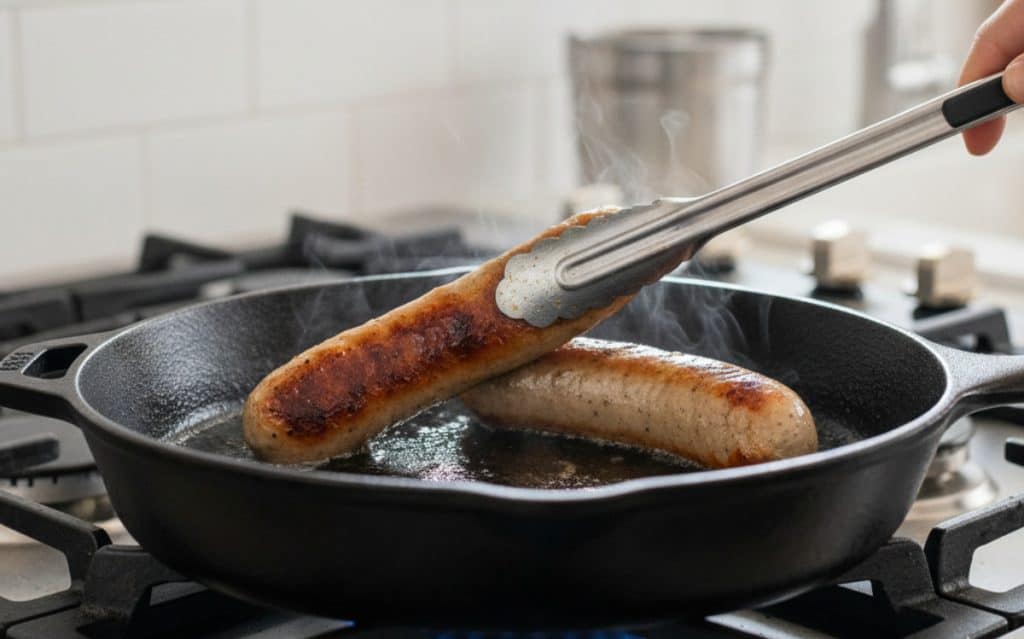
The best way to cook chicken sausage on the stove is to balance searing and finishing heat. Place your heavy-bottomed skillet or cast-iron skillet over medium heat. Add oil and wait until water droplets sizzle, not smoke.
Add sausages in a single layer with space between them. Overcrowding drops the pan temperature and prevents golden crust sausage formation. This technique is a cornerstone of the best way to prepare chicken sausage for a juicy, evenly browned finish. Cook for three to four minutes per side, rotating the sausage sides about 90 degrees every two minutes. This builds even color.
After initial browning, reduce the heat to medium-low. Continue cooking for four to six minutes, turning often. This two-stage approach matters because high heat sear followed by low heat finish protects juiciness.
Here is a quick timing reference that simplifies decisions.
| Sausage Type | Heat Level | Total Time | Notes |
| Pre-cooked chicken sausage | Medium | 8–10 minutes | Brown and heat through |
| Raw chicken sausage | Medium then low | 12–15 minutes | Use thermometer |
| Frozen sausage | Medium low | 15–18 minutes | Add the lid briefly |
Timing varies by thickness. One-inch diameter time trends are shorter. Thick links take longer.
Steaming-Searing Hybrid for Juicier Results
Some cooks swear by a hybrid method, especially for raw chicken sausage. After browning both sides, add one quarter cup of water or chicken broth. Cover the pan and lower the heat so the sausages can gently steam and finish cooking all the way through. [2]
This keeps the casing from getting too tough while the inside stays moist and tender. The liquid also picks up flavor from the pan, so you’re left with a light, savory jus you can spoon over the sausages or use as a base for a quick pan sauce.
Steam gently for eight to ten minutes. Remove the lid, raise the heat slightly, and let the remaining moisture evaporate. This water cover sausage technique, after browning, adds a splash of water/broth and covering gently steams through without drying, then crisping. It reduces the risk of dry sausage, especially with chicken breast blends. Transitioning from technique to safety is essential because color is not a reliable doneness indicator; always confirm with a thermometer.
Phase 3: Safety, Temperature, and Doneness
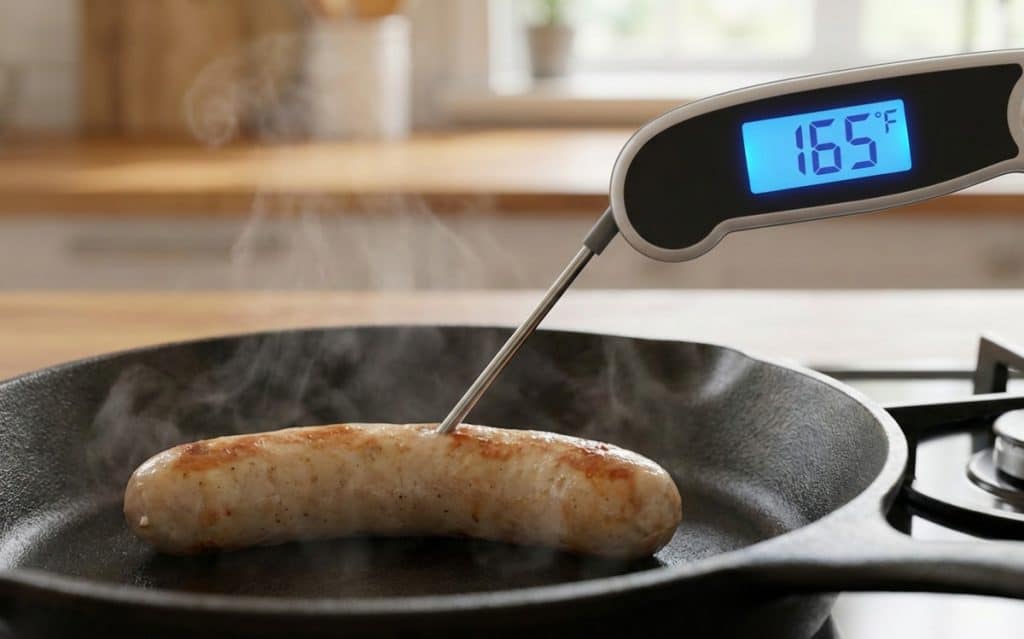
Chicken sausage must reach a safe internal temperature. Visual cues are unreliable. Using a thermometer is essential when you how to cook chicken sausage safely and perfectly every time. According to the USDA, poultry products must reach 165°F to destroy harmful bacteria. This includes all chicken sausage varieties. [3]
Insert an instant-read thermometer into the thickest part of the link. Avoid touching the pan, or you will get a false reading. Do not rely on Browning. Chicken sausage can brown well before it is safe inside. Remove sausages once they hit temperature and rest them for three to five minutes. Resting allows juices to redistribute and keeps the chicken sausage juicy.
The CDC also emphasizes proper reheating. Leftovers should be reheated to 165°F to meet food safety guidelines so that any bacteria that survived cooling or storage are fully killed. Using a food thermometer takes the guesswork out and keeps you from overheating the sausage until it turns dry and chewy. [4]
Understanding safety frees you to focus on flavor, because once you’re confident the sausage is safe to eat, you can pay attention to texture, browning, and seasoning instead of worrying about whether it’s done in the middle.
Flavor Boosts and Aromatics Without Extra Fuss
Chicken sausage pairs well with aromatics added directly to the skillet. After removing the sausages, add sliced onions, garlic, and vibrant bell peppers to the same pan. The rendered fat and fond add depth. Season with smoked paprika, fennel, thyme, oregano, or Italian seasoning sausage blends. A pinch of kosher salt, sausage seasoning sharpens flavors.
Deglaze the sausage pan with a splash of water or broth. Scrape up browned bits and reduce briefly for a quick pan sauce sausage finish that carries all the flavor from the fond. Return sliced sausage to coat and warm through so every piece gets glossed in that savory, concentrated liquid.
This creates a one-pan sausage meal with minimal mess and a built-in sauce that works over rice, pasta, or vegetables. Avoid adding aromatics too early, especially garlic or delicate herbs. They burn before the sausage finishes and turn bitter, so add them near the end of cooking or during the deglaze step, when the heat is lower, and there’s a little moisture in the pan.
Healthy Serving Variations That Still Taste Good

Chicken sausage fits into healthy sausage recipe plans without feeling restrictive. Slice cooked links into bite-sized chunks and toss with vegetables for a vegetable sausage skillet that still feels hearty and satisfying. Zucchini, peppers, and onions work well because they soften nicely, soak up flavor, and cook at about the same rate.
You can add tomatoes or spinach at the end for extra color and moisture, or a spoonful of whole grains on the side to make it a full meal. With this kind of mix, you get protein, fiber, and plenty of flavor in one pan, without it feeling heavy.
Pair with salt, pepper potatoes for a potato sausage combo that still feels balanced if portions stay reasonable. Serve over quinoa or brown rice for a quick sausage dinner bowl. Add herbs and lemon for brightness. Protein content typically ranges from 10 to 17 grams per link, making chicken sausage a lean option compared to pork.
Common Mistakes That Ruin Chicken Sausage
Even experienced cooks make these errors. Cooking over medium-high heat the entire time scorches the exterior before the center cooks. Skipping the thermometer leads to undercooking or overcooking. Guessing is unreliable.
Crowding the pan causes steaming, not browning. Space equals crust, so give each sausage its own room to sit against the hot surface. When they’re piled too close, moisture has nowhere to go, and you end up with pale, soft sausage instead of a deep, golden sear.
Cutting too early spills juices, which means all that moisture you worked to keep inside ends up on the cutting board instead of in your bite. Resting matters more with lean meats like chicken sausage because they have less fat to hide mistakes. Even a short 5-minute rest lets the juices settle back into the meat. Avoiding these small errors keeps results consistent, so every time you cook, the sausage looks and tastes like you planned it that way.
Alternatives When the Stove Is Not Ideal

Credits: Kitchen Basics
The stovetop is best, but alternatives help when needed. Air-fryer results vary; ensure internal temp reaches 165°F for six to nine minutes, turning once so the sausage browns on all sides. Results are even but less saucy, since the air fryer doesn’t leave much fond or pan juices behind. You do get a reliable, lightly crisp exterior and a well-cooked center with very little effort, which helps on busy nights.
If you miss the sauce, you can warm a bit of broth or tomato sauce on the side and toss the sliced sausage in after cooking, giving you some moisture and flavor without needing a skillet. This simple step adds gloss, keeps the meat from feeling dry, and turns plain sausage into more of a complete, ready-to-serve dish.
Oven-bake sausage methods use 200°C or about 400°F for eight to ten minutes, turning halfway. Grill marks, sausage lovers can broil briefly after pan cooking. This adds char without drying the interior. These options work, but the skillet offers the most control. [5]
Best Way to Cook Chicken Sausage on Stove, Wrapped Up
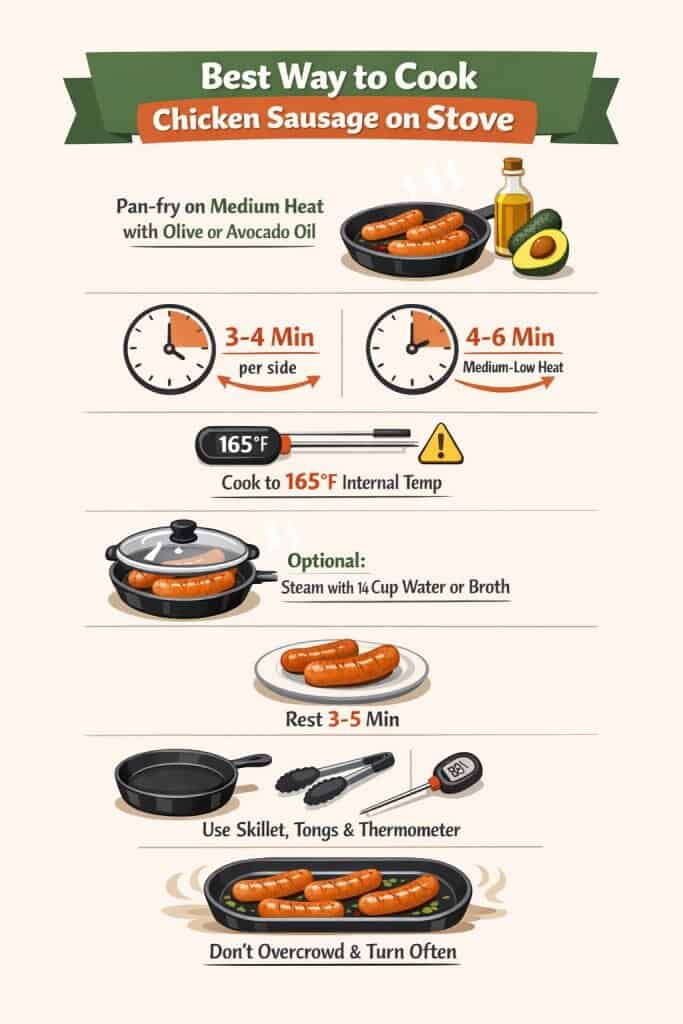
The best way to cook chicken sausage on a stove setup is steady, controlled, and thermometer-driven. Medium heat builds a golden crust. Lower heat finishes gently. A final rest locks in juices so they stay inside the sausage instead of running out on the plate. Using an instant-read thermometer takes away the guesswork, letting you pull the sausages right when they reach a safe internal temperature without drying them out.
Once you trust the process, chicken sausage becomes a reliable, quick protein instead of a gamble. You’re not standing over the pan wondering if the center is still raw or the outside is about to burn. Cooking should feel predictable, not stressful, especially on a weeknight when you want dinner to be simple.
This method makes it that way every time, giving you repeatable results: browned on the outside, juicy in the middle, and ready to pair with whatever vegetables, grains, or sauces you have on hand.
Here’s a revised conclusion with a clearer, topic-focused title and a tighter tie-back to stovetop technique and moisture control
Stovetop Chicken Sausage: Juicy Results, Every Time
Cooking chicken sausage on the stove doesn’t have to feel like a gamble. When you control the heat, avoid rushing the sear, and rely on a thermometer instead of guesswork, you get consistent results: a golden, lightly crisp exterior and a juicy center that stays tender all the way through. Medium heat for browning, followed by a gentler finish, protects lean chicken sausage from drying out while still building real flavor.
The key is treating chicken sausage with intention. Let it warm slightly before cooking, give it space in the pan, and don’t skip the rest after it reaches 165°F. These small steps make a big difference, especially with a protein that has less fat to hide mistakes. Once you trust this stovetop method, chicken sausage becomes a dependable weeknight staple, fast, flavorful, and easy to pair with vegetables, grains, or a quick pan sauce.
With the right pan, steady heat, and a thermometer in hand, stovetop chicken sausage turns out juicy and well-browned every time, no dryness, no stress, just reliable results you can repeat whenever it’s on the menu.
FAQ
How do I cook chicken sausage on the stovetop without drying it out?
To keep chicken sausage juicy on the stovetop, start with room-temperature sausage and use a heavy-bottom skillet. Heat the pan over medium heat and add a small amount of olive oil. Pan fry the chicken sausage slowly, turning it with tongs to rotate all sides evenly. Cook until the sausage’s internal temperature reaches the USDA sausage temperature for food safety.
What skillet and heat level are best for browning chicken sausage?
A cast iron skillet, stainless steel pan, or non-stick skillet all work well for skillet chicken sausage. Preheat the pan until water droplets sizzle, which indicates about 350–375°F. Use medium-high heat briefly to start browning, then reduce to cook the sausage over medium heat. This method promotes even chicken sausage browning and a golden crust without burning.
How long does it take to cook raw versus pre-cooked chicken sausage?
Raw chicken sausage usually needs 8 to 10 minutes to cook, depending on thickness. Turn the sausage every 90 degrees so all sides brown evenly. Pre-cooked sausage only needs 6 to 9 minutes, since you are reheating and crisping the exterior. Always confirm doneness with an instant read thermometer to ensure safe, fully cooked sausage.
Can I cook chicken sausage with vegetables in one pan?
Yes, you can easily make a one pan sausage meal. Brown the chicken sausage first, then remove it and set it aside. Add onions, garlic, bell peppers, or potatoes to the same skillet. Deglaze the pan with a small amount of water if needed. Return the sausage to finish cooking with the vegetables for a complete meal.
What are good alternatives if I do not want to pan fry chicken sausage?
If you prefer not to use the stovetop, you can bake chicken sausage in the oven at 200°F or cook it in a 400°F air fryer. Air frying usually takes 6 to 9 minutes, turning once. Grilling or broiling also works well for adding grill marks. These methods provide crispy results with less cleanup.
References
- https://www.healthline.com/nutrition/avocado-oil-vs-olive-oil
- https://www.chefsresource.com/how-to-cook-raw-chicken-sausage-on-the-stove/
- https://www.usda.gov/about-usda/news/blog/cooking-meat-it-done-yet
- https://www.fda.gov/food/people-risk-foodborne-illness/cooking-food-safety-moms-be
- https://spice.alibaba.com/spice-basics/bake-sausages
Related Articles
- https://milkwoodrestaurant.com/how-to-cook-chicken-sausage-on-stove/
- https://milkwoodrestaurant.com/best-way-to-prepare-chicken-sausage/
- https://milkwoodrestaurant.com/how-to-cook-chicken-sausage/
Was this helpful?

I’m Mary R. Q. , a seasoned professional chef dedicated to elevating home cooking experiences. Through my expertise in the culinary arts, I provide practical cooking tips and insightful reviews of kitchen utensils on my blog, milkwoodrestaurant.com. As a passionate advocate for transforming everyday meals into extraordinary culinary adventures, I aim to empower home cooks with the knowledge and tools they need to create delicious and memorable dishes. I’m also an author of the book “1,001 Kitchen Tips & Tricks: Helpful Hints for Cooking, Baking, and Cleaning (1,001 Tips & Tricks)” which is sold on Amazon. Join me on a flavorful journey as we explore the art of cooking and the essential tools that make it a joy.