Frozen chicken sausage can be cooked directly from the freezer as long as it reaches 165°F (74°C), the USDA’s minimum safe internal temperature for poultry.
That single rule turns a box of frozen sausages into one of the fastest dinner solutions you can keep on hand. Many brands, including Al Fresco, Applegate, and Trader Joe’s, sell fully cooked frozen chicken sausages, so at home you’re simply reheating them to 165°F. You can do that in a pan, the oven, an air fryer, or on the grill.
For best quality, frozen chicken sausage keeps 1–2 months in the freezer, according to the USDA, and cooks in 10–25 minutes depending on the method. Think quick breakfasts, last-minute pasta, simple sheet-pan dinners, or a fast skillet dish.
With a few basic methods, you can have a complete meal ready in 15–25 minutes. Here’s how to cook it safely and turn it into dinner tonight.
Frozen Chicken Sausage: Quick Cooking Snapshot
These quick points sum up the safest and easiest ways to cook and use frozen chicken sausage in everyday meals.
- Frozen chicken sausage can be cooked directly from frozen if it reaches 165°F, the safe internal temperature for poultry.
- Fast cooking methods include skillet cooking (10–15 minutes), oven baking (20–25 minutes at 400°F), air frying (12–15 minutes at 375–390°F), and grilling (15–20 minutes over medium heat).
- Sliced sausage works well in pasta, breakfast skillets, soups, sheet-pan dinners, and stir-fries.
Cooking Frozen Chicken Sausage the Right Way
Frozen chicken sausage is safe to eat once it reaches 165°F internally. That’s the USDA’s official safe temperature for poultry.
Many frozen chicken sausages are fully cooked at the factory. If so, you’re simply reheating them. For tips on the best ways to heat chicken sausages, check techniques that help keep them juicy and flavorful throughout the process. If the package says “raw,” cook them completely until fully done.
Color alone doesn’t guarantee doneness. Always check the thickest part with a digital meat thermometer.
The safest way to verify doneness is with a digital meat thermometer inserted into the center. A browned outside doesn’t mean the middle is safe.
Food safety guidelines from the United States Department of Agriculture recommend three key practices when cooking frozen poultry sausage:
- Please ensure the internal temperature reaches 165°F.
- Stick the thermometer probe into the thickest part of the sausage.
- Let the sausages sit for 3 to 5 minutes after you take them off the heat. This helps the juices settle back in.
Having the right tool makes this foolproof. An instant-read thermometer checks doneness in seconds, while a leave-in probe continuously monitors temperature. An instant-read thermometer is ideal for quick checks, and a digital meat thermometer, which you can leave in while cooking, provides constant monitoring.
According to the USDA Food Safety and Inspection Service, consumers should “never partially cook poultry and finish it later” because “any bacteria present would not have been destroyed” during the initial heating. Cooking sausage directly from frozen usually takes about 30–50% longer than cooking thawed sausage, depending on thickness and cooking method.
That stop-and-start method can let bacteria survive because the heat isn’t consistent, which means that the food may not reach a safe temperature throughout.
Safe and Fast Thawing Methods
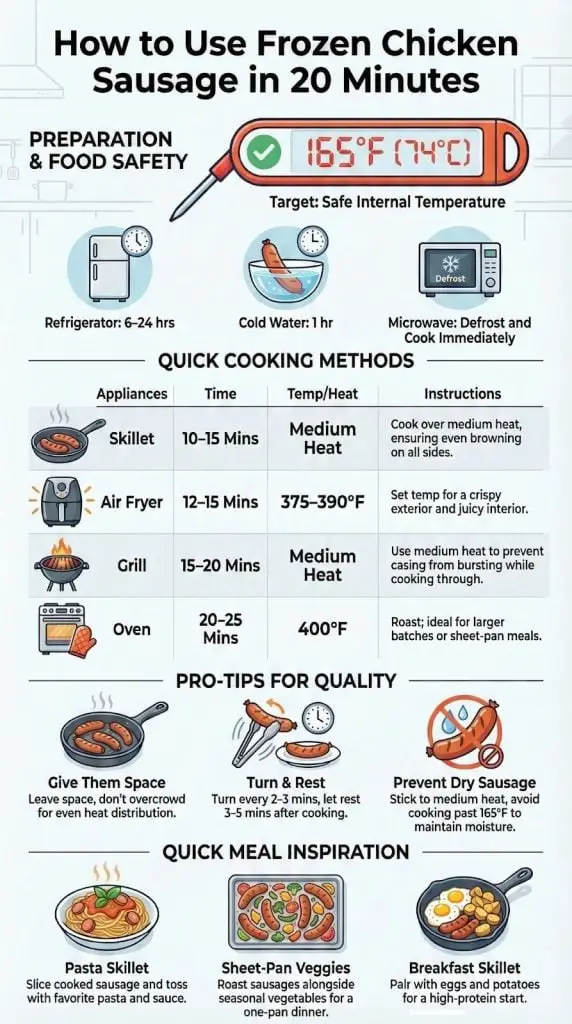
Here’s how to thaw chicken sausage safely. It’s all about temperature.
Safe thawing means keeping the sausage below 40°F (4°C), where bacteria grow slowly. The USDA and Harvard Health Publishing agree on this point.
The safest method is thawing in the refrigerator. Place the sealed package on a plate and let it thaw. It stays cold the whole time.
A 12–16 oz package of frozen chicken sausage usually thaws in 6–24 hours in a refrigerator set to 36–40°F.
Need it faster? Use cold water. A 1-pound package of frozen chicken sausage typically thaws in about 1 hour when it is submerged in cold water that is changed every 30 minutes.
Put the sausage in a sealed plastic bag and submerge it in a bowl of cold water. You have to change the water every 30 minutes to keep it cold. Plan for about an hour per pound.
The microwave is fastest (5–10 minutes on defrost), but cook immediately afterward. The microwave can create warm spots where bacteria start to grow. Some methods are simply unsafe.
Never thaw sausage on the kitchen counter, in hot water, or at room temperature. These let the temperature rise into the danger zone between 40 °F and 140 °F where bacteria multiply fast.
Some methods are simply unsafe. Never thaw sausage on the kitchen counter, in hot water, or at room temperature. These let the temperature rise into the danger zone where bacteria multiply fast.
Common Cooking Methods for Frozen Chicken Sausage
Frozen chicken sausage cooks well in several kitchen appliances. Most reach 165°F in roughly 10–25 minutes, depending on heat source and sausage thickness.
Brands such as Aidells, Applegate, and Al Fresco often recommend medium heat (about 325–375°F surface temperature) for better browning without drying the sausage.
Three popular cooking methods work especially well in everyday kitchens.
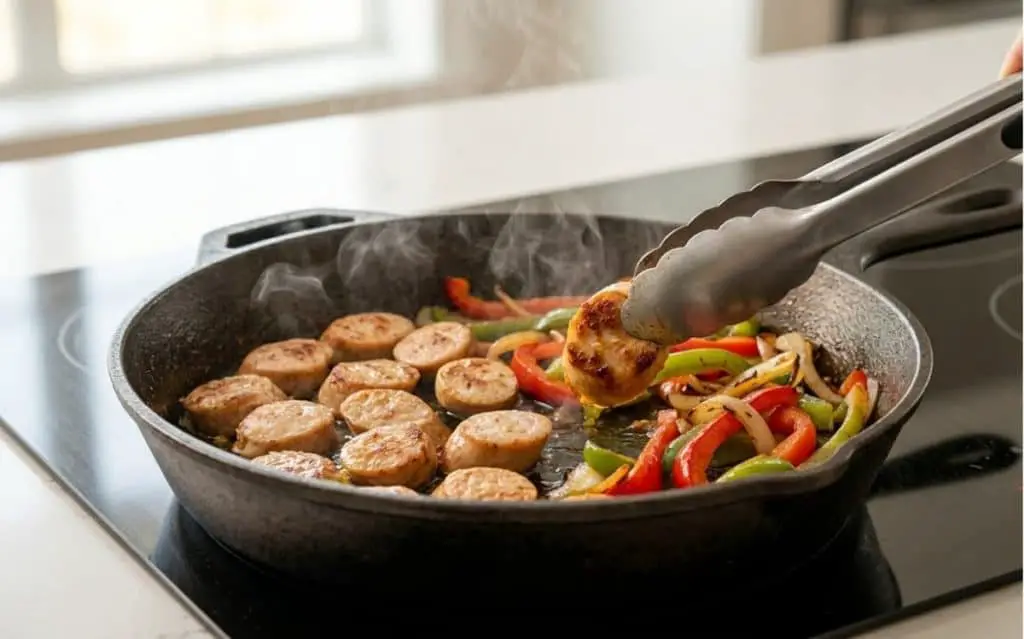
A stovetop skillet is usually fastest, heating frozen sausages in 10–15 minutes over medium heat. A lightly oiled pan heats sausage evenly while developing flavorful browning on the surface.
Oven baking works best for larger batches or sheet-pan dinners because the oven maintains a steady 400°F ambient temperature, allowing several sausages to cook evenly at once. For more on chicken sausage cooking techniques, consider ways to make your oven-prepared sausage turn out perfectly every time.
Air fryers cook sausage at 375–390°F, creating a crisp exterior with minimal oil.
Below is a comparison of common cooking methods.
| Method | Temperature | Cooking Time | Key Tip |
| Skillet / pan fry | Medium heat | 10–15 minutes | Turn frequently |
| Oven baked chicken sausage | 400°F | 20–25 min (pre-cooked); 35–45 min (raw) | Flip halfway. Always check 165°F. |
| Air fryer chicken sausage | 375–390°F | 12–15 minutes | For frozen; 8–12 min thawed pre-cooked. No overlap |
| Grill chicken sausage | Medium heat | 15–20 minutes | Rotate often |
Good cooking practices improve flavor and texture.
- Leave space between sausages for even heating
- Turn sausages every 2–3 minutes
- Let them rest 3–5 minutes after cooking
These steps keep the sausage juicy rather than dry.
Quick Meal Ideas Using Frozen Chicken Sausage
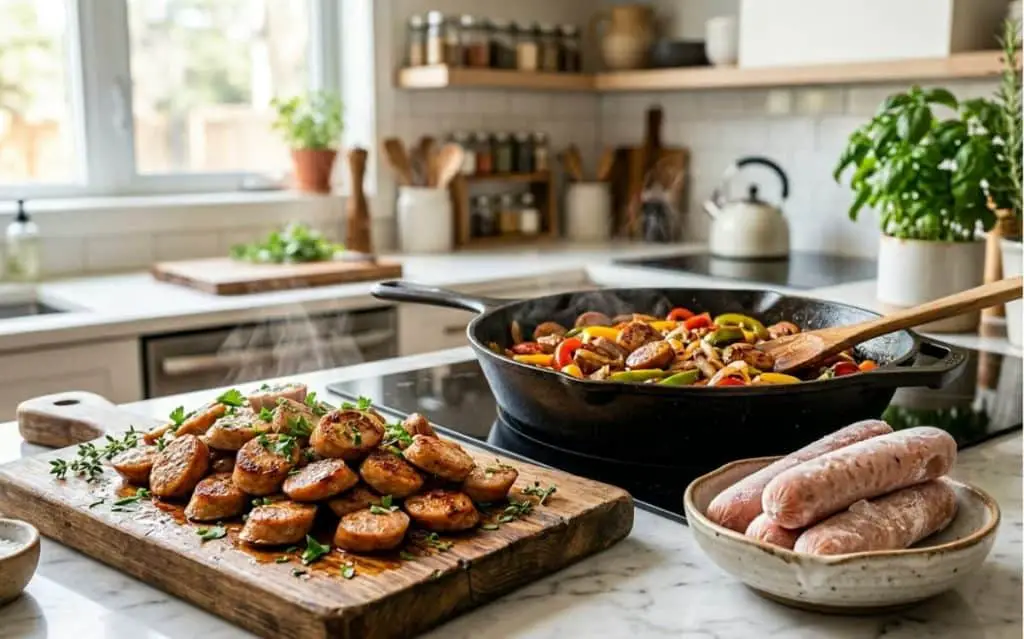
A 12–16 oz pack of frozen chicken sausage can become a full meal in 15–20 minutes, especially when combined with pasta, vegetables, or rice. Just slice it up and toss it in a skillet.
People online use it with whatever they have in the pantry: pasta, a can of beans, or whatever vegetables are in the fridge. Brands like Trader Joe’s and Applegate even suggest simple one-pan recipes on their packaging.
It’s popular for breakfast because it reheats fast. Breakfast ideas like scrambling it with eggs or making a hearty sausage egg skillet belong to quick, tasty ways to start your day.
To explore more breakfast inspiration with chicken sausage, check out recipes that turn this ingredient into a flavorful morning meal
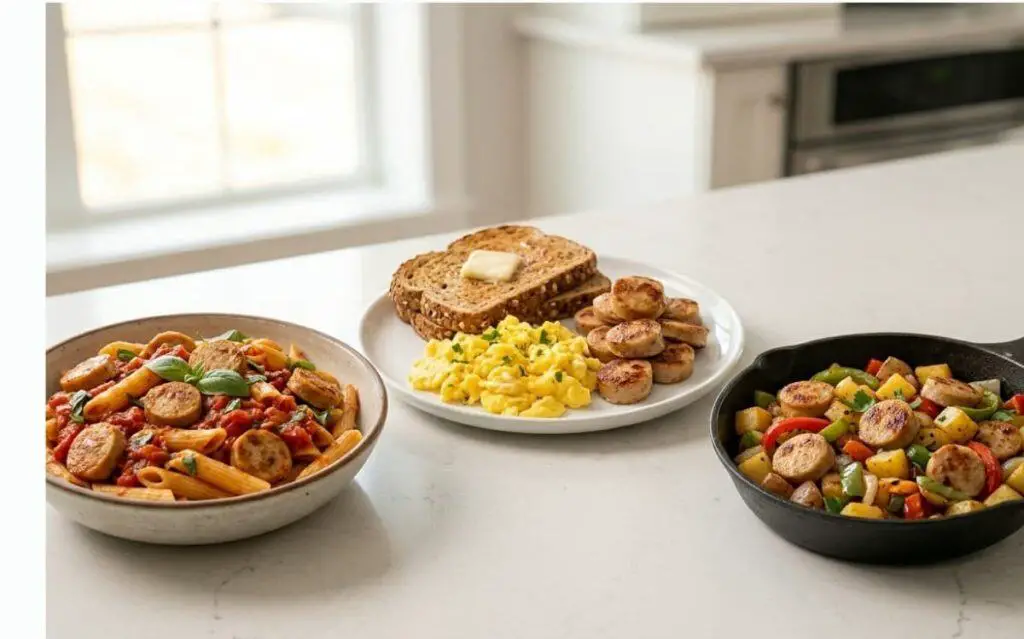
For dinner, it works wonderfully with pasta. Italian-style chicken sausage pairs well with marinara sauce, tomatoes, basil, and oregano, adding about 12–15 grams of protein per sausage, depending on the brand.
You can just simmer sliced sausage in the sauce for about 15 minutes. Other quick dinners include a pasta bake, a simple sausage and peppers skillet, tossing it with broccoli and pasta, or mixing it with rice.
Sheet-pan meals are another easy route. Roast frozen chicken sausage with vegetables such as Brussels sprouts, sweet potatoes, or bell peppers at 400°F for about 20 minutes, spacing sausages 1–2 inches apart for even browning.
The U.S. Department of Agriculture points out that pairing lean proteins with vegetables makes for a more nutritious meal overall.
Practical Home Cooking Hacks
If you need to slice your frozen sausage for a recipe, a quick partial thaw makes the job much easier. Running the link under cold water for 1–2 minutes softens the casing enough to slice.
Home cooks in online forums often mention this trick for getting dinner on the table faster.
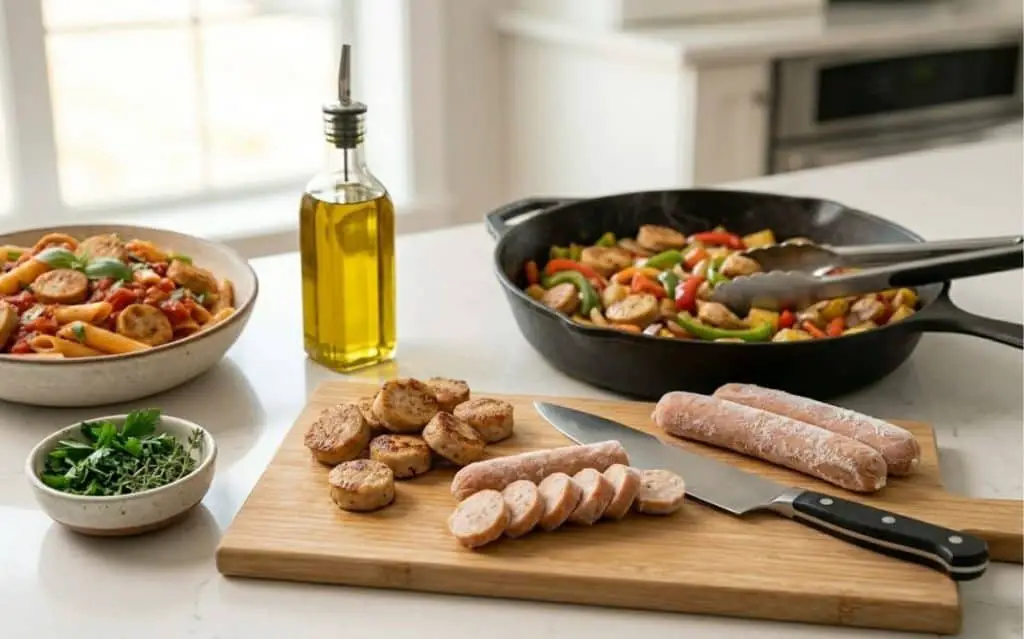
Slice into ¼-inch rounds for faster cooking and better browning. This method is perfect for dishes where you want the sausage distributed throughout, like a stir-fry, fried rice, or a simple skillet meal.
A popular stovetop method for cooking whole frozen sausages uses a bit of water. You place the sausages in a cold skillet, place sausages in a cold skillet, add ½ cup (120 ml) of water, and simmer for 5–7 minutes.
Once the water evaporates, brown them in the rendered fat. Let the water cook off completely. You can brown the sausages in the pan after the fat is rendered.
This technique steams the sausage first, ensuring the inside is fully cooked before you get that lovely, crispy exterior. It prevents the skin from burning while the center is still frozen.
You can also drop frozen sausage directly into a simmering pasta sauce to cook through or slice it thinly after that brief thaw for nearly instant browning. These small adjustments in technique turn a frozen protein into the fastest part of your meal.
How to Avoid Dry, Chewy Sausage
Chicken sausage often becomes dry when the internal temperature rises above 175–180°F, because the lean poultry meat loses moisture at higher temperatures. Moisture loss increases rapidly once temperatures exceed 165°F.
You see this happen a lot in cooking demos for appliances like the Ninja Foodi air fryer; being off by just a few minutes can really change the texture.
Another common mistake is overcrowding the pan or air fryer basket. Leave at least ½ inch of space between sausages so heat can circulate properly. You end up with some sausages burning on one side while others are still cold in the middle.

Credit: Cook with Noorie
Common mistakes include:
- Letting the temperature soar way past 165°F.
- Forgetting to turn the sausages so they brown evenly.
- Overfilling the skillet or air fryer basket.
- Skipping the thermometer check and just hoping for the best.
The habits that lead to a juicier result aren’t complicated:
- Use a medium heat instead of cranking it to high.
- Give the sausages a turn every couple of minutes for even color.
- Always let them rest for those few minutes after cooking.
When you’ve done it right, your sausage will have a few clear signs: a light golden-brown color on the outside, a juicy (not dry) texture when you bite into it, and, of course, that confirmed 165°F reading in the center. That’s how you know it’s both safe and delicious, not overcooked.
FAQs
How long does frozen sausage take to cook using different methods?
Frozen sausage cooking time depends on the cooking method and sausage thickness (usually ¾–1 inch diameter). Pan fry chicken sausage for about 10–12 minutes over medium heat, turning it often for even browning.
Oven baked chicken sausage usually takes 20–25 minutes at 375°F. Air fryer chicken sausage typically cooks in 10–12 minutes at 375–390°F, depending on sausage thickness. Always check that the internal temperature reaches 165°F before serving.
Is it necessary to defrost chicken sausage before cooking meals?
You do not need to defrost chicken sausage before cooking. Many people cook frozen chicken sausage directly when preparing easy chicken sausage meals.
However, thawing it in the refrigerator helps the sausage cook more evenly. Defrosting also works better for dishes such as chicken sausage pasta or sausage casserole because the slices heat more consistently.
What meals work best when cooking frozen chicken sausage?
Cooking frozen chicken sausage works well in simple meals that cook quickly. You can add sliced sausage to chicken sausage stir fry, sausage and peppers, or a sausage skillet recipe with vegetables. It also works well in chicken sausage soup or a sausage and rice recipe. These dishes make practical and filling weeknight dinners.
Can frozen chicken sausage work in breakfast sausage ideas?
Frozen chicken sausage works well in many breakfast sausage ideas. You can slice it and cook it in a sausage breakfast skillet with potatoes and eggs. It also fits well in sausage breakfast casserole or sausage and eggs breakfast plates. Many home cooks also add it to a sausage omelette or a sausage frittata recipe.
Are frozen chicken sausage meals suitable for keto or low-carb diets?
Frozen chicken sausage can work well in keto chicken sausage and low carb sausage recipes. Many meals pair the sausage with vegetables such as sausage and broccoli, sausage and kale, or a sausage and spinach skillet.
These combinations keep the carbohydrate content low while adding flavor and protein. They also work well for sausage meal prep.
Turn Frozen Chicken Sausage Into a Fast, Reliable Meal
After a long day, frozen chicken sausage offers a fast, reliable dinner option. Frozen chicken sausage helps because it cooks quickly and drops into simple dishes like pasta or a quick skillet with peppers. No time to overthink it.
Once it reaches 165°F, you can slice it and build a meal in minutes. A hot skillet set to medium heat, a few pantry ingredients, and frozen chicken sausage can produce a complete meal in about 15–20 minutes. Its flexibility is its main benefit, so you can still get a filling meal on busy nights.
References:
- https://www.fsis.usda.gov/food-safety/safe-food-handling-and-preparation/poultry/chicken-farm-table
- https://www.fsis.usda.gov/food-safety/safe-food-handling-and-preparation/food-safety-basics/danger-zone-40-f-140-f
Related Articles:
- https://milkwoodrestaurant.com/how-to-heat-up-chicken-sausage/
- https://milkwoodrestaurant.com/chicken-sausage-and-egg-breakfast/
- https://milkwoodrestaurant.com/chicken-sausage-recipes-and-cooking-methods/
Was this helpful?

I’m Mary R. Q. , a seasoned professional chef dedicated to elevating home cooking experiences. Through my expertise in the culinary arts, I provide practical cooking tips and insightful reviews of kitchen utensils on my blog, milkwoodrestaurant.com. As a passionate advocate for transforming everyday meals into extraordinary culinary adventures, I aim to empower home cooks with the knowledge and tools they need to create delicious and memorable dishes. I’m also an author of the book “1,001 Kitchen Tips & Tricks: Helpful Hints for Cooking, Baking, and Cleaning (1,001 Tips & Tricks)” which is sold on Amazon. Join me on a flavorful journey as we explore the art of cooking and the essential tools that make it a joy.