Yes, chicken sausages are a good source of protein. A typical link delivers a solid 14 to 18 grams of protein, primarily from the chicken meat itself. This makes it a convenient and flavorful way to meet your daily needs. But the full story is more nuanced, hinging on the specific brand, ingredients, and how it fits into your overall diet.
While it’s not as lean as a plain grilled chicken breast, it offers a protein-packed alternative to traditional pork sausages with less fat. Understanding the numbers and the ingredients list is the key to making it a smart part of your nutrition plan. Keep reading to see how different brands stack up and learn how to pick the best option for your health.
Key Takeaways
- A standard chicken sausage link provides a significant protein punch, often between 14-18 grams.
- The quality of that protein can vary greatly depending on added fillers or enhancements.
- Compared to pork sausage, chicken versions typically offer more protein for fewer calories and less fat.
The Protein Payload in a Single Link
You look at that sausage sizzling in the pan. It’s easy to see it just as a tasty meal, but it’s carrying a substantial protein load. The numbers don’t lie. A standard 3.3-ounce link, about the size of your palm, consistently packs a punch.
Isernio’s Italian Chicken Sausage lists 18 grams of protein per link. Premio’s Sweet Italian Chicken Sausage comes in at 14 grams for a slightly smaller, cooked serving. Generic data from sources like FatSecret shows around 17 grams per 100-gram portion [1].
This puts one sausage in the ballpark of meeting 25-30% of an average adult’s daily protein requirement. It’s a concentrated source.
The protein comes from the ground chicken. This is a complete protein, meaning it contains all nine essential amino acids your body can’t make on its own. These are the building blocks for muscle repair, enzyme production, and overall tissue health. The specific cut of chicken used influences the final fat content, but the protein remains a constant, valuable component. For those tracking nutrition, the detailed chicken sausage nutrition label reveals how fat content and protein levels vary by brand and preparation, helping you choose healthier options.
What impacts the final protein count?
- The primary ingredient: Chicken should be first on the list.
- Added protein sources: Some brands boost levels with egg whites or pea protein.
- Use of fillers: Ingredients like breadcrumbs or soy protein isolate can dilute the protein density.
Weighing the Benefits Against the Downsides

That protein works for you in several ways. It promotes satiety, helping you feel full longer, which can be a boon for weight management. It directly supports muscle maintenance and growth, especially important if you’re active. Chicken sausage also delivers other nutrients that work alongside protein, like B vitamins which help your body metabolize it efficiently.
However, it’s not a perfect food. The main trade-off is often sodium. A single link can contain 450 to 700 milligrams of sodium, a significant portion of the recommended 2,300-milligram daily limit. This is used for flavor and preservation. The fat content, while lower than pork sausage, is still present. Checking chicken sausage fat content can give you insight into how much fat you’re consuming and help balance your meals for better health.
Compared to a plain chicken breast, the sausage is more processed. It contains additional ingredients like vinegar, spices, and sometimes sweeteners. This processing is what gives it its distinctive flavor and longer shelf life, but it’s the reason you need to be a label reader. The convenience and taste come with a need for moderation and smart selection.
Chicken Sausage vs. Other Protein Players

Credit : CNA Insider
How does it fare against other common choices? The comparison is revealing. Against its cousin, pork sausage, chicken is often the winner for protein efficiency. A pork sausage link might have similar protein (around 16g) but frequently delivers more calories and significantly more saturated fat. You get the same muscle-building benefit with a lighter metabolic load.
Stack it up against a skinless chicken breast. A 4-ounce breast provides about 35 grams of protein with minimal fat and carbs. It’s the gold standard for lean protein. The sausage can’t compete on purity, but it wins on convenience and flavor variety. It’s a tool for keeping meals interesting without abandoning your protein goals.
Even against plant-based alternatives, chicken sausage holds an advantage in protein quality. Plant-based proteins are often incomplete, meaning they lack one or more essential amino acids.
Chicken protein is complete and highly bioavailable, meaning your body absorbs and uses it readily. It also provides heme iron, which is more easily absorbed than the non-heme iron in plants.
Your Guide to Choosing a High-Quality Protein Sausage
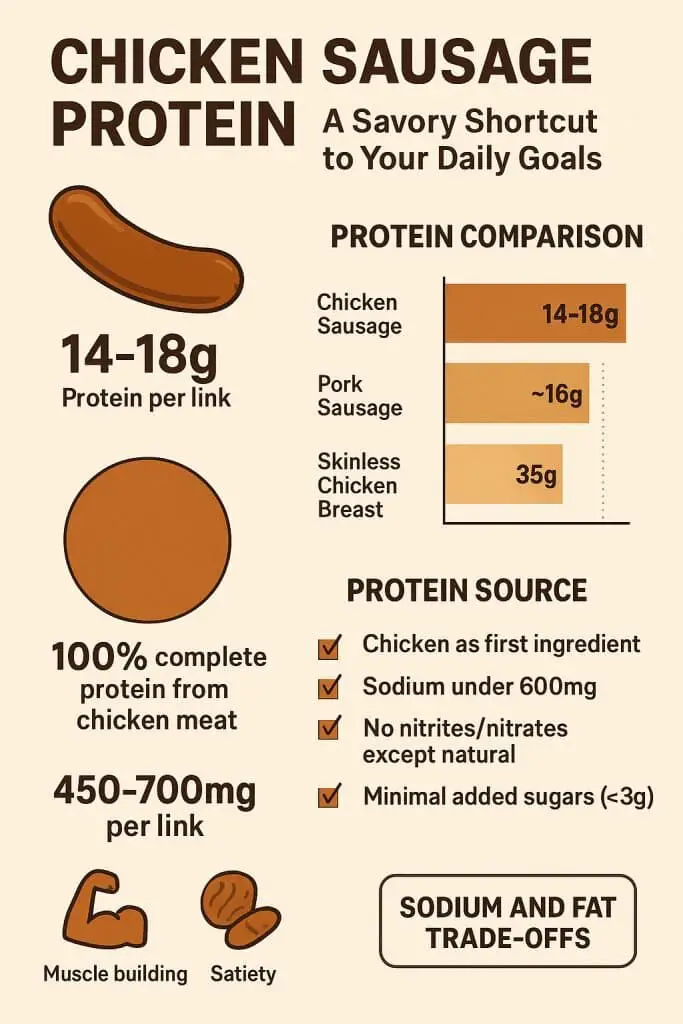
You can make chicken sausage a stellar part of your diet by choosing wisely. It all starts with the ingredients list. The very first word should be “chicken.” If you see “mechanically separated chicken” or if chicken isn’t the primary ingredient, the protein quality may be compromised. Look for short, recognizable ingredient lists. Knowing how to identify high protein sources in chicken sausage helps you optimize your intake and supports your fitness and weight goals effectively.
Pay close attention to the sodium content. Brands can vary widely. Isernio’s Hot Italian Chicken Sausage has 570mg, while their regular Italian version has 700mg. Premio’s sits at 450mg. If sodium is a concern for you, this is the most important number on the label. Opt for the lowest you can find that you still enjoy.
Here’s a quick checklist for your next grocery trip:
- Chicken as the first ingredient.
- Sodium content below 600mg per serving.
- No added nitrites or nitrates (except those naturally in celery powder).
- Minimal added sugars (under 2-3 grams).
Don’t ignore the casing. Natural hog or sheep casings are traditional and don’t negatively impact the nutrition. They provide that classic “snap” when you bite in. The spices, fennel, pepper, garlic, are where the flavor lives, and they add negligible calories or carbs, making them your friend.
Clearing the Air on Common Confusions
Some people hear “sausage” and think “unhealthy,” lumping all types together. This is a mistake. While a traditional, fatty pork sausage might be an occasional treat, a lean chicken sausage is a different product entirely. It’s a matter of nuance, not broad categorization. The high protein and lower fat profile reposition it as a viable regular option.
Another misconception is that all the protein is lost during cooking. This isn’t true. Grilling, pan-frying, or baking may cause some moisture loss, which can slightly concentrate the protein percentage by weight, but the total grams of protein remain largely unchanged. The cooking method primarily affects fat and water content.
The idea that you need to avoid sausages entirely to eat clean is also outdated. With the availability of brands that use minimal processing, no artificial preservatives, and chicken raised without antibiotics, you can find options that align with a whole-foods-focused diet. It’s about selective shopping, not total avoidance [2].
FAQ
How much chicken sausage protein can you get in one link?
You can check chicken sausage protein by looking at sausage nutritional facts. Many links give 10 to 14 sausage protein grams. You can track protein per chicken sausage with chicken sausage macros. You can compare calories in chicken sausage and lean chicken protein to see if the chicken meat protein source fits your daily protein from sausage.
What affects poultry sausage nutrition when you cook it?
You change poultry sausage nutrition when you grill or boil it. Grilled chicken sausage macros shift because fat drips off. Boiled chicken sausage protein stays close to the label. You can watch chicken sausage carbs protein fat to see changes. You still keep chicken sausage amino acids and chicken sausage iron selenium.
Do chicken sausage ingredients protein levels vary by type?
Yes. Chicken sausage ingredients protein levels shift because recipes differ. Italian chicken sausage protein grams, apple chicken sausage protein and spinach feta chicken protein do not match. You can compare chicken sausage vs beef protein or turkey chicken sausage protein if you want a lean chicken protein choice that fits chicken sausage serving size protein.
Can chicken sausage help with sausage muscle building or weight loss?
You can use high protein chicken links for sausage muscle building or weight loss sausage protein needs. Many people track keto chicken sausage protein and paleo protein sausage. You get satiety protein chicken from complete protein chicken. Nutrient dense chicken links can support meal prep chicken protein when you plan your week.
What should you know about chicken sausage storage quality and additives?
You can read chicken sausage storage quality on the package. Additive free sausage nutrition helps you avoid fillers. No msg chicken sausage and gluten free protein sausage help people with limits. Sodium in protein sausage and chicken sausage cholesterol protein matter if you track health goals. Natural casing chicken protein stays the same in most brands.
Conclusion
Chicken sausage earns its place as a legitimate protein source. It delivers a convenient, flavorful dose of complete protein that can help you build muscle and feel satisfied. The key is informed selection. Let the nutrition label be your guide, prioritizing high protein and low sodium. When chosen carefully, that savory link isn’t just a tasty dinner; it’s a strategic step toward hitting your health goals. Next time you’re at the meat counter, you can confidently grab a pack, knowing exactly what it brings to your table.
References
- https://academic.oup.com/ijfst/article/56/10/5250/7805988
- https://ijpsjournal.org/index.php/ijps/article/view/1517
Related Articles
- https://milkwoodrestaurant.com/learn-about-chicken-sausage-protein-source/
- https://milkwoodrestaurant.com/chicken-sausage-nutrition-label/
- https://milkwoodrestaurant.com/chicken-sausage-fat-content/
Was this helpful?

I’m Mary R. Q. , a seasoned professional chef dedicated to elevating home cooking experiences. Through my expertise in the culinary arts, I provide practical cooking tips and insightful reviews of kitchen utensils on my blog, milkwoodrestaurant.com. As a passionate advocate for transforming everyday meals into extraordinary culinary adventures, I aim to empower home cooks with the knowledge and tools they need to create delicious and memorable dishes. I’m also an author of the book “1,001 Kitchen Tips & Tricks: Helpful Hints for Cooking, Baking, and Cleaning (1,001 Tips & Tricks)” which is sold on Amazon. Join me on a flavorful journey as we explore the art of cooking and the essential tools that make it a joy.







![Preparing [champ chicken sausage] - raw sausages boiling in a pot and cooking in a pan.](https://milkwoodrestaurant.com/wp-content/uploads/2026/02/image-1-4-150x150.jpg)
