Chicken sausages can be gluten-free, but not all of them are, and the difference comes down to the extra ingredients and how they’re made.
Chicken itself does not contain gluten, yet many sausages use fillers, binders, breadcrumbs, soy sauce, or flavor mixes that may include wheat, barley, or rye.
Even spices and broths can sometimes hide gluten. That’s why reading the label, checking for “contains wheat,” and looking for a certified gluten-free mark matters if you’re sensitive or have celiac disease.
Keep reading to see where gluten shows up, how to spot safe options, and how to make your own.
Key Takeaways
- Always check the ingredient list for wheat, barley, rye, and their derivatives.
- Look for a “Certified Gluten-Free” label for the highest assurance of safety.
- Making homemade chicken sausage gives you complete control over ingredients.
Why Gluten is Often Present in Sausages
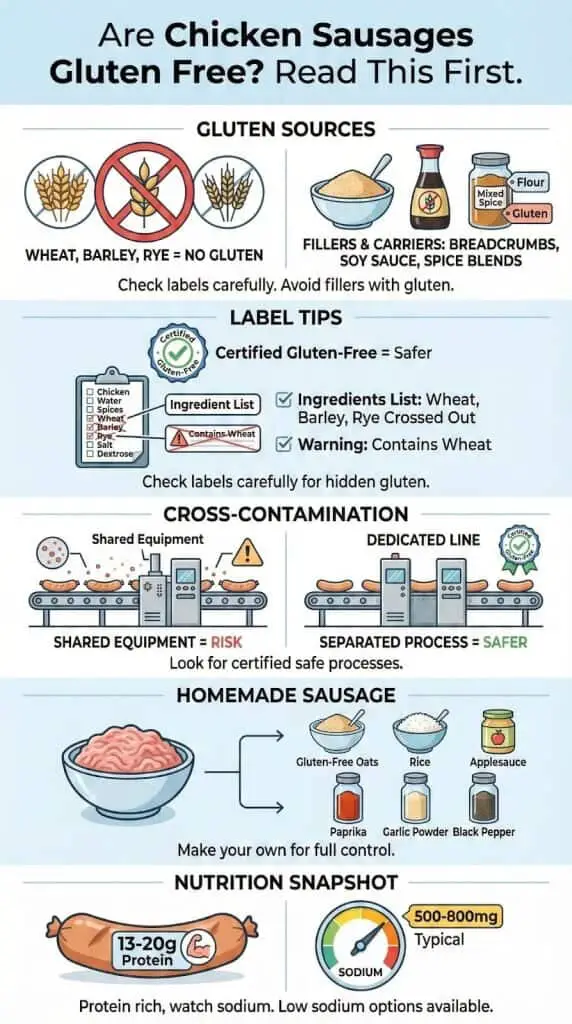
Most chicken sausage ends up containing gluten because of what gets added to the meat, not the chicken itself.
Manufacturers often mix in fillers and binders, like wheat flour, breadcrumbs, or rusk, to bulk up the sausage, keep it moist, and hold it together.
These give the product body, but they also bring gluten into the mix. Seasonings can cause trouble too.
Some spice blends use wheat flour as an anti‑caking agent, and sauces like traditional soy sauce (used in teriyaki or “Asian-style” flavors) usually contain wheat. Even maltodextrin (1) can be a gray area unless the label lists the source.
The casing is another detail people sometimes miss. Natural casings made from animal intestines are typically gluten‑free, but certain artificial casings might contain gluten or be made in facilities where cross‑contamination is possible.
Because of all these variables, the safest approach is to read the full ingredient list and look for clear gluten‑free labeling from a brand that states its practices openly.
How to Identify Truly Gluten-Free Chicken Sausage
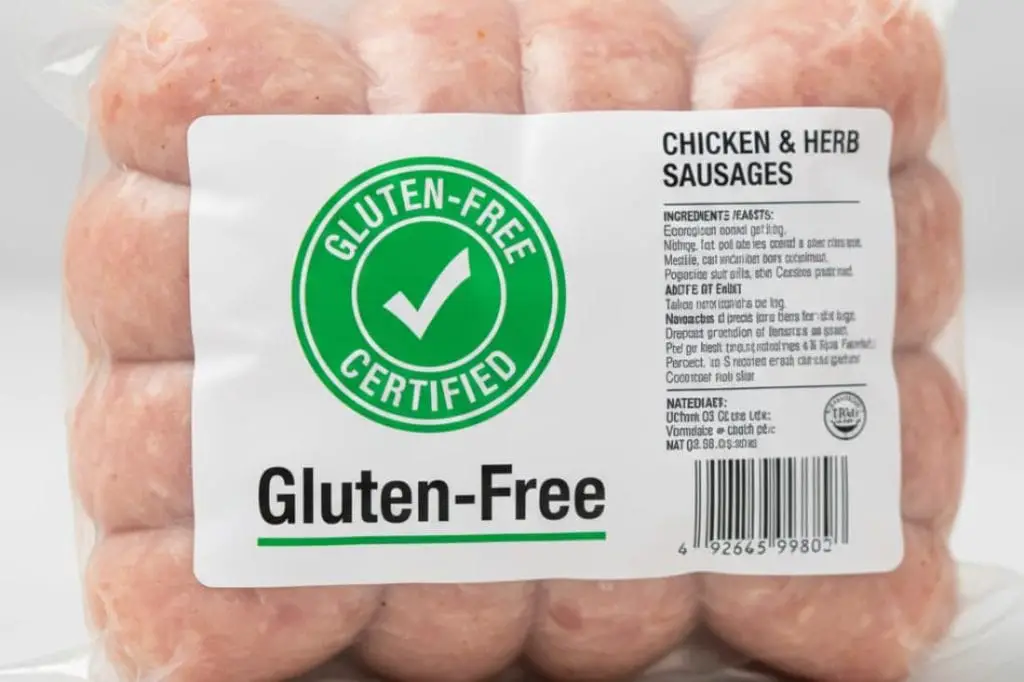
The most dependable way to know if chicken sausage is safe is to look for a Certified Gluten-Free seal on the package.
That certification means the product has been tested to contain less than 20 parts per million (ppm) of gluten and that the manufacturer follows controls to reduce cross‑contamination. For most people with celiac disease or gluten sensitivity, this level is considered safe.
If there’s no certification, you’ll need to read the label carefully. A clear “gluten-free” claim is a good start, but you should still scan the full ingredient list.
Avoid anything that includes wheat, barley, rye, malt, or brewer’s yeast. Be cautious with vague terms like “natural flavors” or “spices” unless the brand states they’re gluten-free, since these mixes can sometimes include gluten‑based carriers.
Some companies are known for focusing on gluten-free products and transparent labels, including brands that clearly address dietary rules such as halal chicken sausage production, which can help certain consumers feel more confident about what they’re buying.
Even so, it’s smart to check the label every time you buy, because recipes and suppliers can change without much notice.
Quick checklist for choosing gluten-free chicken sausage
- Prioritize products with a “Certified Gluten-Free” seal.
- Read the entire ingredient list; avoid wheat, barley, rye, malt, and brewer’s yeast.
- Be careful with vague terms like “spices” and “natural flavors” unless the brand clarifies they’re gluten-free.
- When uncertain, contact the manufacturer or choose a different sausage with clearer labeling.
The Risk of Cross-Contamination in Manufacturing

Credit: cookingguide
Cross-contamination risk. Even if a chicken sausage recipe does not include any gluten ingredients, it can still become unsafe through cross-contamination.
This matters even for people who choose chicken sausage for health benefits, since hidden traces of gluten can outweigh the advantages of a cleaner ingredient list.
This happens when gluten-free sausage is made on the same equipment or in the same room as products that contain wheat, barley, or rye. Tiny gluten particles can transfer during mixing, stuffing, or packaging. (2)
Why certification matters. A certified gluten-free label shows that the company follows strict steps to control cross-contact. This often includes:
- Dedicated or carefully separated production lines
- Detailed cleaning procedures
- Regular gluten testing to keep levels below 20 ppm
“No gluten ingredients” vs. certified. A package that says “no gluten ingredients” only describes the recipe.
It does not guarantee how the product was handled. Certified gluten-free products usually offer a higher level of assurance about the full process.
Extra care for celiac disease. For people with celiac disease, even small traces of gluten can trigger symptoms and long-term harm. That makes cross-contamination just as important as the ingredient list.
What to look for on labels
- A “Certified Gluten-Free” seal
- Phrases like “made in a dedicated gluten-free facility”
These statements usually signal tighter controls and a safer choice for strict gluten-free diets.
Making Your Own Gluten-Free Chicken Sausage at Home
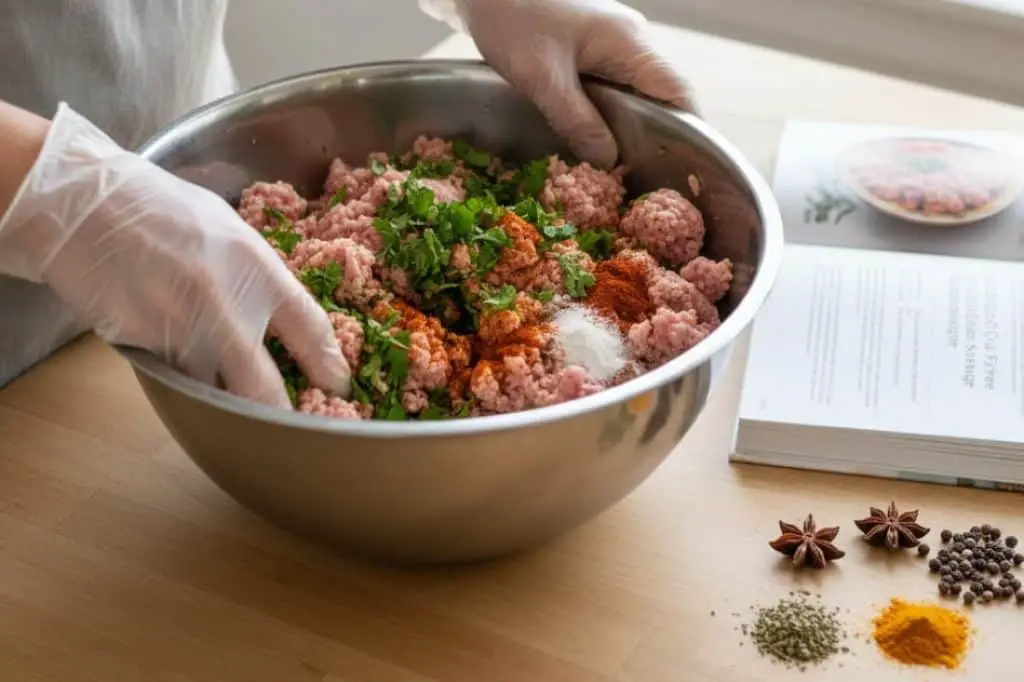
Start with safe ground chicken. The most reliable way to keep chicken sausage gluten-free is to make it yourself, so you control every ingredient.
Begin with plain ground chicken, usually around 85–90% lean, which helps the sausage stay moist. Skip any pre-seasoned ground chicken, since the added flavor mixes may contain gluten.
Use gluten-free binders. Instead of wheat-based fillers, choose naturally gluten-free options to help the sausage hold together. Good choices include:
- A small amount of gluten-free oat bran
- Cooked rice
- Unsweetened applesauce. Try small test batches to find the texture you prefer.
Season with single-ingredient spices. Flavor is where you can customize the sausage. Use clearly labeled, single-ingredient spices rather than pre-mixed blends.
Seasonings like sage, fennel, paprika, garlic powder, and onion powder are usually gluten-free when bought plain.
Shape and cook your way. You can shape the mixture into patties for simple pan cooking, or use gluten-free collagen casings if you want classic sausage links.
By making your own, you avoid hidden ingredients and cross-contamination, turning sausage into a straightforward, transparent food instead of a question mark.
Nutritional Profile of Gluten-Free Chicken Sausage
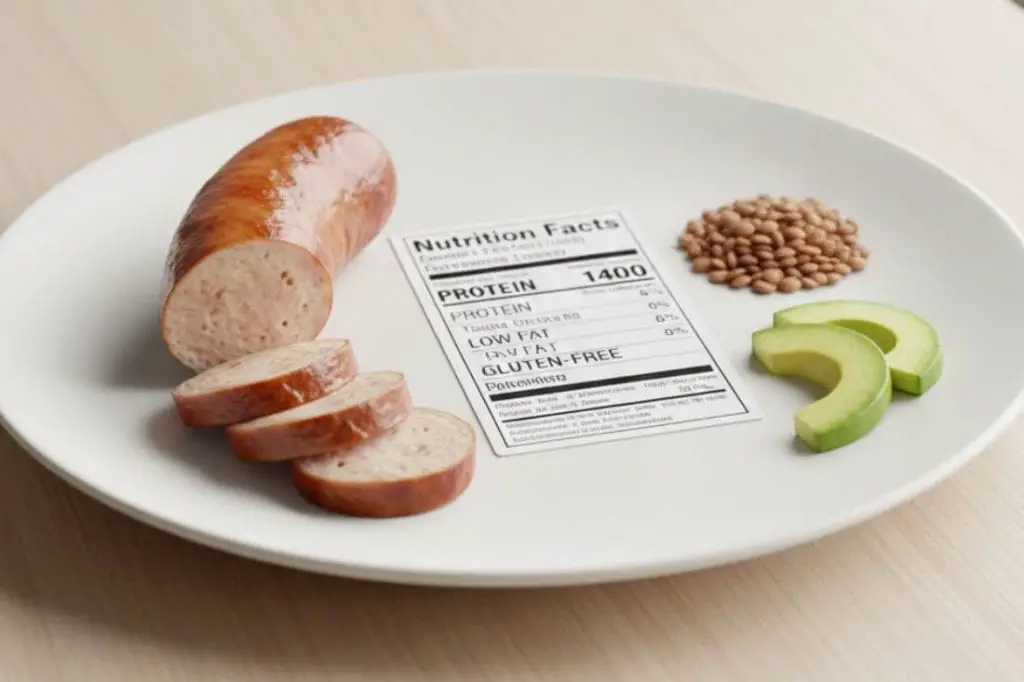
When you pick a clean, gluten-free chicken sausage, you are usually getting a solid source of lean protein.
Chicken sausage tends to be lower in saturated fat than many pork or beef sausages, which makes it a practical choice if you want something lighter but still filling, especially for those looking for health-conscious chicken sausage options that fit into a cleaner eating style.
A typical link often has around 13 to 20 grams of protein, enough to anchor a meal and help keep you satisfied.
The main nutrition concern, gluten-free or not, is usually sodium. Processed meats rely on salt for both flavor and preservation, so it is common to see 500 to 800 milligrams of sodium in a single link.
If you are trying to limit salt, look for products labeled lower sodium or consider making your own sausage so you can decide exactly how much salt to add.
Choosing gluten-free sausages with short, clear ingredient lists helps keep your meals straightforward and easier to trust.
When you pair the sausage with plenty of vegetables and a whole grain like brown rice or quinoa, you end up with a balanced plate that feels both practical and enjoyable.
A Quick Guide to Gluten-Free Chicken Sausage
| Situation | Recommendation | Key Action |
| Buying at the Store | Look for certified gluten-free brands. | Read the label for a certification seal and check the ingredient list. |
| Dining Out | Ask detailed questions about ingredients and preparation. | Inquire if sausages contain fillers and if they are cooked on a shared grill. |
| Making at Home | Use plain ground chicken and single-ingredient spices. | Avoid pre-mixed seasoning blends and use gluten-free binders if needed. |
FAQ
How can I tell if chicken sausages are gluten free when shopping?
Many shoppers ask is chicken sausage gluten free because ingredients vary by brand. When buying gluten free chicken sausage, read labels carefully and look for gluten free chicken sausage certified statements.
Check for gluten-free chicken sausage ingredients that avoid wheat fillers, breadcrumbs, or malt extract.
Label reading matters because gluten free chicken sausage cross contamination can happen in shared gluten free chicken sausage manufacturing practices at a processing facility.
What ingredients should I avoid to make sure the sausage is safe for celiac disease?
People who need gluten free chicken sausage for celiac should avoid any seasoning blend or binder that contains gluten. A careful gluten free chicken sausage additive check can prevent exposure to unsafe fillers.
Look for gluten free chicken sausage no wheat fillers, gluten free chicken sausage no breadcrumbs, and gluten free chicken sausage no gluten seasoning. Safe binders include potato starch, rice flour, tapioca starch, or corn starch.
Are store-bought sausages safer than homemade for gluten-sensitive diets?
Store-bought products can be safe, but risks vary by brand. Gluten free chicken sausage packaging with clear labels helps shoppers choose carefully.
Many gluten free chicken sausage brands follow labeling laws, while gluten free chicken sausage deli counter options may face higher contamination risk from shared tools.
Homemade gluten free chicken sausage offers more control, but clean equipment is still needed to prevent gluten free chicken sausage cross contamination.
How can I use gluten free chicken sausage in everyday meals?
Gluten free chicken sausage options work for many meals, including gluten free chicken sausage breakfast dishes, lunches, and dinners.
You can serve gluten free chicken sausage patties in the morning, use gluten free chicken sausage pasta substitute ideas at dinner, or pack gluten free chicken sausage snack portions for busy days.
Family meals often include gluten free chicken sausage pizza topping, salad addition, stir fry, or gluten free chicken sausage grilling for weekend meals.
Are gluten free chicken sausages healthy for kids and special diets?
Parents often choose gluten free chicken sausage kid friendly options for household meals. A gluten free chicken sausage protein source supports gluten free chicken sausage for sensitive diet needs, including diabetic friendly and keto friendly choices.
Always check gluten free chicken sausage nutrition, especially low sodium or clean label options.
Some products are preservative-free, halal gluten free, and suitable for gluten free chicken sausage toddler friendly serving sizes.
Navigating Chicken Sausage with Confidence
Chicken sausage can absolutely fit into a gluten-free diet when you know what to watch for. The risk rarely comes from the chicken itself, but from fillers, seasonings, casings, and how the product is made.
When you get used to reading labels closely, choosing certified gluten-free options, and thinking about cross-contamination, it becomes much easier to find safe brands.
If you want complete peace of mind, homemade sausage is a strong option, since you control every ingredient.
That small effort gives you more control and lets you enjoy chicken sausage with real confidence.
References
- https://en.wikipedia.org/wiki/Maltodextrin
- https://pubmed.ncbi.nlm.nih.gov/34753529/
Related Articles
- https://milkwoodrestaurant.com/chicken-sausage-halal-or-haram/
- https://milkwoodrestaurant.com/chicken-sausage-health-benefits/
- https://milkwoodrestaurant.com/chicken-sausage-health-conscious-options/
Was this helpful?

I’m Mary R. Q. , a seasoned professional chef dedicated to elevating home cooking experiences. Through my expertise in the culinary arts, I provide practical cooking tips and insightful reviews of kitchen utensils on my blog, milkwoodrestaurant.com. As a passionate advocate for transforming everyday meals into extraordinary culinary adventures, I aim to empower home cooks with the knowledge and tools they need to create delicious and memorable dishes. I’m also an author of the book “1,001 Kitchen Tips & Tricks: Helpful Hints for Cooking, Baking, and Cleaning (1,001 Tips & Tricks)” which is sold on Amazon. Join me on a flavorful journey as we explore the art of cooking and the essential tools that make it a joy.





![Preparing [champ chicken sausage] - raw sausages boiling in a pot and cooking in a pan.](https://milkwoodrestaurant.com/wp-content/uploads/2026/02/image-1-4-150x150.jpg)
