Think chicken sausage is a healthy food? Chicken sausage is usually not a healthy food because it’s processed meat and often contains 600–700 mg sodium per link, depending on the brand.
It’s processed meat. But if you’re going to eat sausage, the chicken kind is usually better for you than pork or beef.
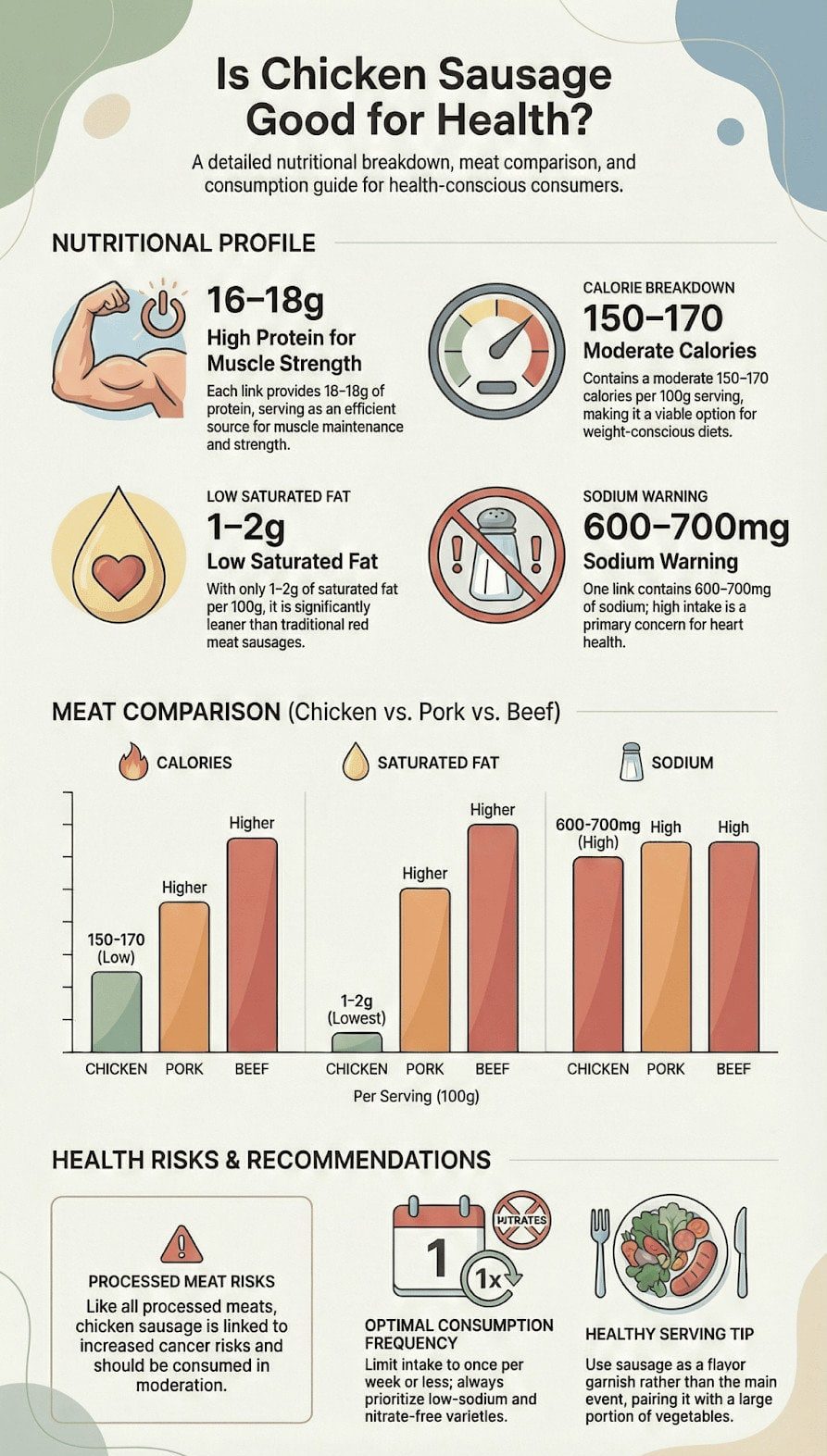
Chicken sausage is usually lower in calories (150–170 per 100g) and saturated fat (1–2g per 100g) than pork sausage. One link gives you a good hit of protein, too,around 16 to 18 grams.
The main issue is sodium and preservatives. Many chicken sausages contain 600–700 mg of sodium per link and added curing agents like nitrates. So it’s an okay choice sometimes, not an everyday food. Want to see the real details behind the label? Keep reading.
Key Takeaways
- It’s usually leaner than pork or beef sausage, with less saturated fat and fewer calories.
- Don’t forget, it’s still processed. That often means a lot of sodium, and sometimes preservatives.
- Think of it as a sometimes-food. Choose chicken sausage with under 400 mg sodium per link, no sodium nitrite/nitrate, and a short ingredient list.
Is chicken sausage healthy compared to other sausages?
Not really, no. It’s processed meat and that’s the core of why it ranks as unhealthy as other processed options. But if you’re going to eat a sausage, chicken is the better bet.
Chicken sausage typically contains 1–2 g saturated fat per 100 g, compared with 8–10 g in pork sausage. Fewer calories, too. That’s the whole reason it gets labeled “healthier.”
The catch is everything else. It’s still packed with sodium, around 600 to 700 milligrams per serving. It still has preservatives like nitrates.
IARC/WHO classify processed meat as Group 1 carcinogen, linking 50g/day to 18% higher colorectal cancer risk. [1]
So you’re choosing a less harmful option, not a healthy one.
What is the nutritional profile of chicken sausage?
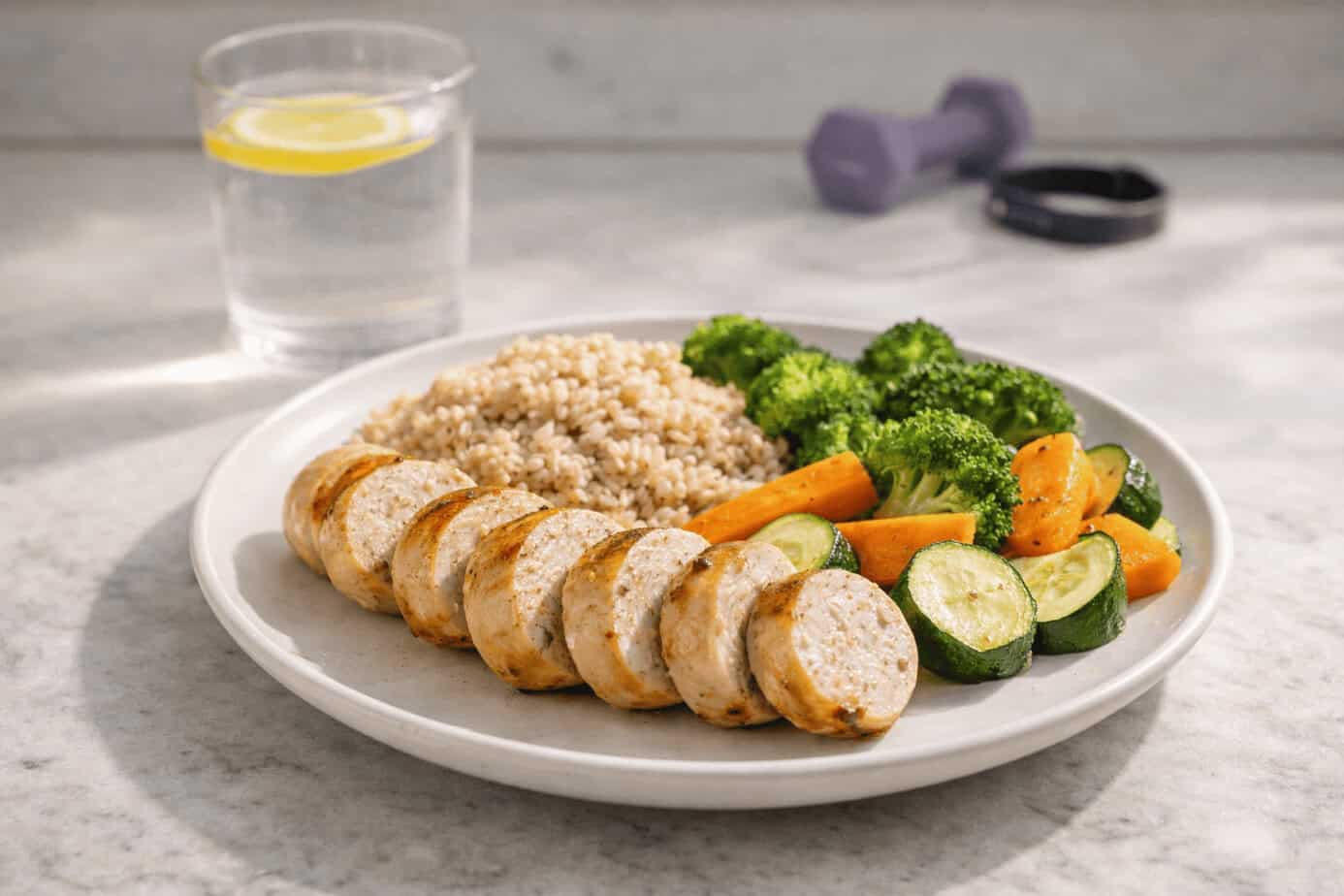
You get a solid hit of protein, about 16 to 18 grams per link. That’s useful if you’re trying to build muscle or just stay full longer. Chicken sausage provides small amounts of vitamin B12, iron, selenium, and phosphorus, but amounts vary widely by recipe
Chicken sausage usually contains less saturated fat than pork sausage, but total fat depends on whether skin or dark meat is included.
Now for the bad part: the salt. Many chicken sausages contain 600–700 mg sodium per link, although lower-sodium options under 400 mg exist. If you eat these often, that sodium adds up and can push your blood pressure higher.
What you buy makes a big difference, too.
- Sausages made from white meat are lower in fat but can be dry and bland.
- Ones with dark meat or skin are tastier but have more calories.
- Some varieties include apple or spinach, but fiber usually stays low at about 1–2 g per link.
The protein content is the main selling point, but the sodium and specific ingredients are what you need to watch. The brand you choose changes everything.
What are the potential health benefits of chicken sausage?
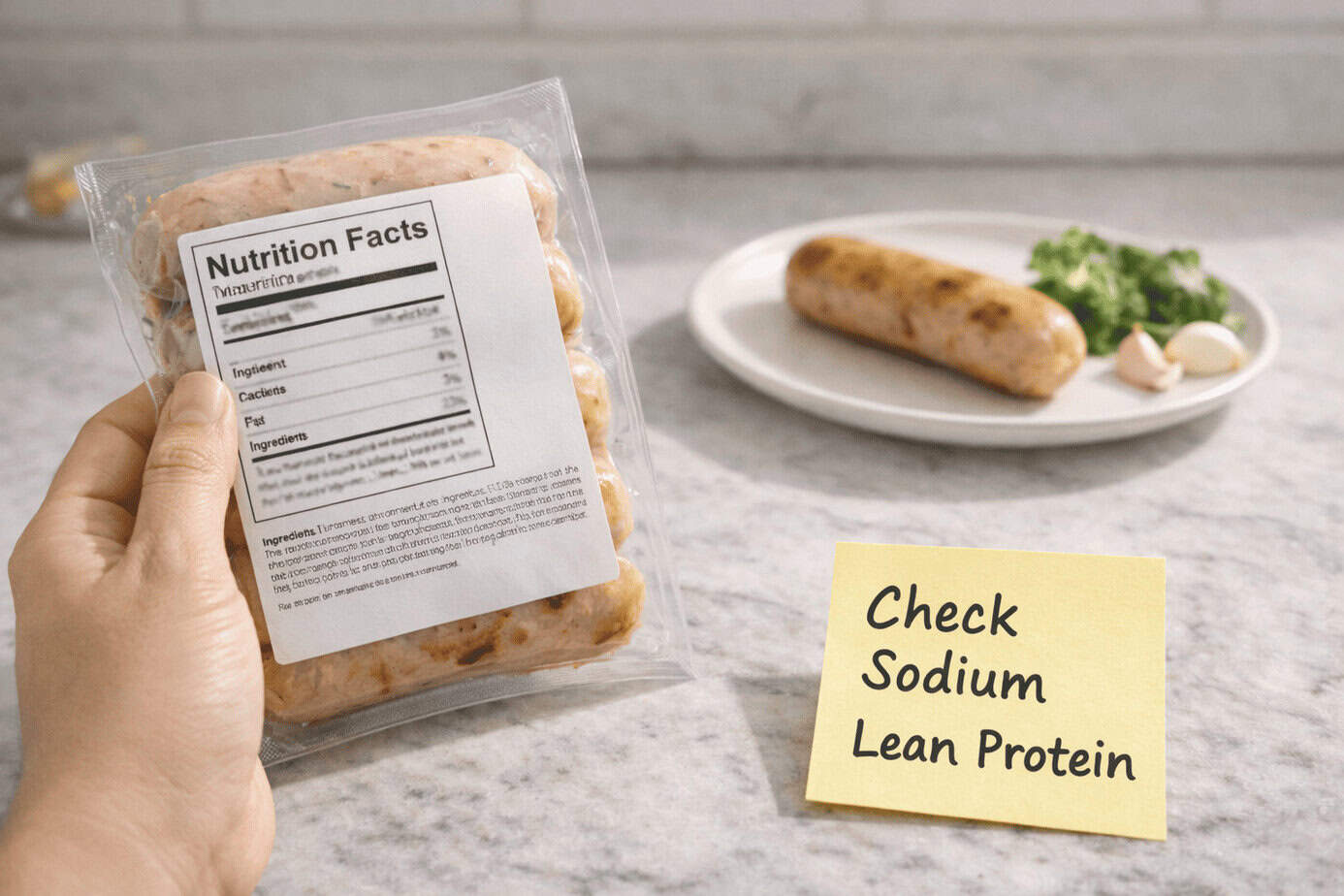
It’s not a healthy food, but the protein can be helpful.
A 16–18 g protein link can improve fullness and help reduce snacking compared with a low-protein breakfast. That’s the main value, though if you’re thinking about overall food choices, it’s worth remembering the distinction between quick hits of protein and genuine health benefits.
Chicken meat is naturally lean, but chicken sausage can still be high in sodium because salt is added during processing. Whether you’re looking for a healthy alternative to traditional pork or are aiming to be more health-conscious, chicken sausage provides you with the added assurance of a tasty meal at only a fraction of the fat content. [2]
A typical link contains about 140–180 calories depending on fat content and fillers. Most chicken sausages provide about 16–18 g protein per link, which supports muscle maintenance during calorie restriction.
Chicken sausage provides iron, especially if made with dark meat, but usually less than beef sausage. Some varieties include things like spinach or apples, offering a minor nutrient bump. Don’t rely on the spices for major health claims, though.
The strategy is to use it as an accent, not the foundation. Don’t make a meal of sausage; add a little sausage to a meal.
Here are a few concrete ways to do that:
- Dice it into a veggie-heavy omelet or scramble for breakfast.
- Toss slices onto a sheet pan with a mountain of broccoli, bell peppers, and zucchini to roast.
- Use a few slices as a savory, protein-rich topping for a big green salad.
This way, you get the flavor and protein benefit without letting the sodium and processed nature of the food take over your plate.
What are the health risks of eating chicken sausage?

Credits: Food that warms your soul
Chicken sausage is not ideal as a daily protein source because it is processed and often high in sodium. The science on this is pretty straightforward.
First, the cancer link is serious. The WHO/IARC reports processed meat is linked to higher colorectal cancer risk, with 50 g per day associated with an 18% increase.
Some ‘uncured’ sausages use celery powder as a nitrate source, which can still form nitrites during processing.
Then there’s your blood pressure. One link has a shocking amount of salt, a 600–700 mg link can provide about 30% of the 2,300 mg daily sodium limit recommended for many adults. Eating 600–700 mg sodium per link regularly can push total intake above the 2,300 mg/day limit, increasing hypertension risk.
Regular intake of processed meats is associated with higher LDL cholesterol and inflammation markers compared with whole foods. Even though it’s better than pork, chicken sausage still tends to raise your bad cholesterol and inflammation markers more than just eating a piece of grilled chicken or some lentils would.
And yeah, cook chicken sausage to an internal temperature of 165°F (74°C) to reduce foodborne illness risk.
The bottom line? The risks come from the processing itself,the preservatives, the salt mountain, and how your body handles it all. It can fit occasionally, but frequent intake increases long-term risk because of sodium and processing.
How does chicken sausage compare with whole food alternatives?
Let’s be honest. You don’t eat chicken sausage for top-tier nutrition. You eat it because it’s easy and tastes good.
But if nutrition is the goal, other options blow it out of the water. A simple chicken breast is the protein king here.
For the same amount of food, you get almost twice the protein,31 grams,with a tiny fraction of the sodium. Whole chicken breast contains no curing additives and is not classified as processed meat.
Want to avoid meat processing entirely? A cup of cooked lentils provides about 15g fiber, which supports gut health and blood sugar control.
You won’t get B12 from them, but you also won’t get any of the chemicals.
Here’s what you’re really choosing between:
| Protein Source | Protein (g) | Sodium (mg) | Processing Level | Cancer Risk |
| Chicken sausage | 16–18 | 600–700 | Medium-high | Elevated |
| Chicken breast | 31 | <100 | None | Not linked the same way as processed meat |
| Lentils | 9 | <10 | None | Not linked the same way as processed meat |
The sausage sits in an awkward middle. It has more protein than lentils but comes with a heavy cost in salt and processing.
It has less protein and more problems than plain chicken. It’s a compromise food, not a healthy food.
How often should you eat chicken sausage and what should you look for?
Alright, final take. If you’re going to eat chicken sausage, here’s how to do it without kidding yourself.
Limit chicken sausage to once per week or less if you eat other processed meats. That’s the only way to somewhat limit the cancer and heart risks from the processing and salt.
Buying it is a chore. You have to scrutinize the label. Look for:
- “Nitrate and nitrite free” on the label.
- Less than 400mg of sodium per link.
- No MSG or weird preservatives.
- A clear statement of what meat is inside.
Then, when you cook it, balance the plate. Serve it with potassium-rich foods, think a mountain of kale, a baked potato, or a heap of black beans.
The potassium helps offset the blood pressure spike from all that sodium. And for heaven’s sake, just eat one. A single link is enough.
FAQ
Is chicken sausage actually healthy compared to other sausages?
Chicken sausage is usually viewed as a “better” choice because it has fewer calories and less saturated fat, but that doesn’t always mean it’s good for you in a nutrition-first context.
Still, always check the label because processed meat health concerns depend on sodium and additives.
How many calories and macros are in chicken sausage?
Chicken sausage calories vary depending on ingredients, but most servings are moderate in calories and high in protein (E.g., 140-180kcal per 85g link; track macros by checking the nutrition label and logging servings in a food diary.). Many people choose it as a high protein sausage because it supports fullness and muscle maintenance.
If you track fitness goals, review the chicken sausage macros on the label. Some versions are also a good low calorie sausage choice for dieting.
Can chicken sausage help with weight loss or dieting?
Yes, chicken sausage weight loss goals can work if portion sizes are controlled.
It can fit a chicken sausage diet because it is filling and often works as a lean protein sausage. The key is choosing healthy chicken sausage with lower sodium and fewer fillers.
Pair it with vegetables for better balance and improved chicken sausage satiety.
Is chicken sausage bad because it is processed meat?
Not always, but sausage processing concerns matter. Some sausages contain preservatives linked to sausage health risks and sausage cancer risk discussions.
If you are concerned about processed meat health, look for uncured chicken sausage or nitrate free sausage options. Also check chicken sausage ingredients for additives and keep intake moderate for long-term safety.
What should I look for on labels when buying chicken sausage?
Focus on clean ingredients and clear nutrition facts. Check sodium in sausage, since high sodium can affect sausage blood pressure and sausage heart health.
Choose products labeled preservative free sausage or clean label sausage when possible. If you have sensitivities, pick gluten free sausage.
Also avoid heavy fillers and prioritize real spices and quality protein.
The Real Deal on Chicken Sausage
Yes, it’s leaner than pork or beef sausage. You’ll get less saturated fat and a good amount of protein. That’s the only reason it gets called a “better” option.
But it’s processed meat. That single fact comes with serious baggage: a ton of sodium, preservatives like nitrates, and a well-established link to a higher risk of certain cancers when eaten regularly.
If you decide to eat it, follow two rules.
- For most people, once per week or less is a reasonable upper limit.
- Use it as a garnish, not a main course. Chop half a link into a mountain of roasted vegetables or a big salad for flavor.
For the protein that actually supports your health long-term, skip the processed middleman. Go for grilled chicken breast, fish, eggs, or plant-based proteins like lentils and beans.
They give you the nutrients without the hidden costs. Chicken sausage is a tasty compromise, not a nutritional strategy.
References:
- https://www.who.int/news-room/questions-and-answers/item/cancer-carcinogenicity-of-the-consumption-of-red-meat-and-processed-meat/
- https://www.premiofoods.com/why-choose-chicken-sausage/
Related Articles:
- https://milkwoodrestaurant.com/chicken-sausage-health-benefits-and-nutrition/
- https://milkwoodrestaurant.com/is-chicken-sausage-unhealthy/
- https://milkwoodrestaurant.com/is-chicken-sausage-good/
Was this helpful?

I’m Mary R. Q. , a seasoned professional chef dedicated to elevating home cooking experiences. Through my expertise in the culinary arts, I provide practical cooking tips and insightful reviews of kitchen utensils on my blog, milkwoodrestaurant.com. As a passionate advocate for transforming everyday meals into extraordinary culinary adventures, I aim to empower home cooks with the knowledge and tools they need to create delicious and memorable dishes. I’m also an author of the book “1,001 Kitchen Tips & Tricks: Helpful Hints for Cooking, Baking, and Cleaning (1,001 Tips & Tricks)” which is sold on Amazon. Join me on a flavorful journey as we explore the art of cooking and the essential tools that make it a joy.
![Preparing [champ chicken sausage] - raw sausages boiling in a pot and cooking in a pan.](https://milkwoodrestaurant.com/wp-content/uploads/2026/02/image-1-4-150x150.jpg "Champ Chicken Sausage: What It’s Made Of & Why It’s Popular 5")