You can eat chicken sausage, but timing matters more than you think. That convenient protein pack sitting in your fridge offers a leaner alternative to pork, because it is often lower in fat, but amounts vary by brand. Yet it’s still a processed meat, carrying sodium and preservatives that demand strategic consumption. The best times slot into post-workout recovery, morning meals for sustained energy, and balanced lunches. Limit it at night or keep the portion small.
Getting the timing right lets you enjoy the flavor without compromising your health goals. Keep reading to understand the specific windows that turn this common food into a smart choice.
Key Takeaways
- Fuel recovery after exercise: Chicken sausage provides protein for muscle repair when paired with carbs.
- Prioritize morning and daytime: Eating it for breakfast or lunch helps with fullness and energy use.
- Limit evening and frequent use: Late-night consumption can affect sleep, and daily intake increases health risks.
Best Times to Eat Chicken Sausage
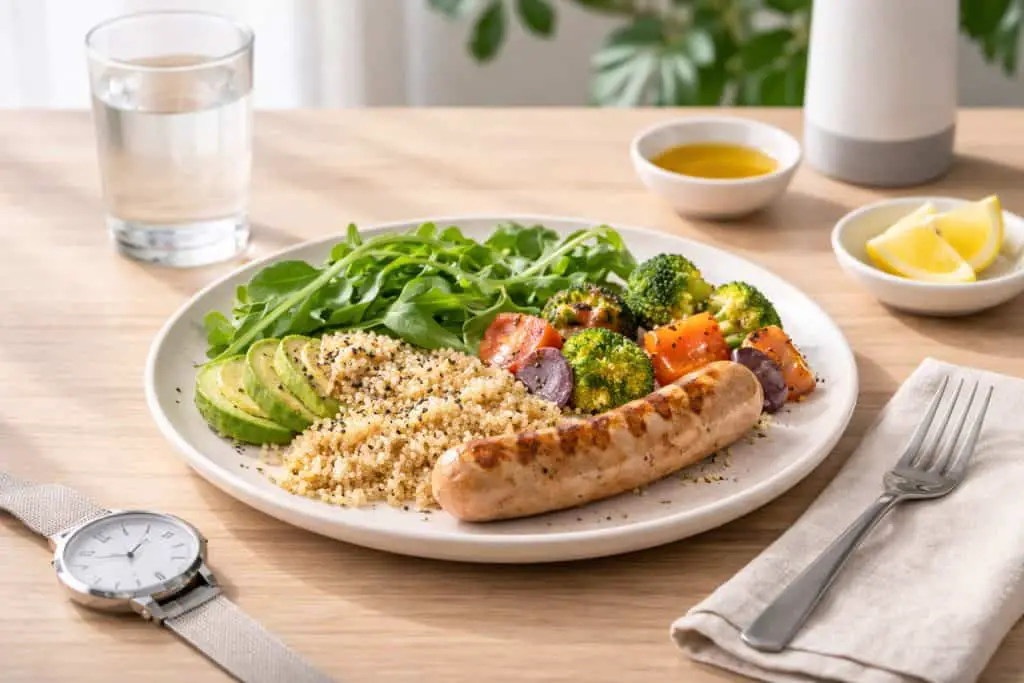
The Post-Workout Window: Repair and Replenish
After you push through a tough workout, your muscles are eager for repair. This is when chicken sausage can serve a real purpose. The protein it contains (typically around 12–18 grams per sausage, depending on the brand) helps stop muscle breakdown and kickstart recovery. Your body is primed to use those nutrients effectively. It’s important to mention that while protein post-exercise supports recovery, the optimal window may be hours long, not minute-by-minute.
Think of it as building material for the damage done during exercise. You wouldn’t want to waste that opportunity. Pairing it with a carbohydrate source is key. Something like sweet potatoes or whole-grain bread helps replenish the energy stores you just burned through. This combination supports glycogen restoration, prepping you for your next session.
It’s a practical choice for a quick meal after the gym. Just grill a piece and slice it over a bowl of quinoa with some roasted vegetables, making sure it reaches a safe chicken sausage internal temp so the protein is both effective and properly cooked. You get a balanced plate without much fuss.
- Ideal post-workout pairings:
- Sweet potato and greens
- Brown rice or quinoa bowl
- Whole-grain pasta with vegetables
Breakfast and Lunch: For Sustained Energy and Fullness
Mornings are a strong contender for chicken sausage. Your body has been fasting overnight, and a hit of protein can set a stable metabolic tone for the day, which is why many people wonder if it’s actually good for you when compared to heavier breakfast meats.[1]
You see it often on brunch menus for a reason. It provides a savory, satisfying element that eggs alone sometimes can’t match. The key is to integrate it into a larger, fibrous meal. A couple pieces of sausage alongside a veggie-packed omelet and a slice of whole-grain toast make for a complete plate. The fiber from the vegetables and whole grains helps balance the absorption of fat and sodium.
Lunch follows a similar logic. It’s a time when you need fuel to power through the afternoon without feeling fatigued. Adding sliced chicken sausage to a large salad or a stir-fry with plenty of colorful veggies turns it into a supporting player, not the main event. This approach gives you the protein benefit while cutting the processed aspects with fresh, nutrient-dense foods.
| Time of Day | Is It a Good Choice? | Why It Works (or Doesn’t) |
| Post-Workout | Yes | Protein supports muscle repair, especially when paired with carbohydrates |
| Breakfast | Yes | Helps control appetite and provides sustained energy for the day |
| Lunch | Yes | Supports fullness and prevents afternoon energy crashes |
| Dinner | Limit | Higher fat and sodium may affect digestion and sleep |
| Late Night | Avoid | Less energy use, higher chance of discomfort or poor sleep |
The Meals to Approach with Caution
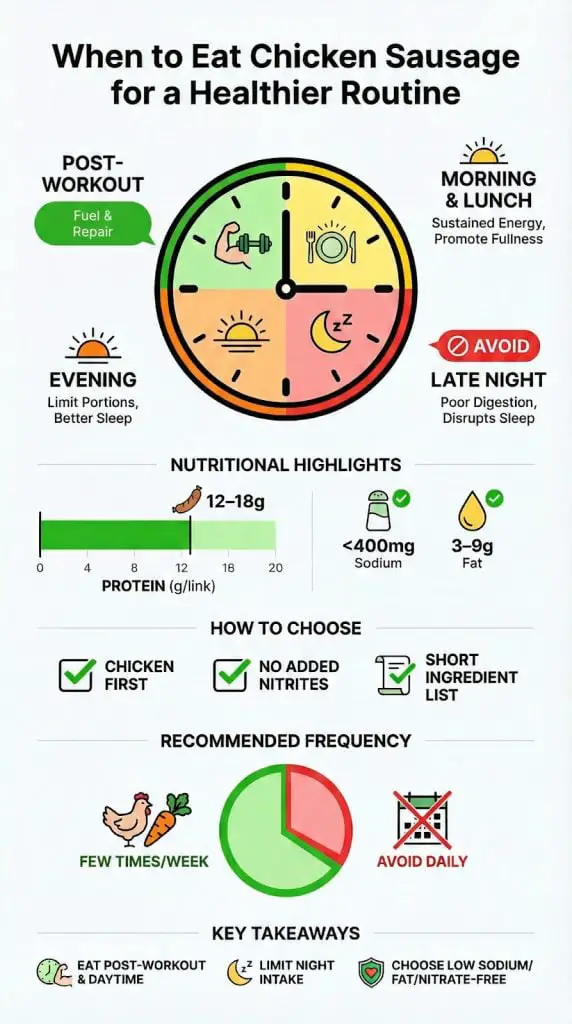
Evenings are when chicken sausage loses its appeal. Your body is winding down, and metabolism naturally slows. A meal high in fat and sodium right before bed can lead to digestive discomfort or reflux for some people, so many feel better keeping heavier meats earlier in the day. Heavy or high-sodium meals at night can affect digestion and sleep; lighter protein sources may be preferable.
Those calories can go unused for immediate energy, especially if activity levels are low. It can also go to storage if you’re relaxing after dinner. If you do have it at night, keep the portion small, maybe half a sausage sliced into a soup, and eat it at least two hours before you plan to sleep. This gives your body a head start on processing it.
The frequency of consumption is perhaps the most critical factor. Health organizations recommend minimizing regular intake of processed meats, which raises valid concerns about how bad chicken sausage can be when it becomes a daily habit instead of an occasional choice.[2]
Reserve it to a few times per week at most. On other days, choose unprocessed options like grilled chicken breast, fish, eggs, lentils, or tofu. This pattern significantly reduces any associated long-term risks while still allowing for culinary enjoyment.
Making a Smarter Sausage Choice

Not all chicken sausages are created equal. The variations between brands can be dramatic, turning a questionable choice into a reasonably healthy one. Your first move should always be to read the label. Look for chicken as the first ingredient, not a list of fillers or starches.
A label stating ‘no added nitrites except those naturally occurring in celery’ can indicate an alternative curing method, but these products still contain nitrites and should be eaten in moderation. Nitrites, along with high sodium and saturated fat, contribute to why processed meats carry stronger health warnings than fresh meats. Some brands use natural alternatives like vinegar and celery juice.
Aim for options with less than 400mg of sodium per serving to keep your daily intake in check. The fat content is usually lower than pork sausage; aiming for options with roughly 3–9 grams of total fat per link keeps you in a leaner range. Finally, consider the processing level. A shorter ingredient list is almost always better. It indicates a product closer to plain meat and spices, which is what you’re after.
- Label checklist:
- Chicken is the first ingredient
- Nitrate-free or no added nitrites
- Aim for under 400mg of sodium per link if possible
- Short, recognizable ingredient list
What to Look for on a Chicken Sausage
| Nutrition Factor | Better Choice | Why It Matters |
| Main Ingredient | Chicken listed first | Indicates higher real meat content |
| Sodium | Under 400 mg per link | Helps control blood pressure and water retention |
| Total Fat | 3–9 g per link | Keeps calories and saturated fat moderate |
| Nitrites | No added nitrites (or limited) | Reduces exposure linked to health risks |
| Ingredients List | Short and recognizable | Signals less processing |
FAQ
When is the best time to eat chicken sausage during the day?
The most practical times are breakfast, lunch, or a post‑workout meal. It all depends on your routine and energy needs. You can eat chicken sausage for breakfast with eggs or in a breakfast sandwich. Eating it after a workout helps replace protein. If you choose to eat it at dinner, keep portions modest and pair it with lighter, high‑fiber sides.
Is chicken sausage healthy for weight loss and active lifestyles?
Generally, a healthy chicken sausage depends on nutrition and portions. For weight loss, choose a low-fat or low-sodium chicken sausage. Chicken sausage nutrition provides protein, which supports muscle repair. Additionally, while protein helps satiety and muscle, the processed nature means other lean proteins (chicken breast, legumes) are generally healthier.
What are the healthiest ways to eat chicken sausage in meals?

Credits: That Recipe
The healthiest way to eat chicken sausage focuses on cooking methods and sides. Baking, boiling, air‑frying, or light pan‑frying with minimal oil are generally healthier than deep‑frying, because they avoid large amounts of added fat and very high cooking temperatures. You can also pair chicken sausage with vegetables, quinoa, or salad for a healthier way to eat them.
Overall, a healthier chicken sausage meal keeps added fats, creamy sauces, and charring to a minimum and leans heavily on vegetables and whole grains.
How often can you eat chicken sausage, and is daily eating okay?
How often to eat chicken sausage depends on the portion size and the calories in the sausage. Because chicken sausage is still a processed meat, daily long‑term use is not recommended; using it occasionally while relying mainly on unprocessed proteins fits better with current health guidelines. Comparing chicken sausage vs pork sausage helps limit saturated fat. Breakfast vs dinner chicken sausage both fit balanced meals.
What easy meal ideas work for different occasions and ages?
Chicken sausage meal ideas fit many schedules and needs. Chicken sausage breakfast ideas include omelets, breakfast burritos, and brunch. For a quick chicken sausage meal, you can try chicken sausage weeknight dinners, pasta dinner, or a rice bowl. Chicken sausage ideas for kids are a lunchbox meal. Best occasions for chicken sausage include party appetizers and simple snack ideas.
Making Chicken Sausage a Smart, Timed Choice
The question of when to eat chicken sausage boils down to context. It’s a useful, flavorful protein when used strategically, primarily after exercise or earlier in the day alongside plenty of whole foods. Its processed nature means it deserves a place on the “sometimes” list, not the everyday menu. By choosing higher-quality, minimally processed versions and being mindful of the clock, you can enjoy it without guilt. Your body will thank you for the thoughtful timing.
References
- https://www.realsimple.com/reasons-you-should-always-start-your-day-with-protein-11753560
- https://www.aicr.org/cancer-prevention/food-facts/processed-meat/
Related Articles
- https://milkwoodrestaurant.com/chicken-sausage-internal-temp/
- https://milkwoodrestaurant.com/are-chicken-sausages-good-for-you/
- https://milkwoodrestaurant.com/how-bad-is-chicken-sausage-for-you/
Was this helpful?

I’m Mary R. Q. , a seasoned professional chef dedicated to elevating home cooking experiences. Through my expertise in the culinary arts, I provide practical cooking tips and insightful reviews of kitchen utensils on my blog, milkwoodrestaurant.com. As a passionate advocate for transforming everyday meals into extraordinary culinary adventures, I aim to empower home cooks with the knowledge and tools they need to create delicious and memorable dishes. I’m also an author of the book “1,001 Kitchen Tips & Tricks: Helpful Hints for Cooking, Baking, and Cleaning (1,001 Tips & Tricks)” which is sold on Amazon. Join me on a flavorful journey as we explore the art of cooking and the essential tools that make it a joy.







![Preparing [champ chicken sausage] - raw sausages boiling in a pot and cooking in a pan.](https://milkwoodrestaurant.com/wp-content/uploads/2026/02/image-1-4-150x150.jpg)
