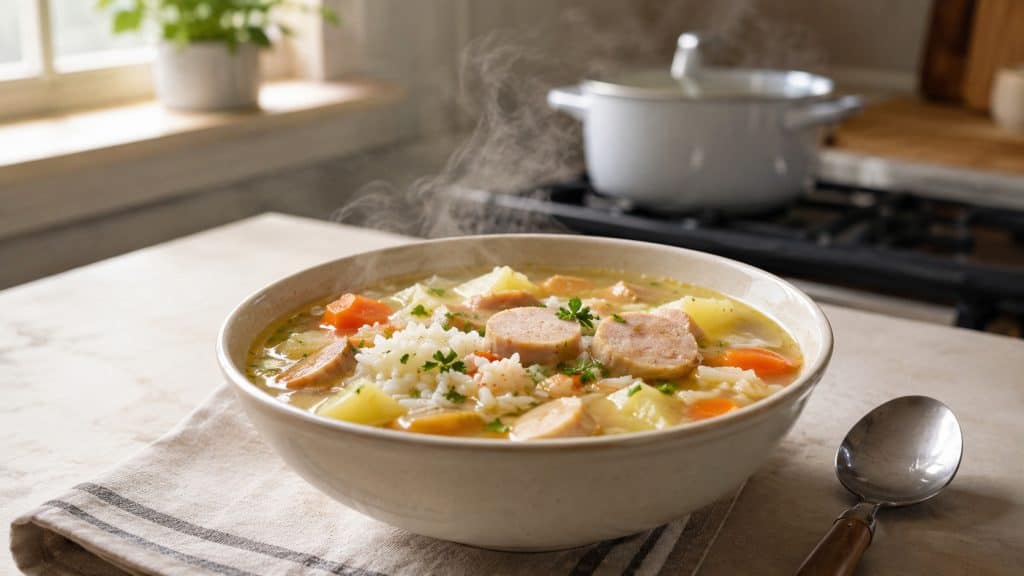
Chicken sausage and rice soup is a quick, one-pot dinner ready in about 35 minutes. It packs lean protein, rice, and vegetables into a single, flavorful bowl.
For a reliable weeknight meal, you can easily swap ingredients or adjust the cooking method. Here’s how to make it, plus tips for storage and variations.
Why Chicken Sausage and Rice Soup Is a Smart Choice
- Creates a complete meal in one pot with protein, vegetables, and grains.
- Works well for meal prep and freezer meals when prepared correctly.
- Offers flexible ingredients for different diets and flavor preferences.
Chicken Sausage and Rice Soup for Easy Family Dinners
Chicken sausage and rice soup works for family dinners because it’s balanced, uses one pot, and cooks in about 35 minutes. The sausage itself builds the flavor; varieties like Italian or smoked season the broth directly. Common ingredients like broth, rice, onions, carrots, and celery form the base, while extras like spinach can be added freely.
A critical technique for better flavor is browning the sausage first. This creates fond, the browned bits in the pot. Cooking teachers always say not to skip this step, as deglazing with broth dissolves the fond, creating a richer base without extra spices.
The soup is valued for meal prep, affordability, and customization, making it a reliable choice across seasons.
Benefits of Chicken Sausage
Chicken sausage contains significantly less fat than many traditional pork sausages while still providing savory flavor. USDA data shows that the leanest pork cuts (like pork tenderloin) contain roughly 1.02g of saturated fat per 3-ounce serving, which is often leaner than or equal to many poultry products.
Italian chicken sausage brings fennel and herbs.
Smoked chicken sausage contributes deeper smoky notes.
Cajun varieties create spicy warmth without needing multiple seasonings.
Roasted garlic versions build aromatic flavor directly into the broth.
Because these seasonings are already blended into the sausage, this chicken sausage soup recipe develops complexity much faster than traditional homemade chicken soup.
Ideal for Meal Prep and Leftovers
Several groups appreciate this recipe because it balances convenience with satisfying flavor.
- Busy families needing a complete dinner.
- Beginners cook learning one pot meals.
- Meal preppers preparing lunches.
- Comfort food lovers seeking a lighter alternative.
- Anyone wanting a healthy chicken sausage soup without sacrificing taste.
That versatility makes the recipe practical throughout every season.
Recipe Ingredients Chicken Sausage and Rice Soup
Simple ingredients create the best flavor because each one contributes structure, aroma, and richness without overwhelming the broth. Using quality stock and fresh vegetables makes a noticeable difference in the finished soup.
The ingredient list stays approachable while allowing plenty of substitutions.
| Ingredient | Purpose | Easy Substitute |
| Chicken sausage | Protein and seasoning | Turkey sausage |
| Rice | Body and texture | Brown rice or wild rice |
| Chicken broth | Flavor base | Vegetable broth |
| Onion, celery, carrots | Mirepoix foundation | Frozen mirepoix mix |
| Garlic | Aromatics | Garlic powder |
| Fresh herbs | Bright finish | Italian seasoning |
One pot is all most cooks need to prepare the complete meal. These recipes similarly emphasize straightforward ingredients that maximize flavor without unnecessary complexity.
The broth deserves special attention because it carries every ingredient. Homemade chicken sausage stock creates exceptional depth, although quality boxed broth performs well for weeknight dinners.
Several vegetables consistently perform best.
- Onion
- Celery
- Carrots
- Garlic
- Fresh thyme
- Parsley
These ingredients create the classic backbone of homemade chicken sausage soup before optional additions like mushrooms, kale, spinach, zucchini, corn, or beans enter the pot.
Before selecting rice, remember that each variety cooks differently.
Best Rice for Soup
Rice dramatically changes both cooking time and texture.
White rice cooks quickly and produces a softer soup.
Jasmine rice contributes floral aroma while remaining tender.
Brown rice stays pleasantly chewy and works especially well for leftovers.
Wild rice blends remain firm during long simmering and are ideal for chicken sausage and wild rice soup.
Arborio rice naturally releases starch, producing a creamier consistency without adding dairy.
That said, experienced home cooks often choose brown or wild rice when preparing soup for several days of meals because those grains resist becoming overly soft.
Picking the Best Chicken Sausage
Each sausage style changes the finished flavor.
- Fresh Italian sausage develops deeper fond while browning.
- Smoked chicken sausage cooks faster because it is already fully cooked.
- Mild sausage keeps the broth family friendly.
- Spicy sausage adds heat without extra seasoning.
- Herb varieties create a more traditional rustic soup.
Fresh sausage rewards cooks with richer caramelization, while smoked sausage offers unmatched convenience for an easy chicken sausage soup after work.
Step-by-Step Cooking Chicken Sausage and Rice Soup
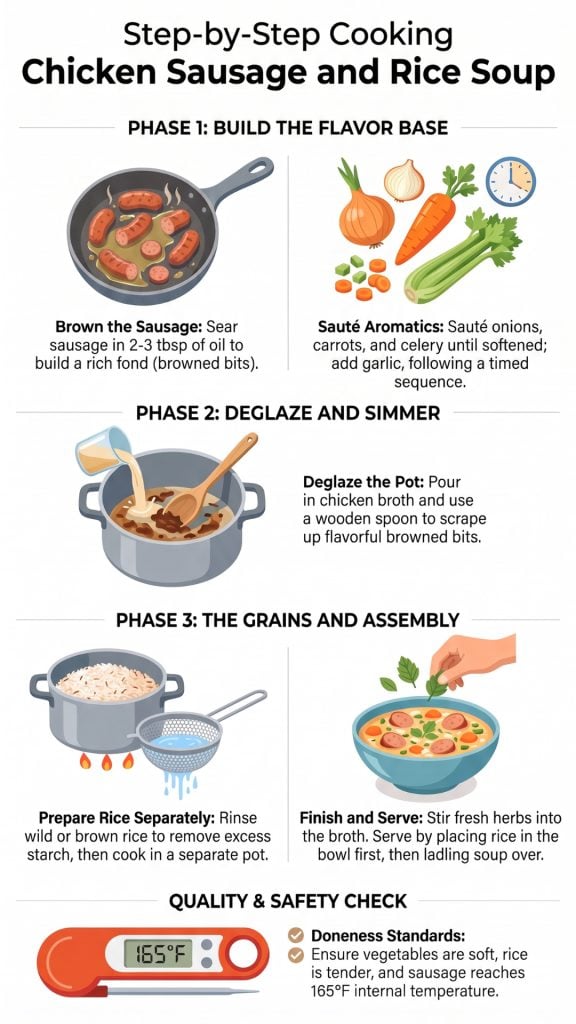
The process follows a logical sequence: brown the sausage, cook the vegetables, simmer the broth, and finish with herbs. This order develops flavor efficiently.
First, the sausage is browned. Sliced or crumbled chicken sausage is cooked in the soup pot over medium-high heat until colored. America’s Test Kitchen has shown this step makes soups taste richer.
This creates fond, the caramelized bits on the pot’s bottom. Because chicken sausage is lean, while oil is needed, one tablespoon is generally insufficient to compensate for the ultra-lean nature of modern chicken sausage if you want to build a proper fond and sauté a full mirepoix. 2-3 tablespoons is standard in practice.
Next, the vegetables are sautéed. After removing the sausage, chopped onions, carrots, and celery are cooked in the same pot until softened. Minced garlic is added and cooked briefly until fragrant.
Deglazing follows. Chicken broth is poured into the pot, and a wooden spoon is used to scrape up the browned bits. This step, called deglazing, incorporates the fond’s flavor into the liquid.
Rice is prepared separately. Wild or brown rice is cooked in a separate pot, then rinsed aggressively to strip away surface starches.
Finally, the soup is assembled. Fresh herbs like parsley are stirred into the hot broth. Cooked rice is placed in serving bowls, and the hot soup is ladled over the top.
How to know it’s done:
- The vegetables are soft.
- The rice is cooked to your liking.
- The sausage has reached a safe internal temperature of 165°F (74°C), per USDA guidelines.
Best Vegetable Combinations to Add in The Soup?
Start with the classic trio: carrots, celery, and onion. This combination, called a mirepoix, creates a sweet, aromatic base as it cooks. Add minced garlic right after, cooking it for just 30 seconds so it doesn’t burn.
From there, you can build. Aim for 3 to 5 total vegetables for a good mix of texture and color without making the broth too weak. The USDA notes vegetables like carrots and leafy greens add vitamins and fiber to meals.
Pick vegetables that match the sausage’s flavor instead of fighting it. Mushrooms add an earthy taste, while zucchini keeps things light for summer.
Good vegetable choices, by cooking time:
- Add at the start (with onions): Carrots, celery, mushrooms.
- Add at the end (last 2-5 minutes): Spinach, kale, corn, peas, zucchini.
Using seasonal vegetables
You can change the soup with the seasons. Spinach wilts almost instantly. Kale holds its shape better, especially with Italian sausage. Corn or peas add sweetness, and zucchini cooks fast without getting soggy.
One rule: don’t overload the pot. Too many vegetables will water down the broth and hide the flavor from the sausage.
Seasonings for Better Flavor
Layering seasonings throughout cooking produces a richer soup than adding everything at the end. Professional kitchens build flavor gradually, allowing herbs, aromatics, and broth to complement one another instead of competing.
Fresh thyme pairs naturally with chicken sausage because its earthy aroma withstands simmering.
Rosemary contributes woodsy notes, while parsley freshens the final bowl.
Bay leaves quietly deepen the broth during cooking and should be removed before serving.
Importantly, tomato paste deserves more attention than many recipes give it. Browning a tablespoon with the vegetables caramelizes its natural sugars before broth is added. This technique, commonly demonstrated by experienced home cooks on YouTube, produces remarkable depth in less than two minutes.
Seasonings can be adjusted depending on the sausage variety.
- Thyme
- Rosemary
- Parsley
- Bay leaf
- Italian seasoning
Before increasing salt, taste the broth. Most chicken sausage already contains substantial seasoning.
Adjusting the Spice Level
Heat should enhance the soup rather than dominate it.
Cajun seasoning creates a smoky profile.
Crushed red pepper flakes provide adjustable warmth.
Fresh cracked black pepper adds a subtle bite.
Smoked paprika contributes color and richness without overwhelming other flavors.
A spicy chicken sausage soup benefits from restraint because the sausage already carries much of the seasoning.
Creating a Creamy Soup Texture
Yes. Dairy and dairy-free ingredients both create a velvety texture while preserving the soup’s comforting character.
One overlooked challenge with creamy chicken sausage soup is the body. Chicken sausage contains less collagen than bone-in chicken, so the broth naturally feels lighter. Rather than relying only on cream, experienced cooks sometimes blend a small portion of the cooked rice with broth using an immersion blender before stirring it back into the pot. This creates a naturally creamy texture without flour or dairy, a method frequently recommended in experienced cooking communities.
| Ingredient | Result |
| Heavy cream | Rich and luxurious |
| Half-and-half | Lighter consistency |
| Coconut milk | Dairy-free creaminess |
| Cream cheese | Thick and tangy |
Several additions work especially well.
- Parmesan cheese
- Heavy cream
- Coconut milk
- Cream cheese
- Cashew cream
Always stir dairy into the soup during the final few minutes after reducing the heat. This minimizes curdling while preserving a silky finish.
Of course, if preparing a dairy free chicken sausage soup, the blended-rice technique provides surprising richness without masking the herbs or sausage.
Simple Tips for Preventing Mushy Rice Every Time
Control cooking time and store rice separately when preparing leftovers. Rice continues absorbing broth after cooking, a behavior frequently explained by Serious Eats when discussing starch absorption.
The most common complaint across cooking communities is simple. Yesterday’s soup becomes today’s thick paste.
The solution begins before cooking. Rinse rice thoroughly to remove excess surface starch.
Research from Food and Bioprocess Technology shows:
“Cooking methods significantly affect starch release from rice into surrounding liquid. Under non-continuous contact methods, the starch that leaches into rice soup can account for up to 4.84% of the total starch content.” – Food and Bioprocess Technology
Next, consider cooking the rice separately rather than directly in the soup, especially when making meal prep soup.
Experienced home cooks increasingly favor a modular method.
| Cook Rice in Soup | Cook Rice Separately |
| Maximum flavor absorption | Better leftovers |
| One pot convenience | Superior texture |
| Softer next day | Easy reheating |
| May become thick | Consistent broth |
Before reheating leftovers, follow this checklist.
- Store broth and rice separately whenever possible.
- Add rice only when serving.
- Reheat broth first.
- Stir rice into hot soup.
- Add a splash of broth if needed.
That small adjustment preserves texture while maintaining concentrated flavor without watering down the soup.
Smart Storage Methods for Convenient Future Meals
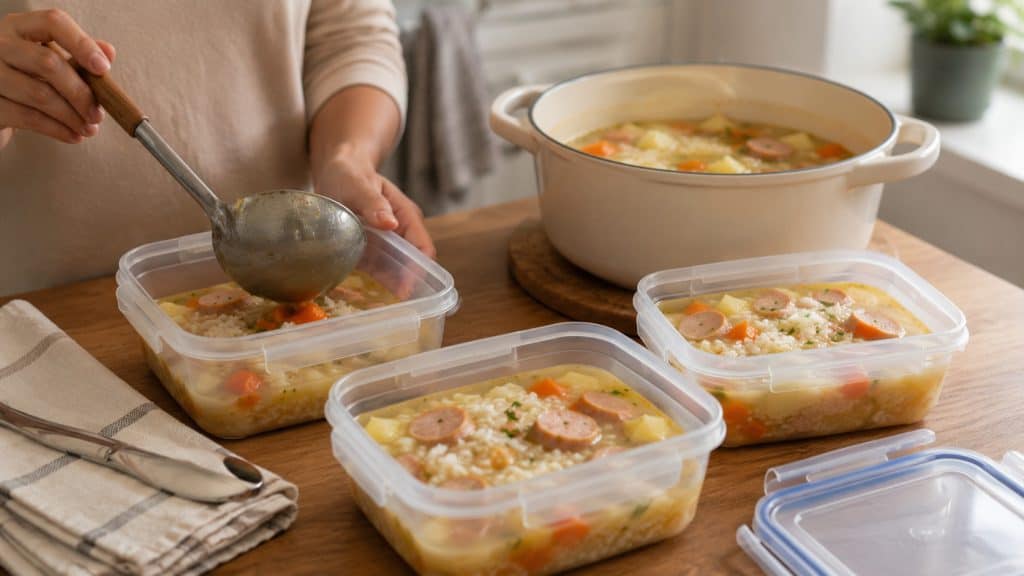
Chicken sausage and rice soup stores exceptionally well with a few simple adjustments.
Allow the soup to cool before refrigerating.
Store rice separately whenever practical.
Freeze creamy versions only after omitting dairy, then stir cream into the reheated soup.
Storage guidelines remain straightforward. Store the soup in an airtight container in the refrigerator for 3 to 4 days.
As noted by USDA Food Safety and Inspection Service (FSIS):
“Refrigerated leftovers should be consumed within three to four days, as bacteria can grow at refrigerator temperatures even when food looks and smells fine. An easy rule of thumb is “4 Under 40”, store leftovers at 40°F or below and eat them within four days.” – USDA Food Safety and Inspection Service (FSIS)
For longer storage, freeze it for 2 to 3 months. If possible, store the rice separately to help maintain its texture when reheating.
For freezer meals:
- Cool completely.
- Portion into airtight containers.
- Freeze before adding cream.
- Freeze rice separately if possible.
- Label with the preparation date.
These habits keep freezer friendly soup tasting freshly made instead of overcooked.
Simple Side Dish Ideas That Complement Every Bowl
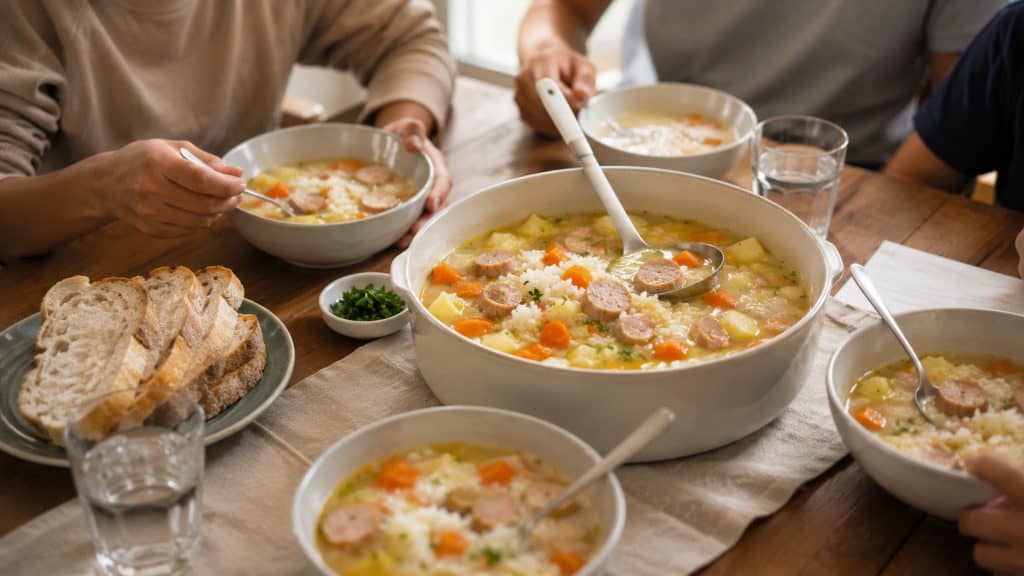
Simple side dishes complement the soup without competing with its hearty flavors.
Crusty sourdough absorbs every drop of broth.
Garlic bread pairs naturally with Italian-style sausage.
Dinner rolls satisfy younger diners while requiring little preparation.
Fresh salads balance the richness.
- Caesar salad
- Garden salad
- Arugula salad
- Mixed greens with lemon vinaigrette
The combination creates a satisfying healthy family dinner suitable for casual weeknights or relaxed weekend gatherings.
Easy Recipe Variations for Different Tastes and Dietary Needs
Changing one core ingredient creates an entirely different bowl while preserving the recipe’s dependable structure.
Flexible ingredients allow cooks to adapt soups for different preferences without rebuilding the recipe from scratch.
| Variation | Key Changes |
| Tuscan | Kale, white beans, Parmesan |
| Cajun | Cajun sausage, peppers, paprika |
| Lemon Herb | Spinach, dill, lemon zest |
| Dairy Free | Coconut milk or blended rice |
| High Protein | Extra chicken sausage and beans |
Several popular variations include:
- Chicken sausage soup with spinach
- Chicken sausage soup with kale
- Chicken sausage soup with mushrooms
- Chicken sausage soup with potatoes
- Chicken sausage soup with beans
- Chicken sausage soup with tomatoes
- Chicken sausage soup with brown rice
- Chicken sausage soup with jasmine rice
Healthy substitutions are equally simple.
- Brown rice instead of white.
- Low sodium broth.
- Extra vegetables.
- Reduced fat chicken sausage.
- Fresh herbs instead of excess salt.
That flexibility explains why this remains one of the most adaptable chicken sausage recipes for families.
How to Make Chicken Sausage and Rice Soup
Easy & Delicious Sausage and Rice Soup | Comfort food for cold weather
Credit: Dr. J’s Kitchen
Quality ingredients create memorable soup long before the first spoonful. The style begins with premium chicken sausage browned until caramelized. Because lean poultry sausage renders limited fat, a small amount of olive oil or butter helps create better fond and richer flavor.
Fresh onions, carrots, celery, and garlic build the aromatic base before quality chicken broth enters the pot.
Brown or wild rice provides structure without quickly breaking apart.
Fresh thyme and parsley brighten the finished bowl, while cracked black pepper and freshly grated Parmesan add complexity.
For the signature finish:
- Stir in chopped parsley.
- Add fresh lemon juice.
- Taste and adjust seasoning.
- Finish with cracked black pepper.
- Serve with warm artisan bread.
This balanced approach produces a bowl that feels comforting without becoming overly heavy.
Bringing Comfort and Flavor to the Dinner Table
When you’re hungry, you want something that fills you up without making dinner feel like hard work. This chicken sausage and rice soup does exactly that, with simple steps and a rich, satisfying bowl you’ll want to make again. That’s what matters.
If you’re ready for an easy meal that fits busy days, give this recipe a try and make it your own. If you’re looking for more comforting recipes or a great place to enjoy hearty food, Milkwoodrestaurant is a helpful choice to keep on your list.
FAQ
Can Chicken Sausage Soup Be Frozen for Later Meals?
Yes. Freezer friendly soup is easy to prepare with chicken sausage. Let the soup cool completely before transferring it to airtight containers. For the best texture, freeze the soup without the rice or store the rice separately. This method keeps the broth from becoming too thick and helps the soup taste fresher after reheating.
Which Broth Creates The Best Flavor for Chicken Sausage Soup?
A good chicken sausage broth starts with low-sodium chicken broth or a rich chicken sausage stock if you have one. A flavorful broth adds depth without covering the taste of the sausage and vegetables. Simmering the soup with fresh herbs, onions, celery, and garlic creates a well-balanced base that tastes homemade.
Which Vegetables Work Well in Different Seasons?
A chicken sausage soup with zucchini is perfect during summer because zucchini cooks quickly and has a mild flavor. In colder months, chicken sausage soup with potatoes or mushrooms creates a heartier meal. Using vegetables that are in season helps improve both flavor and texture while keeping the recipe flexible throughout the year.
Which Rice Creates The Creamiest Soup Texture?
Chicken sausage soup with arborio rice creates a naturally creamy texture because arborio rice releases more starch as it cooks. Chicken sausage soup with basmati rice has a lighter texture and a delicate aroma, making it a good choice if you prefer a broth that stays clear instead of becoming creamy.
References
- https://link.springer.com/journal/11947
- https://www.fsis.usda.gov/food-safety/safe-food-handling-and-preparation/food-safety-basics/leftovers-and-food-safety