Chicken and sausage jambalaya is a one-pot Louisiana dish built on rice, smoky andouille, and bold Cajun seasoning. Every ingredient cooks in the same pot, so the rice soaks up the flavor of the meat and spices as it simmers. This guide covers what the dish actually is, how Creole and Cajun versions differ, and the steps for building a pot from scratch.
Jambalaya at a Glance
A quick look at the facts before getting into the details.
- Jambalaya is a one-pot rice dish built on the Holy Trinity of onion, celery, and bell pepper
- Creole versions include tomatoes for a red color, while Cajun versions skip them for a browner, smokier pot
- A finished pot typically feeds four to six people and keeps well in the fridge for several days
In short, jambalaya rewards one thing above all: letting the rice cook low and slow in a well-seasoned pot.
What Is Chicken and Sausage Jambalaya?
Jambalaya is a rice-based dish loaded with meat, vegetables, and Cajun spices, all cooked together in a single pot. Chicken and sausage versions lean on andouille for smokiness and bone-in or boneless chicken thighs for richness, though shrimp and other proteins show up in regional variations.
The one-pot method is part of what makes the dish practical. Rice, meat, and vegetables all finish cooking together, so the rice absorbs the drippings and spices instead of relying on a separate sauce or stock reduction.
As the Louisiana cultural encyclopedia 64 Parishes explains:
“a representative dish of South Louisiana, especially the parishes of Acadiana” – 64 Parishes
Where Jambalaya Comes From
The dish traces back to a blend of cultures that shaped Louisiana cooking: Spanish settlers working without saffron, French cooks contributing sausage and technique, and West African cooks bringing rice know-how and one-pot traditions.
That mix shows up directly in the ingredient list. Tomatoes stand in for the saffron a true paella would use, while rice cooked in the same pot as the meat echoes West African one-pot rice dishes like jollof. Over generations, Louisiana cooks folded in whatever proteins and spices were locally available, which is part of why so many regional versions of the dish exist today.
Encyclopedia Britannica describes the dish’s history this way:
“a mishmash reflective of the various cultures that settled in Louisiana” – Encyclopedia Britannica
Creole vs Cajun Jambalaya
The two styles share a base but diverge on one main ingredient. The table below breaks down the practical differences.
| Feature | Creole Jambalaya | Cajun Jambalaya |
| Tomatoes | Included, gives a red color | Left out entirely |
| Color | Red to orange | Brown |
| Flavor base | Tomato and stock | Browned meat and dark roux |
| Region | New Orleans and city cooking | Rural Acadiana |
Sausage choice also shapes the final flavor. Andouille brings a coarser grind and heavier smoke than most alternatives, while a milder swap like kielbasa mellows the heat without changing the method. Milkwood Restaurant’s chicken sausage comparison breaks down how different sausage types affect a finished pot.
Ingredients for Chicken and Sausage Jambalaya
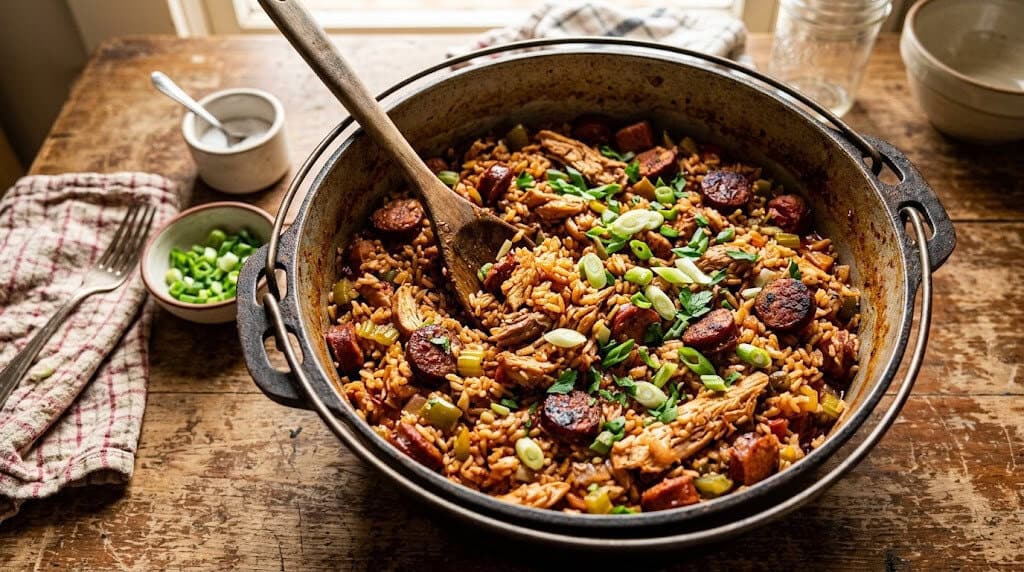
Alt text: Raw chicken thighs, sliced andouille sausage, rice, and chopped vegetables arranged for jambalaya
A standard pot for four to six servings uses:
- 1 pound andouille sausage, sliced
- 1 to 1.5 pounds boneless chicken thighs, cut into chunks
- 1 onion, 1 green bell pepper, and 2 celery stalks, chopped (the Holy Trinity)
- 2 cups long-grain rice, rinsed
- 4 cups chicken broth or stock
- 1 can diced tomatoes, for a Creole-style pot (optional for Cajun style)
- Cajun seasoning, garlic, bay leaves, and cayenne to taste
These proportions scale directly with serving size, so doubling the meat, rice, and broth works for a bigger batch without throwing off the ratios. For a tested version of this exact combination, Milkwood Restaurant’s chicken sausage jambalaya recipe lays out exact measurements and timing.
How to Make Chicken and Sausage Jambalaya
Credits: Food Network
- Brown the sausage in a large pot, then set it aside
- Brown the chicken in the same pot, then set it aside with the sausage
- Cook the onion, celery, and bell pepper in the drippings until softened
- Stir in garlic, Cajun seasoning, and rice, and toast for one minute
- Add the broth, tomatoes if using, and the browned meat, then bring to a boil
- Cover, reduce heat, and simmer until the rice is tender, about 20 minutes
- Rest the pot for five minutes before fluffing and serving
Tips for the Best Jambalaya
- Rinse the rice first to wash off excess starch and keep grains separate
- Resist stirring too often once the lid goes on, since that releases steam the rice needs
- Taste the broth before adding rice, since it is easier to adjust seasoning early
- Let the finished pot rest a few minutes off heat so the rice finishes evenly
- Use a heavy-bottomed pot or Dutch oven, since thin pans scorch rice before it fully cooks
Serving jambalaya straight from the pot, with a scattering of sliced green onion on top, keeps things simple and matches how it is traditionally served in Louisiana kitchens. A side of hot sauce on the table lets each person adjust the heat to their own taste.
How to Store and Reheat Jambalaya
Alt text: Infographic showing how long jambalaya lasts in the fridge and freezer and how to reheat it
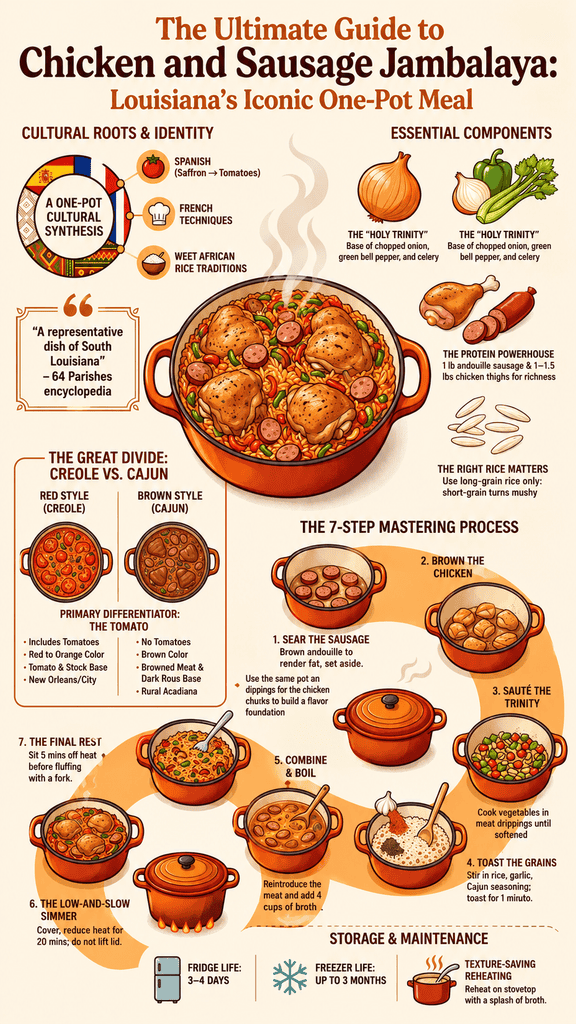
Cooked jambalaya is kept in the refrigerator for three to four days in a sealed container. For longer storage, it freezes well for up to three months, though the rice softens slightly after thawing.
Reheating gently on the stovetop with a splash of broth brings the texture back closer to fresh. Microwaving works too, though covering the dish helps keep the rice from drying out.
Common Mistakes to Avoid When Making Jambalaya
A few mistakes come up again and again when making jambalaya at home:
- Using short-grain rice, which turns mushy instead of staying fluffy
- Adding too much liquid, which leaves the pot soupy instead of set
- Skipping the browning step, which is where most of the flavor develops
- Lifting the lid repeatedly while the rice steams, which lets heat and moisture escape
- Oversalting early, before the broth and sausage have had a chance to reduce
Most of these mistakes trace back to rushing the browning step or adding liquid before the pot and meat are hot enough to build flavor. For a broader troubleshooting guide covering these exact pitfalls, see Milkwood Restaurant’s chicken and sausage jambalaya guide.
FAQ
Is Jambalaya the Same Thing as Gumbo?
No. Gumbo is a soup served over rice, built on a roux, while jambalaya cooks the rice directly in the pot with the other ingredients. Both are Louisiana staples, but the texture and cooking method set them apart clearly.
Can Shrimp Be Added to Chicken and Sausage Jambalaya?
Yes. Shrimp cooks quickly, so it is best added in the final five minutes of cooking to avoid turning rubbery. Many Louisiana cooks combine chicken, sausage, and shrimp in the same pot for a heartier version.
What Sausage Works Best if Andouille Is Not Available?
Kielbasa or another smoked sausage makes a reasonable substitute, though the smokiness will be milder. Andouille’s coarser texture and heavier spice are what give traditional jambalaya its signature depth.
Is Jambalaya Supposed to Be Spicy?
It carries noticeable heat in most traditional versions, mainly from cayenne and Cajun seasoning, but the level is easy to adjust. Starting with less spice and tasting as it cooks keeps the dish approachable for sensitive palates.
Can Jambalaya Be Made in a Rice Cooker or Instant Pot?
Yes, both appliances work well since jambalaya is essentially a seasoned rice dish. Browning the meat and vegetables in a separate pan first, then transferring everything to the appliance, still gives the best flavor.
One Pot, Every Flavor of Louisiana
Chicken and sausage jambalaya rewards patience more than precision. Browning the meat, building the Holy Trinity, and letting the rice steam undisturbed do more for the final flavor than any single spice.
Whether the pot leans Creole with tomatoes or Cajun without them, the dish stays true to its roots: whatever protein and vegetables are on hand, cooked together until the rice carries every bit of flavor from the pot.
Once the basic method feels familiar, swapping proteins or adjusting the spice level becomes easy. Milkwood Restaurant has more Cajun and Creole recipes to try next.
References
- https://64parishes.org/entry/jambalaya
- https://www.britannica.com/topic/jambalaya