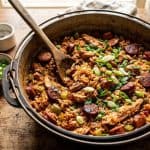
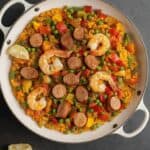
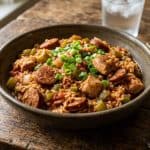
This chicken sausage jambalaya is an easy one-pot dish that combines rice, meat, and vegetables into a perfectly balanced meal. The cooking process begins with browning the sausage to develop rich flavor. Aromatics and spices are then added to create a savory base. Finally, the rice absorbs the broth and seasonings, producing a hearty and satisfying dinner.
Recipe at a Glance
A quick look at the facts before getting into the details.
- Total time runs about 45 minutes, with 15 minutes of that hands-on prep
- One pot handles the entire recipe, from browning the meat to simmering the rice
- The recipe serves four to six and reheats well as leftovers
In short, this recipe rewards following the order of operations more than any special equipment or ingredient.
Why This Recipe Works
Browning the sausage and chicken first builds a layer of caramelized flavor at the bottom of the pot, which the rice later absorbs along with the broth. Cooking everything in one vessel also means fewer dishes and a more concentrated final flavor than cooking components separately.
Rinsing the rice before adding it removes excess surface starch, which keeps the grains from turning gummy once the liquid is absorbed. Letting the pot rest, covered, for a few minutes after cooking allows the rice to finish steaming evenly.
The order of operations matters more than any individual ingredient. Building flavor in stages, meat first, then vegetables, then rice, gives each layer time to develop before the next one goes in, rather than dumping everything into the pot at once.
This layered, one-pot method is part of what defines the dish itself. Wikipedia’s entry on jambalaya describes it as:
“a savory rice dish that developed in Louisiana” – Wikipedia
Ingredients for This Recipe
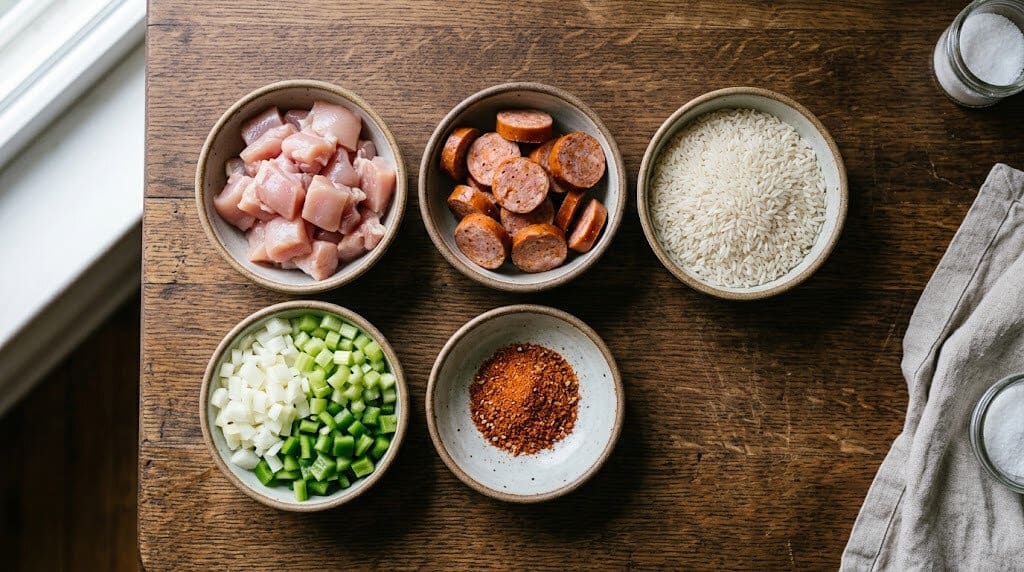
Alt text: Measured chicken, sausage, rice, and chopped vegetables in bowls ready for jambalaya
- 1 pound andouille sausage, sliced into rounds
- 1.5 pounds boneless chicken thighs, cut into bite-sized pieces
- 1 tablespoon oil, for browning
- 1 onion, 1 green bell pepper, and 2 celery stalks, diced
- 3 garlic cloves, minced
- 2 cups long-grain white rice, rinsed
- 1 can (14.5 ounces) diced tomatoes
- 4 cups chicken broth
- 2 teaspoons Cajun seasoning, plus more to taste
- 2 bay leaves and sliced green onion, for serving
This ingredient list already leans Creole, since it includes tomatoes, while some cooks leave those out for a browner, smokier Cajun version instead, a distinction Milkwood Restaurant’s chicken and sausage jambalaya guide breaks down region by region.
Step-by-Step Instructions
Credits: Food Network
- Heat the oil in a large, heavy-bottomed pot over medium-high heat
- Brown the sausage for about 4 minutes, then transfer it to a plate
- Brown the chicken in the same pot for about 5 minutes, then transfer it to the plate with the sausage
- Add the onion, bell pepper, and celery to the pot, and cook until softened, about 5 minutes
- Stir in the garlic and Cajun seasoning, then add the rinsed rice and toast for 1 minute
- Add the tomatoes, broth, bay leaves, and the browned meat, and bring to a boil
- Cover, reduce the heat to low, and simmer for 20 minutes without lifting the lid
- Remove from heat and rest, covered, for 5 minutes, then fluff and serve with green onion
Getting the Rice Right
Rice choice affects the final texture more than any other single ingredient in this recipe. The table below compares how common options behave once cooked in the pot.
| Rice Type | Result in Jambalaya | Recommended? |
| Long-grain white | Stays separate and fluffy, holds up to simmering | Yes, the standard choice |
| Jasmine | Higher starch content leads to clumping | Not ideal |
| Basmati | Long grains work, but flavor differs from tradition | Acceptable substitute |
| Short-grain | Turns soft and sticky under this cooking method | Avoid |
Sticking with long-grain white rice and resisting the urge to lift the lid during the 20-minute simmer are the two habits most likely to produce consistent results.
Food Safety Tips for Jambalaya
Chicken needs to reach a safe internal temperature before serving, regardless of how long it has simmered in the pot.
The USDA Food Safety and Inspection Service recommends:
“a safe minimum internal temperature of 165 °F as measured using a food thermometer” – USDA Food Safety and Inspection Service
Checking the thickest piece of chicken in the pot with an instant-read thermometer is the most reliable way to confirm doneness, since color alone can be misleading in a tomato-based broth.
Recipe Variations
- Add peeled, deveined shrimp in the last 5 minutes of cooking for a chicken, sausage, and shrimp version
- Leave out the tomatoes for a Cajun-style brown jambalaya instead of a Creole red one
- Swap in turkey sausage for a lighter version, though the smokiness will be milder
- Increase the cayenne or add a diced jalapeño for extra heat
Shrimp is the easiest of these swaps to get wrong, mainly because of timing rather than flavor. Milkwood Restaurant’s chicken and sausage jambalaya recipe walks through a shrimp-inclusive version step by step for anyone trying that variation first.
What to Serve With Jambalaya
A simple green salad or steamed vegetables balances the richness of the pot. Cornbread or a crusty baguette works well for soaking up any extra broth left on the plate.
Hot sauce on the side lets each person adjust the heat level without changing the seasoning of the whole pot. A cold beverage with some acidity, like sweet tea with lemon, cuts through the richness of the sausage nicely.
How to Store Leftovers
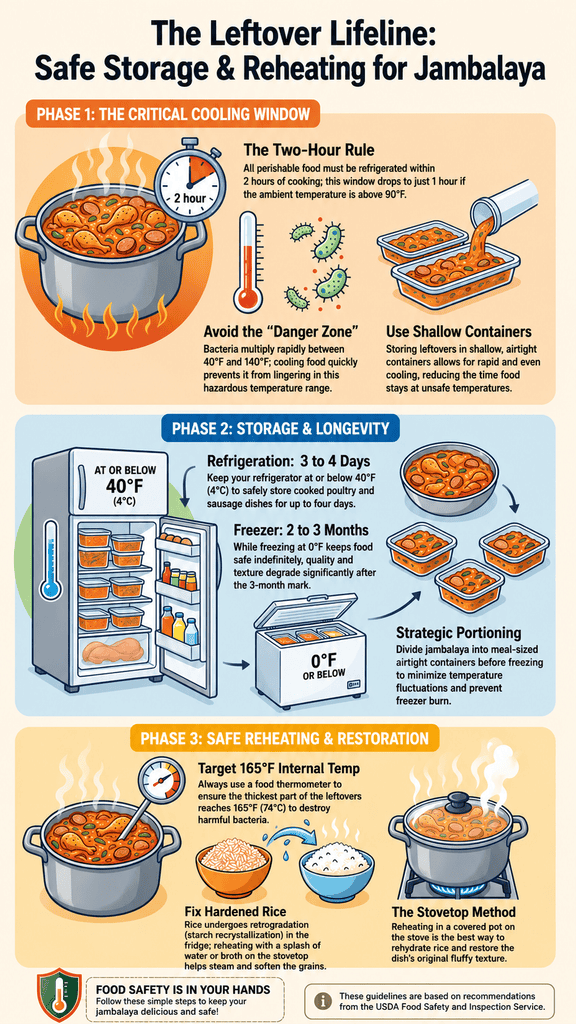
Alt text: Infographic showing how to store and reheat leftover chicken sausage jambalaya
Leftovers keep in a sealed container in the refrigerator for three to four days. Reheating gently on the stovetop with a splash of broth helps loosen the rice back to its original texture.
Freezing works for longer storage, up to about three months, though the texture of the rice softens somewhat after thawing. Portioning leftovers into single servings before freezing makes reheating quicker on a busy night.
Common Recipe Mistakes to Avoid
A few mistakes come up often with this particular recipe:
- Using a pot that is too wide, which causes the liquid to evaporate before the rice finishes cooking
- Guessing at the broth amount instead of measuring, which throws off the rice-to-liquid ratio
- Adding raw shrimp too early, which leaves it overcooked and rubbery by the time the rice is done
- Skipping the rest period at the end, which leaves the bottom layer of rice undercooked
Swapping in a different brand or type of sausage can throw off that balance too, since seasoning levels vary more than most cooks expect, a gap Milkwood Restaurant’s chicken sausage comparison maps out in detail.
FAQ
Can This Recipe Be Doubled for a Crowd?
Yes, though a wider pot does not work as well as a taller one, since the liquid needs enough depth to cook the rice evenly. Doubling the recipe in a proportionally taller pot keeps the timing close to the original.
Is Bone-In or Boneless Chicken Better for This Recipe?
Boneless thighs cook faster and are easier to portion, which fits this recipe’s simmer time. Bone-in pieces add richer flavor but need a longer simmer to cook through, so the timing in this recipe assumes boneless meat.
Can This Recipe Be Made Ahead of Time?
Yes, the full pot can be made a day ahead and reheated gently before serving. The flavor often improves overnight as the rice continues to absorb the seasoning from the broth.
What Happens if the Rice Is Undercooked After 20 Minutes?
Adding a small splash of hot broth, covering the pot again, and simmering for another 5 minutes usually finishes the job. Checking a few grains from the center of the pot gives the most accurate read on doneness.
Can This Recipe Be Made Without a Dutch Oven?
Any heavy-bottomed pot with a tight-fitting lid works, though thinner pots run a higher risk of scorching the bottom layer of rice. Stirring the pot once partway through browning, before the rice goes in, helps prevent sticking regardless of pot type.
Ready in One Pot, Worth the Wait
This chicken sausage jambalaya recipe asks for patience more than skill. Browning the meat properly, measuring the liquid, and letting the rice rest undisturbed account for most of the difference between an average pot and a great one.
Once the timing feels familiar, the recipe adapts easily to shrimp, extra heat, or a bigger batch for a crowd. Milkwood Restaurant has more one-pot Cajun and Creole recipes worth trying next.
References
- https://www.fsis.usda.gov/food-safety/safe-food-handling-and-preparation/food-safety-basics/doneness-versus-safety
- https://en.wikipedia.org/wiki/Jambalaya