Chicken sausage can be a good option for diabetes management, but only if you pick the right kind. The key is choosing products low in carbs, moderate in salt, and made from simple ingredients. Many store-bought versions are the problem: they sneak in starches, sugars, and too much sodium, which can mess with your blood sugar.
Lean protein, like chicken, helps balance a meal when you eat it with high-fiber foods. Yet, real-world data from people using continuous glucose monitors shows some “healthy” sausages still cause spikes due to fillers and how they’re made. Let’s look at what you need to check before putting it on your plate.
Quick Blood Sugar Facts About Chicken Sausage
Chicken sausage can fit a diabetic-friendly diet when it is low in carbs, sodium, and added sugar. These simple points cover the biggest factors that affect blood sugar response and meal balance.
- Choose chicken sausage with low carbs, moderate sodium, and simple ingredients to help support steadier blood sugar levels.
- Hidden fillers like potato starch, dextrose, maple flavoring, and added sugars may trigger larger glucose spikes than expected.
- Pair chicken sausage with fiber-rich vegetables and balanced meals instead of refined buns, sugary sauces, or processed sides.
The Real Impact of Chicken Sausage on Diabetes
Chicken sausage is generally safer than pork sausage because it is leaner, but processing methods and additives determine whether it supports stable glucose levels.
Chicken breast contains less saturated fat than many pork products, which matters for people managing type 2 diabetes and cardiovascular risk. The issue begins when manufacturers add starches, sweeteners, oils, and sodium to improve texture and shelf life.
The Centers for Disease Control and Prevention (CDC) warns that heavily processed foods often contain excess sodium, added sugars, and preservatives linked to chronic disease patterns.Some chicken sausages marketed as “healthy” are still highly processed because of added stabilizers, sodium, and fillers.
According to CDC dietary guidance, Americans already consume far more sodium than recommended daily amounts.
CGM users in online diabetes communities frequently report glucose spikes from chicken sausage products that appear low carb on the label. The pattern points toward hidden fillers rather than the chicken itself.
The biggest differences between healthier and riskier products usually come down to these factors:
- Minimally processed meat versus finely processed sausage paste
- Chicken breast versus mechanically separated chicken
- Low sugar seasoning versus maple or honey blends
- Moderate sodium versus heavily salted preservation
- Short ingredient lists versus chemical stabilizers
A diabetic-friendly chicken sausage should behave more like lean grilled chicken than a heavily processed convenience meat. That distinction matters more than the keto-friendly label printed on the package.
Hidden Ingredients That Change the Metabolic Response
Hidden additives often create the glucose spikes blamed on chicken sausage itself. Meat is rarely the main issue.
Many manufacturers add dextrose, cane sugar, honey, maple syrup, potato starch, or tapioca starch to improve browning and texture. Even products labeled “low carb chicken sausage” may contain enough fast-digesting fillers to affect blood sugar within an hour.
Finely processed sausage may also digest faster than coarse-ground meat. Some CGM users report faster glucose responses from processed sausage products, possibly because softer textures digest more quickly than coarse-ground meat.
Higher saturated fat levels can also complicate insulin sensitivity. “Keto-friendly” sausage products sometimes replace carbohydrates with oils, skin, or extra fat, increasing theextra strain on blood sugar control despite low net carbs.
Hidden Triggers Behind Blood Sugar Spikes
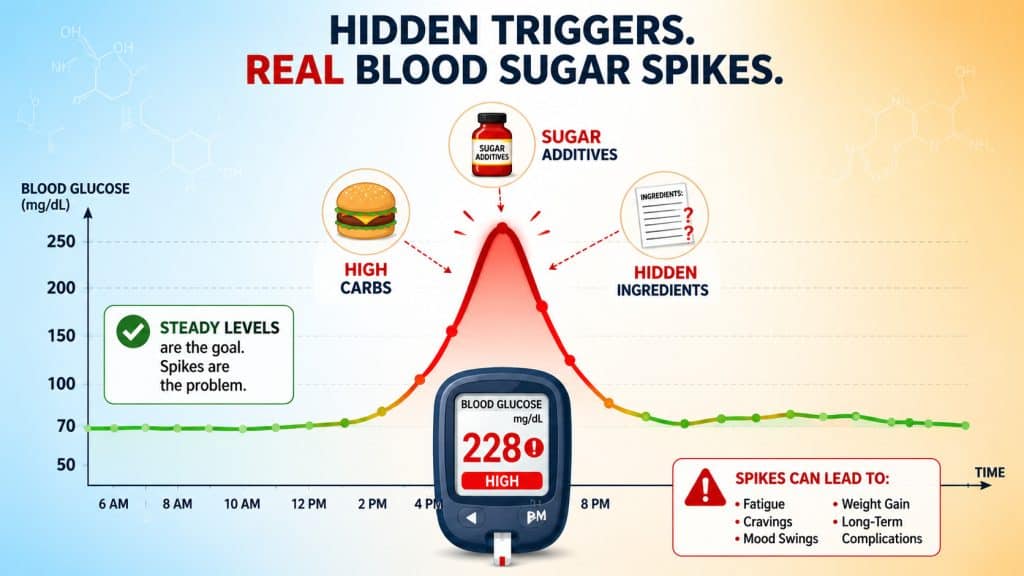
Blood sugar spikes usually come from hidden carbohydrates, sodium-heavy processing, and meal pairings rather than the chicken itself.
The “healthy label” misconception appears constantly in diabetes discussions. Products marketed as organic, keto, gluten free, or nitrate free still trigger glucose increases when they contain starch fillers or fruit-based flavorings.
Many CGM users on Reddit report spikes reaching 180 to 200 mg/dL after eating apple chicken sausage or maple chicken sausage. The reaction often happens within 30 to 60 minutes, suggesting fast-digesting additives instead of slow protein metabolism.
Research points toward sodium as a significant metabolic factor. A study by Baudrand et al. (2014) found that high sodium intake is associated with increased insulin resistance and higher cortisol production.
While excess sodium may not always raise glucose directly, it can create a ‘metabolic drag’ that makes it harder for your body to handle the carbohydrates in your meal.
Several hidden ingredients commonly appear in problematic products:
- Cornstarch
- Potato starch
- Rice flour
- Dextrose
- Brown sugar
- Apple concentrate
- Honey powder
Meal structure matters too. Chicken sausage on a white bun with ketchup creates a completely different glucose response than chicken sausage paired with broccoli and vinegar slaw.
The Sodium-Insulin Feedback Loop
High sodium intake may temporarily worsen insulin resistance in sensitive individuals. Many commercial links exceed 500mg sodium per serving, especially flavored breakfast varieties.
Research from Nutrition, Metabolism and Cardiovascular Diseases shows
“Higher muscle and skin sodium are associated with insulin resistance in obese patients.” – Nutrition, Metabolism and Cardiovascular Diseases
Processed meats can also increase water retention and inflammation markers. Some CGM users describe a delayed “second wave” glucose increase several hours after salty processed meals.
The American Heart Association recommends limiting sodium to 2,300mg daily, with an ideal target of 1,500mg for many adults. One heavily processed sausage meal can approach one-third of that intake.
Digestive Effects of Sausage Casings
Collagen and cellulose casings may affect digestion speed differently from whole meat textures. This topic remains debated, but community discussions frequently mention faster glucose responses from finely processed sausage products.
People with diabetic gastroparesis may find coarse-ground sausage easier to handle because it can feel less heavy during digestion. The texture may also affect how quickly food moves through the stomach and impacts blood sugar levels.
Some casing treatments also include sugars or preservatives that never appear prominently on front labels. That detail explains why ingredient reading matters more than marketing claims.
Benchmarks for Choosing Diabetic-Friendly Chicken Sausage
The best diabetic-friendly chicken sausage is low-carb, high-protein, minimally processed, and moderate in sodium.
| Feature | Recommended Benchmark | Why It Matters |
| Total Carbs | <2g per link | Reduces hidden glucose spikes |
| Protein-to-Fat Ratio | 3:1 minimum | Indicates leaner meat quality |
| Sodium | <400mg per serving | Supports insulin sensitivity |
| First Ingredient | Chicken breast | Signals higher-quality protein |
A quick label scan often reveals whether a product supports blood sugar management or complicates it. Short ingredient lists usually indicate fewer fillers and additives.
The most reliable health-conscious options usually focus on savory herbs instead of sweet flavor profiles. Garlic, spinach, roasted pepper, basil, and Italian herb varieties generally contain less hidden sugar than maple or apple blends.
These warning signs deserve attention before buying:
- “Maple” or “apple” flavoring
- Cane sugar near the top ingredients
- Mechanically separated chicken
- More than 2g carbs per link
- Sodium above 500mg
- Long chemical preservative lists
“Nitrate free” labels can also mislead diabetic consumers. Many uncured products use celery powder, which naturally contains nitrates despite sounding cleaner on packaging.
According to the American Heart Association, processed meat intake is linked with increased cardiovascular risk, especially when sodium and saturated fat remain high. That matters because diabetes and heart disease frequently overlap.
The safest approach is treating chicken sausage as a convenience protein rather than an unlimited “health food.”
Cooking Methods That Lower the Metabolic Load

Cooking methods that reduce excess fat and sodium may lower the overall metabolic burden of processed sausage meals.
Preparation changes the final nutritional impact more than many people realize. Air frying, boiling, and pairing with vegetables can alter how heavy the meal feels afterward.
The Boil-and-Sear Technique
Boiling first may reduce surface sodium and excess fat before final cooking. Some diabetes communities call this the “boil-and-discard” method.
A short sear afterward improves texture without requiring extra oil. This approach may lighten the meal compared with deep pan frying.
Air Fryer Cooking Compared to Pan Frying
| Method | Benefit | Concern |
| Air Fryer | Renders excess fat | Risk of overcooking |
| Pan Frying | Better texture | More added oil |
Air fryers remain popular among low carb and diabetic meal prep communities because they allow fat to drip away during cooking.
Pan frying often adds unnecessary oils and calories, especially when sausage already contains hidden fat from skin or fillers.
Fiber-Rich Pairings for Better Glucose Stability
Fiber-rich foods help slow digestion and moderate glucose responses after processed meats.
Helpful pairings include:
- Vinegar-based slaws
- Broccoli
- Spinach
- Cauliflower
- Lettuce wraps
- Mustard instead of ketchup
Adding vegetables changes the meal from a processed meat snack into a more balanced diabetic-friendly plate. The difference shows up clearly in many CGM comparisons.
Smart Food Pairings for Stable Blood Sugar
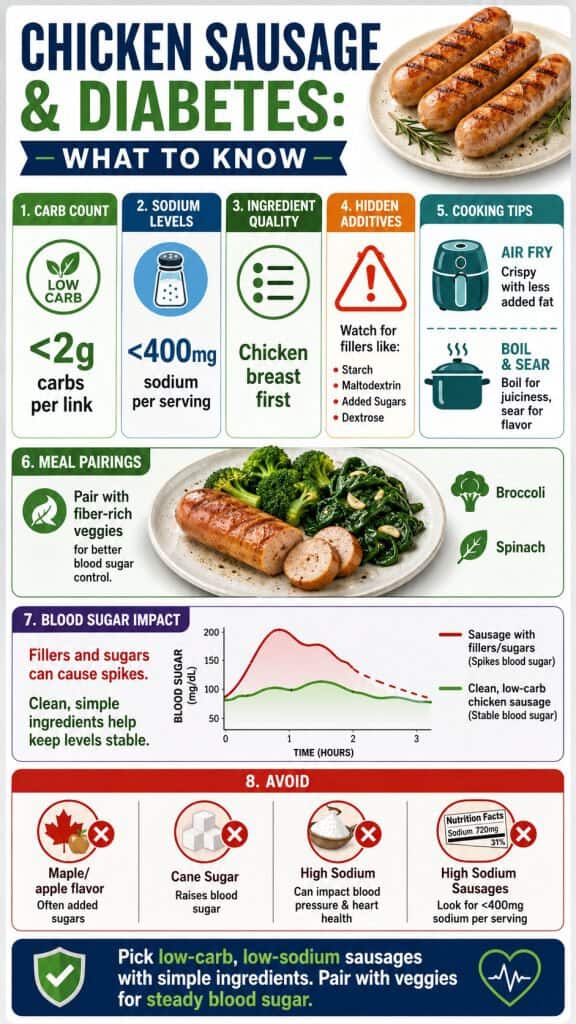
Pairing chicken sausage with fiber-rich vegetables and low-glycemic foods helps slow digestion and improve glucose stability.
A balanced diabetic meal depends on the entire plate, not one ingredient. Even low carb chicken sausage can produce larger glucose swings when combined with refined bread or sugary condiments.
The Harvard T.H. Chan School of Public Health notes that higher fiber intake supports healthier blood sugar patterns and improved metabolic health. Fiber also increases fullness, reducing overeating risk.
The strongest meal combinations usually include protein, fiber, and healthy fats in moderate amounts.
Helpful meal ideas include:
- Chicken sausage with spinach and eggs
- Lettuce wrap sausage sandwiches
- Broccoli and sausage sheet pan meals
- Cauliflower rice bowls with grilled sausage
- Vinegar slaw paired with baked chicken sausage
- Avocado and sausage breakfast skillets
Refined buns, sugary sauces, and hash browns often create larger glucose increases than the sausage itself. Meal context changes the outcome significantly.
Marketing Claims That Mislead Diabetic Consumers
Sausage for diabetics! Made with chicken! Your sugar levels will be normal!
Source: Huhn und Gemüse
Many “healthy” or “keto” chicken sausages prioritize marketing claims over metabolic quality by reducing carbs while increasing sodium or saturated fat.
Some keto products focus more on marketing than ingredients. Brands reduce visible carbs but increase oils, sodium, or chicken skin to preserve texture and flavor.
In a recent analysis by Frontiers in Endocrinology
“Processed meat consumption accounted for 20.3% of the global type 2 diabetes burden in 2021,” with attributable deaths increasing 118% over three decades. – Frontiers in Endocrinology
A sausage labeled keto may still contain:
- Excess sodium
- High saturated fat
- Poor protein quality
- Preservatives
- Hidden sweeteners
Protein quality matters more than front-label branding. A minimally processed sausage with moderate sodium often supports better blood sugar control for people managing chicken sausage diabetes concerns than a heavily processed keto product loaded with oils.
Ingredient order also matters. If water, oils, sugar, or fillers appear before chicken breast, the product likely relies more on processing than protein quality.
Some labels use vague phrases like:
- “Natural flavors”
- “Flavor blend”
- “Smoke seasoning”
- “Dried fruit solids”
- “Caramelized flavoring”
Those terms may hide sweeteners or processed additives that complicate blood glucose control.
The healthiest chicken sausage for diabetes usually looks boring on the label. Short ingredient lists and simple seasoning profiles often outperform trendy marketing terms.
FAQs
Is chicken sausage good for diabetics at breakfast?
Chicken sausage for diabetics can work well at breakfast when it is low in carbs, moderate in sodium, and paired with high-fiber foods. A diabetic friendly breakfast protein should help you stay full without causing large blood sugar spikes. Try low carb breakfast sausage with eggs, spinach, avocado, or whole grain toast instead of sugary cereals, hash browns, or sweet sauces.
What makes chicken sausage better for blood sugar control?
Chicken sausage blood sugar control depends on the ingredient list, carb count, and sodium content. Low carb chicken sausage made with simple seasonings and lean meat is usually easier to fit into diabetic low glycemic meals. Low sugar chicken sausage with fewer fillers may help reduce sudden blood glucose increases, especially when paired with vegetables or other fiber-rich foods.
Can chicken sausage fit a diabetic meal prep routine?
Diabetic meal prep chicken sausage recipes can support balanced eating when meals include vegetables, fiber, and controlled portions. Many people use baked chicken sausage diabetic friendly meals for quick lunches and dinners during the week. Chicken sausage meal prep low carb bowls with broccoli, cauliflower rice, spinach, or peppers can provide protein without adding too many refined carbohydrates or sugary sauces.
How do I read labels on chicken sausage for diabetes?
Label reading chicken sausage diabetes tips should start with checking total carbs, sodium, saturated fat, and added sugar. Healthy chicken sausage for diabetes usually contains simple ingredients and fewer preservatives. Watch for hidden sugar in chicken sausage from syrup, honey, fruit concentrate, or starch fillers. Low sodium chicken sausage and clean ingredient chicken sausage options are often better choices for steady blood sugar management.
Are homemade chicken sausages healthier for diabetics?
Homemade chicken sausage for diabetics can be healthier because you control the ingredients, salt, and fat content. Many packaged products contain preservatives, fillers, and excess sodium that may affect chicken sausage and blood glucose levels. Using lean chicken, herbs, garlic, and simple spices can create healthy sausage alternatives for diabetics while supporting heart healthy chicken sausage meals and better portion control.
Chicken Sausage and Diabetes, What Actually Matters for Blood Sugar Control
Chicken sausage sounds like a healthier option, but some varieties still contain added sugar, excess sodium, and heavily processed ingredients that can make blood sugar management harder. That catches people off guard. The bigger issue is usually the full meal, not just the sausage itself. Pairing it with fiber-rich vegetables and keeping portions reasonable often matters more than choosing the perfect brand.
A smarter approach is keeping chicken sausage as one part of a balanced plate instead of the main focus. Look for simple ingredients, low carb counts, and unsweetened flavors that won’t spike glucose levels. If you track meals with a CGM, pay attention to how different products affect your numbers over time. Small label checks and better meal pairing can make chicken sausage fit much more comfortably into a diabetes-friendly routine.
References:
- https://public-pages-files-2025.frontiersin.org/journals/endocrinology/articles/10.3389/fendo.2025.1635831/text
- https://ohiostate.elsevierpure.com/en/publications/high-tissue-sodium-associates-with-systemic-inflammation-and-insu/
Related Articles:
- https://milkwoodrestaurant.com/chicken-sausage-diabetes/
- https://milkwoodrestaurant.com/chicken-sausage-health-conscious-options/