Chicken sausage comes out juicy and crisp when you bake it with moderate heat, good airflow, and a careful watch on the clock. Cooking it too hot and fast is the main reason it gets dry. The USDA says poultry sausage needs to hit 165°F (74°C) to be safe but letting it finish cooking from residual heat after you take it out helps keep it tender.
Online, cooks on Reddit and recipe sites agree: chicken sausage has less fat than pork, so it needs gentler handling. The line between a perfect link and a tough one is mostly about managing your oven’s temperature and using a meat thermometer. Here’s how to roast it right, with reliable timing and sheet pan tips.
Quick Oven Wins for Juicy Chicken Sausage
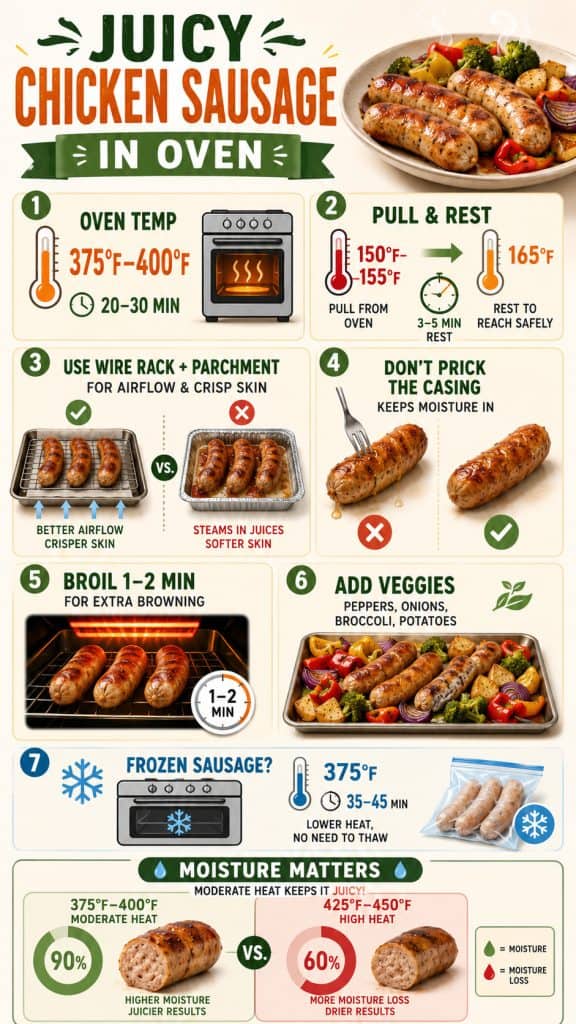
Chicken sausage stays juicy when roasted with moderate heat, steady airflow, and careful temperature control instead of aggressive high heat. These quick tips cover the biggest factors that affect texture, moisture, and browning.
- Roast chicken sausage at 400°F (200°C) for 20 to 30 minutes and avoid piercing the casing to help retain moisture.
- Use a wire rack over parchment paper for better airflow and more even browning without soggy bottoms.
- Remove the sausages once they look browned and juicy, then let them rest briefly so the inside stays tender instead of drying out.
Best Oven Temperature for Chicken Sausage
Moderate oven heat around 375°F to 400°F keeps chicken sausage juicy while still producing crisp browning.
Chicken sausage behaves differently from pork sausage because poultry contains less fat and a more delicate protein structure. High heat can push the fat out too quickly, which leaves the interior dry and grainy. Many cooks notice this problem when roasting at aggressive temperatures above 425°F.
According to the USDA, poultry products should reach 165°F internally for safe consumption. Still, experienced cooks often remove sausages slightly earlier because carry over cooking continues after the links leave the oven. This approach protects texture without sacrificing safety.
A wire rack matters more than most recipes admit. Airflow around the sausage allows the casing to brown evenly instead of steaming against the pan surface. That extra circulation creates the snap people expect from roasted sausage.
| Method | Temp | Result |
| Standard Roast | 400°F | Faster browning |
| Low-and-Finish | 300°F + broiler | Juicier texture |
The low and finish approach has become popular in online cooking communities because it reduces casing splits. Some cooks prefer slower methods because gradual heat helps preserve moisture and improves texture.
Sausages roast gently at 300°F, then spend about 2 minutes under the broiler for color and crispness.
As noted in clinical nutrition guidelines, lean poultry proteins are susceptible to moisture loss at high temperatures. The combination of moderate roasting and carry over cooking keeps the sausage tender while still reaching food safe temperatures.
- Use 400°F for convenience and faster cooking.
- Use 300°F plus broiler for maximum moisture retention.
- Rotate the pan halfway through roasting for even browning.
- Rest sausages for 5 minutes before slicing.
Common Reasons Chicken Sausage Dries Out in the Oven
Chicken sausage dries out when too much fat and moisture cook out of the links, creating a chalky texture sometimes called sometimes called ‘shorting,’ where fat separates from protein
Chicken sausage contains significantly less fat than pork sausage. That lower fat content makes it healthier for many households, but it also creates a narrow cooking window. Once the internal temperature climbs too high, moisture escapes rapidly.
Research from the National Institutes of Health shows
“hardness increased significantly” while “the panel detected decreased tenderness,” confirming that the lower fat emulsion requires gentler handling to maintain a pleasant texture during cooking. – Poultry Science Study
Online cooking communities frequently describe overcooked chicken sausage as “rubbery,” “crumbly,” or “eraser-like.” Those descriptions match what food scientists call emulsion breakdown. The protein tightens, fat leaks out, and the sausage loses tenderness.
The internal temperature matters more than visual appearance. Chicken sausage often stays pink even after fully cooking because curing agents and packaging gases affect color. Reddit cooking discussions repeatedly warn against relying on color alone.
Common signs of overcooked chicken sausage include:
- Rubbery casing
- Dry or chalky center
- Split skin
- Shriveled appearance
- Greasy baking sheet from leaked fat
An instant read thermometer changes everything. Many cooks pull sausages at 150°F to 155°F, then tent them loosely with foil while carry over heat pushes them toward the safe 165°F mark. That short resting period usually improves moisture noticeably.
According to the USDA Food Safety and Inspection Service, poultry products should always be verified with a food thermometer rather than color inspection.
Wire Rack vs Baking Tray for Chicken Sausage
Credits: Baking With Josh & Ange
A wire rack improves airflow around chicken sausage, which helps the casing brown more evenly instead of steaming against the pan.
Most mainstream recipes place sausages directly on foil-lined trays, and while that method works, the underside often turns soft because moisture and rendered fat collect underneath the links. Different chicken sausage cooking techniques often prioritize airflow since the casing browns more evenly and develops better texture during roasting.
Using a wire rack lined with parchment paper usually produces the best results because heat reaches all sides of the sausage more consistently.
Parchment paper also helps prevent sticking, especially when seasonings caramelize during roasting. Foil-lined trays are easier to clean, but chicken sausage casing often sticks once the surface browns.
Cooking directly on a sheet pan can roast the sausages faster, but trapped steam underneath the links often creates soggy bottoms and uneven color. Crowding too many sausages onto one tray can also reduce crispness by limiting airflow during roasting.
A rack also allows rendered fat to drip away from the links instead of pooling underneath. That slight separation helps the sausage roast instead of shallow steam.
- Wire racks improve browning consistency.
- Parchment prevents tears.
- Crowded pans trap moisture and reduce crispness.
Recommended Chicken Sausage Oven Cooking Time
Chicken sausage usually cooks in 20 to 30 minutes depending on thickness, oven temperature, and whether the links start frozen.
Fresh sausage cooks faster because the center heats evenly from the beginning. Frozen sausage takes longer and needs gentler heat to avoid burst casings from rapid steam expansion.
| Sausage Type | Oven Temp | Time |
| Fresh links | 400°F | 20 to 25 min |
| Thick links | 400°F | 25 to 30 min |
| Frozen links | 375°F | 35 to 45 min |
Many packaged brands such as Aidells and Tyson recommend roasting between 375°F and 400°F. Those instructions usually target convenience, but community cooks often shorten cooking slightly to protect moisture.
Flipping sausages halfway through cooking improves browning and reduces sticking. If the casing still looks pale near the end, a quick broiler finish solves the problem quickly.
Frozen chicken sausage deserves extra caution. High heat can make the outer casing expand before the center thaws, which causes splitting and moisture loss. Lower temperatures give the interior time to heat more evenly.
Some people who prepare quick chicken sausage breakfast meals prefer oven roasting because it produces better browning and firmer texture without much extra effort.
For extra browning:
- Roast until nearly finished.
- Switch the oven to broil.
- Broil for 60 to 120 seconds.
- Watch closely to avoid burned casing.
An instant read thermometer remains the safest way to judge doneness.The best texture usually comes from avoiding prolonged time at 165°F inside the oven.
Roasting Chicken Sausage With Vegetables
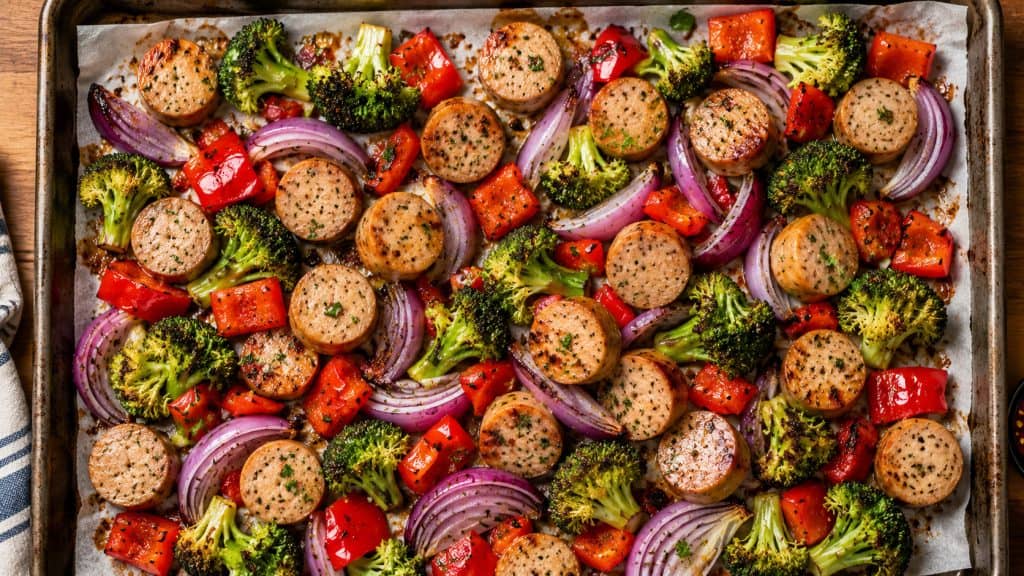
Sheet pan vegetables help chicken sausage stay moist while creating an easy one pan dinner with almost no cleanup.
Roasting sausages directly over sliced onions, celery, or peppers creates a light steaming effect underneath the links. Some cooks call this the “mirepoix bed” method because the vegetables release moisture while roasting.
Busy households often rely on chicken sausage because the prep stays minimal. On X, many users describe the “scissors to pan” workflow where kitchen shears cut the package directly over the baking tray.
Best vegetables for chicken sausage sheet pan meals include:
- Bell peppers
- Onions
- Broccoli
- Zucchini
- Brussels sprouts
- Sweet potatoes
- Baby potatoes
Fresh herbs also help balance the richness of roasted sausage, and rosemary infused chicken sausage pairs especially well with broccoli, potatoes, and caramelized onions during oven roasting.
Meal prep cooks often use pre cooked chicken sausage because it reheats quickly throughout the week. A single tray can produce several high protein lunches with almost no extra effort.
- Use parchment paper for easier cleanup.
- Slice vegetables evenly for balanced roasting.
- Add broccoli later because it cooks faster than potatoes.
- Rotate pans halfway through roasting for consistent browning.
Common Mistakes That Ruin Oven-Roasted Chicken Sausage
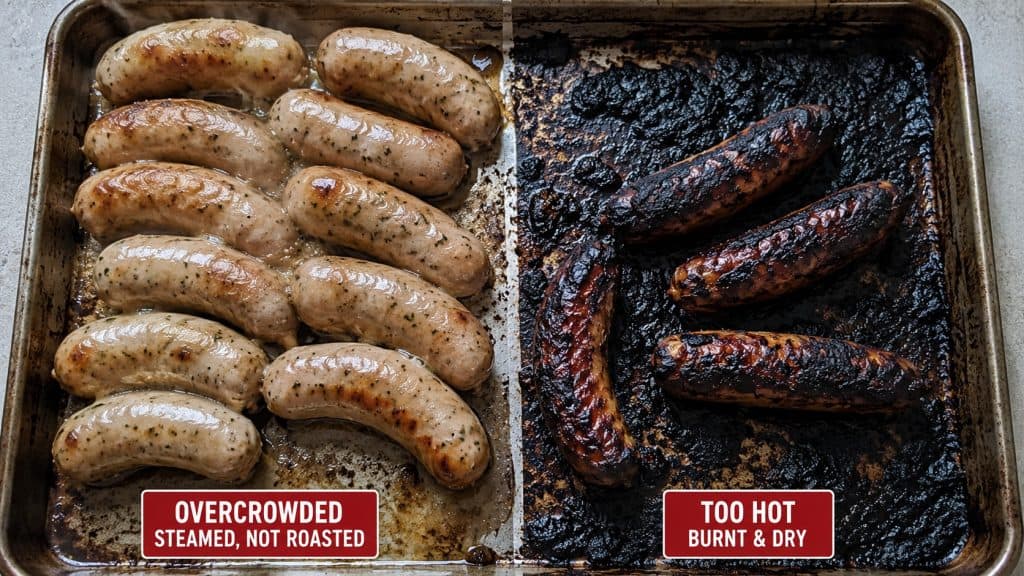
The biggest chicken sausage mistakes involve excessive heat, overcooking, and moisture loss from damaged casings.
Pricking the sausage casing remains one of the most common problems. Poultry sausage contains limited fat, so every puncture allows valuable moisture to escape during roasting.
Cooking sausage all the way to 165°F inside the oven often creates dryness because carry over heat keeps cooking the links after removal. Many experienced cooks pull sausages earlier for better texture.
As highlighted by the United States Department of Agriculture
“The ONLY way to know when meats, poultry and seafood have reached a safe internal temperature is to use a food thermometer. You can’t tell by looking or by the color of meat or poultry” – USDA Food Safety Blog
Common roasting mistakes include:
- Pricking the casing with a fork
- Roasting frozen links at high heat
- Skipping resting time
- Crowding the sheet pan
- Using foil without parchment
- Ignoring thermometer readings
- Overusing the broiler
Crowded pans create steam pockets that soften the casing. Spacing the sausages apart improves airflow and browning.
Foil can also damage texture. Lean chicken casing sticks aggressively during roasting, especially with sugary marinades or garlic herb seasoning blends.
The USDA still recommends verifying doneness with a thermometer rather than relying on color or texture. That guidance matters because cured poultry sausage may stay visibly pink even when fully cooked.
Some cooks place a small water tray on the lower oven rack to add humidity during roasting. The extra moisture can reduce rubbery casing texture while still allowing browning on the surface.
FAQs
Can you reheat chicken sausage in the oven without drying it out?
Yes, you can reheat chicken sausage in the oven without drying it out if you use moderate heat and cover the sausages loosely with foil. For chicken sausage oven reheating, bake the links at 350°F for 10 to 15 minutes until fully heated through. Adding a small splash of water to the baking sheet helps maintain moisture and keeps the oven cooked chicken sausage links tender.
What vegetables work best with chicken sausage in the oven?
Chicken sausage with vegetables oven meals work best with vegetables that roast evenly and caramelize well at moderate temperatures. Bell peppers, onions, broccoli, zucchini, Brussels sprouts, and sweet potatoes are reliable choices for a chicken sausage tray bake or chicken sausage one pan meal. Spread the vegetables in a single layer with olive oil and seasoning so they roast properly instead of steaming.
Is frozen chicken sausage oven cooking different from fresh sausage?
Frozen chicken sausage oven cooking requires lower heat and a longer cooking time than fresh sausage. Roast frozen links at 375°F to reduce the risk of split casings and uneven cooking. Chicken sausage bake time for frozen links usually ranges from 35 to 45 minutes depending on thickness. Always check the chicken sausage internal temperature and make sure it reaches 165°F before serving.
How do you get crispy skin on oven roasted sausage links?
You can get crispy skin on oven roasted sausage links by drying the casing before roasting and allowing enough airflow around each sausage. A chicken sausage roasting rack helps hot air circulate evenly and improves browning. For crispy chicken sausage oven texture, finish the sausages under the broiler for 1 to 2 minutes after roasting. This method creates juicy chicken sausage baked with crisp edges and better texture.
Can chicken sausage meal prep last several days in the refrigerator?
Chicken sausage meal prep can stay fresh in the refrigerator for 3 to 4 days when stored properly in airtight containers. Chicken sausage oven meal prep works especially well with roasted vegetables, potatoes, or rice because the ingredients reheat evenly. A healthy chicken sausage dinner can also maintain good texture during reheating if the sausages are not overcooked during the original roasting process.
Chicken Sausage in Oven, Simple Steps That Keep Every Bite Juicy
You can ruin chicken sausage fast if the oven runs too hot or the links stay in too long. The texture gets dry, the casing turns tough, and dinner feels disappointing. That’s the problem. A lower roasting temperature, a quick flip halfway through, and pulling the sausages before they fully finish cooking keeps the inside juicy while the outside still gets crisp.
If you want an easier way to get reliable results, use a thermometer and keep the setup simple. A wire rack, parchment paper, and a fast broiler finish make a big difference without adding extra work. Once you try it this way, oven baked chicken sausage becomes one of those weeknight meals you keep coming back to.
References
- https://www.usda.gov/about-usda/news/blog/check-your-steps-cook-keep-your-family-safer-food-poisoning
- https://pubmed.ncbi.nlm.nih.gov/30698807/
Related Articles:
- https://milkwoodrestaurant.com/chicken-sausage-cooking-techniques/
- https://milkwoodrestaurant.com/how-to-cook-chicken-sausage-for-breakfast/
- https://milkwoodrestaurant.com/rosemary-infused-chicken-sausage/