Chicken sausage can contribute to inflammation, but it mostly depends on how it is made and how often you eat it.
Plain chicken is lean and generally neutral, but once it becomes sausage, you often see high sodium, preservatives like nitrates and nitrites, and extra additives that may promote inflammation when eaten regularly.
Cooking methods matter too, especially very high-heat grilling or frying. The good news is, you can lower much of this risk with smarter choices.
Keep reading to learn which ingredients to watch for, better ways to cook it, and how to enjoy chicken sausage more safely.
Key Takeaways
- The chicken itself is not the problem; it’s the added sodium, preservatives, and fats.
- Choosing minimally processed, nitrate-free options significantly reduces inflammatory risk.
- Moderation and pairing with anti-inflammatory foods are key to enjoying it safely.
The Core Issue is Processing, Not Poultry
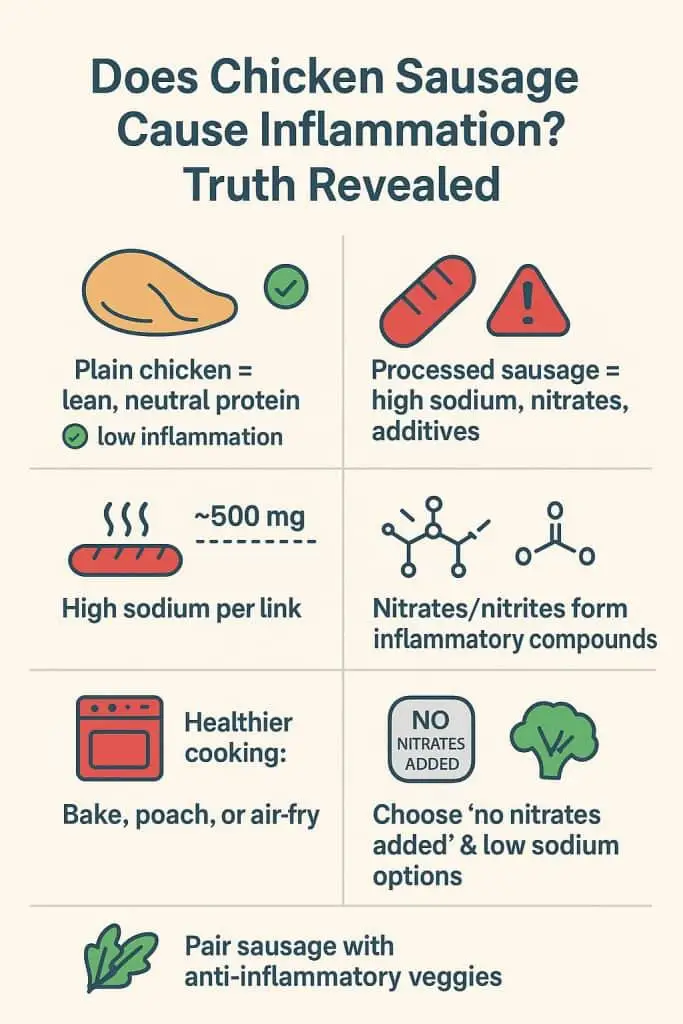
Most people think of chicken as “light” or “clean,” and in its plain form, that is mostly true. At its simplest, chicken is a lean source of protein and is not naturally inflammatory.
To understand how chicken sausage fits into the bigger picture, some people look at a broader comparison with other sausages, since ingredients and processing levels differ widely.
A plain, skinless chicken breast is often seen as neutral, or even slightly helpful, within an overall anti-inflammatory style of eating. The picture changes when that same chicken is turned into sausage.
Once you move into sausage, you are usually not just eating chicken anymore. The main concerns are:
High sodium content. Many packaged chicken sausages contain a lot of salt for flavor and preservation.
- Too much sodium can cause water retention.
- It can raise blood pressure in some people.
Both effects create extra stress on the body, which is linked with inflammation over time.
Preservatives such as nitrites and nitrates. Ingredients like sodium nitrite and sodium nitrate are often added to:
- Keep a pink color.
- Extend shelf life.
When digested, these may contribute to oxidative stress under certain conditions, especially high intake or frequent use, but effects vary by person, overall diet, and processing.
So the core issue is not the chicken itself, but what gets added to it. That distinction matters because it gives you room to make better choices.
By reading labels, choosing lower-sodium or “no nitrite added” options, or even making your own chicken sausage at home, you can enjoy the flavor while cutting down on many of the ingredients most closely tied to inflammation.
Key Inflammatory Ingredients to Watch For
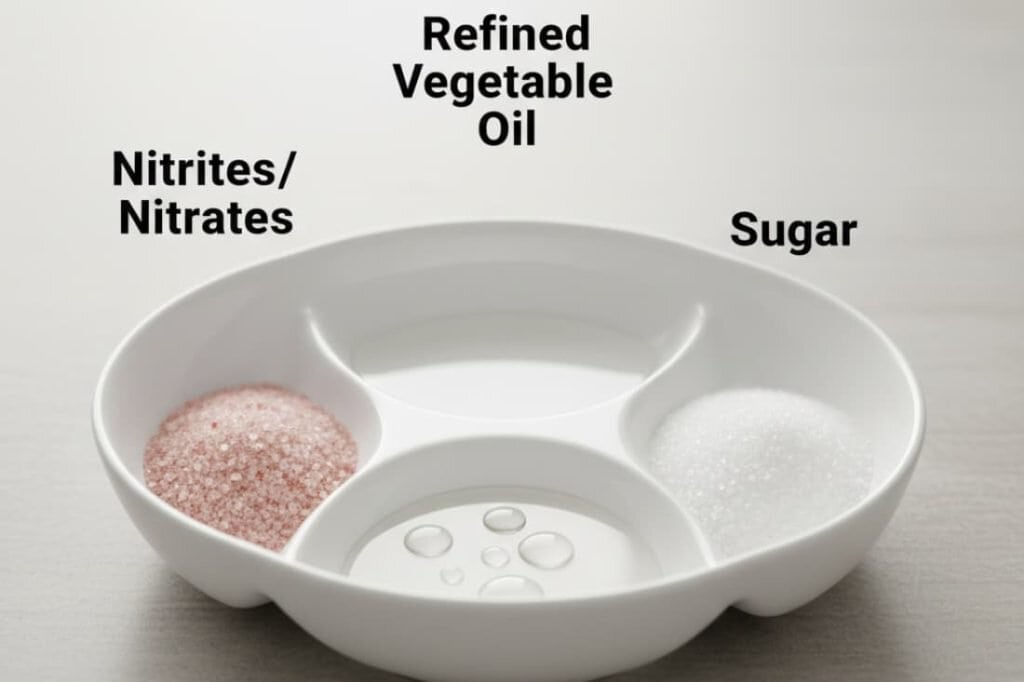
Most of the trouble with chicken sausage shows up on the label, not in the meat itself.
For people trying to choose between alternatives, even a simple turkey vs chicken angle can matter, because different poultry sausages may contain different additives and sodium levels.
When you look closely, a few ingredients matter most if you care about inflammation:
High sodium
- Many chicken sausages pack 500 mg of sodium or more per link.
- That is a big chunk of the daily recommended limit in just one piece.
- Regularly eating that much salt can raise blood pressure and support a low-grade, chronic inflammatory state.
Nitrates and nitrites
- Preservatives like sodium nitrite and sodium nitrate help prevent bacterial growth and keep the meat pink.
- During cooking and digestion, they can form nitrosamines, compounds linked with inflammatory responses and other health concerns.
- Because of this, many health groups suggest limiting nitrate-cured meats.
Artificial flavors, colors, and processing aids
- Some sausages include artificial flavors, colors, and certain emulsifiers.
- These may disturb gut bacteria in some people, and a disrupted gut microbiome is often connected with broader inflammation in the body.
- As a rough rule, a long ingredient list full of unfamiliar names usually means a more heavily processed product with more potential to be inflammatory.
How Cooking Methods Can Increase Risk

Most of the time, the sausage itself is not the only issue, it is also what you do to it in the pan or on the grill.
High-heat cooking can change the health profile of chicken sausage:
PAHs from smoke and drippings
- When fat drips onto a very hot surface or open flame, it burns and creates polycyclic aromatic hydrocarbons (PAHs). (1)
- That smoke can coat the sausage, adding compounds linked to inflammation and oxidative stress in the body.
- This is most common with very hot grilling or heavy pan-frying.
AGEs from very high temperatures
- At high heat, proteins and sugars in the sausage react and form advanced glycation end products (AGEs). (2)
- Diets high in AGEs are associated with more inflammation and a higher risk of several chronic conditions.
- Almost all cooking creates some AGEs, but searing, charring, and very high heat create far more.
You can lower this load just by changing how you cook:
- Baking at a moderate temperature.
- Poach the sausage gently in liquid, then browning lightly if you want texture.
- Air-frying at a controlled, moderate temperature instead of maximum heat.
Some people prefer a lower-heat approach similar to cooking chicken sausage in oven techniques, which can minimize PAH and AGE formation.
These methods still cook the sausage safely but avoid the intense temperatures that encourage high PAH and AGE formation.
Making Healthier Choices and Preparations
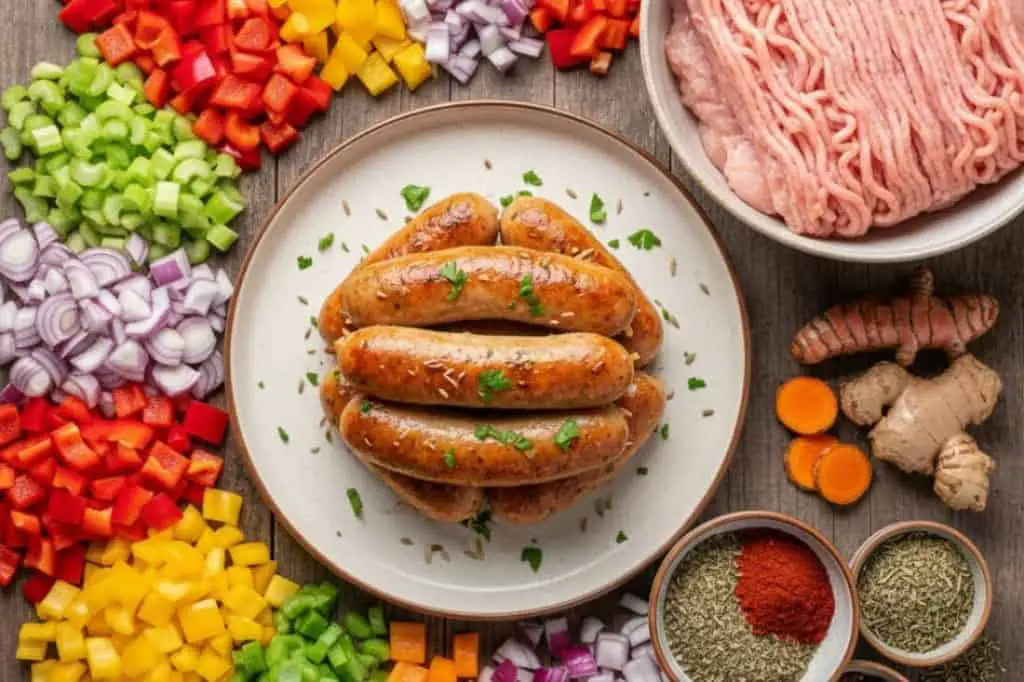
You do not have to give up chicken sausage to care about inflammation, but you do have to be more deliberate about it.
Choose better labels
- Look for phrases like “no nitrates or nitrites added,” “low sodium,” and “minimal ingredients.”
- Check the nutrition facts and aim for under 400 mg of sodium per serving.
- A short ingredient list with familiar words usually means less processing and fewer additives.
Make your own when possible
- Use lean ground chicken.
- Season with your own herbs, spices, garlic, onion, and a moderate amount of salt.
- This way you avoid preservatives, control sodium, and skip artificial flavors or colors.
Balance the plate, not just the sausage
- Treat sausage as a component, not the main focus.
- Pair it with anti-inflammatory, fiber-rich foods such as:
Leafy greens (spinach, kale, arugula)
Broccoli or other cruciferous vegetables
Bell peppers, tomatoes, or roasted vegetables
Whole grains like quinoa or brown rice
- This mix supports gut health and can help blunt some of the possible inflammatory impact.
Understanding Your Personal Response

Credit: Lacey Baier
Everyone’s body responds to food a little differently, and processed meats really show that. Some people can eat chicken sausage with no obvious reaction, while others feel it right away.
If you have inflammatory arthritis, IBS, or an autoimmune condition, even small portions of processed sausage may trigger symptoms or make existing issues feel worse.
It helps to notice how you feel after you eat it. If you regularly see bloating, joint pain, or digestive discomfort afterward, your body may not be handling certain ingredients well. In that case, cutting back or avoiding chicken sausage is a reasonable, self-protective choice.
For most otherwise healthy people, a good-quality chicken sausage once in a while, as part of a varied diet, is unlikely to cause major problems.
The real concern is frequent, heavy use. The safest approach is moderation: think of chicken sausage as an occasional extra, not an everyday staple.
FAQ
How can chicken sausage affect people who worry about inflammation or have sensitive conditions?
Chicken sausage inflammation risk depends on how it is made. Processed chicken sausage inflammation tends to be higher because additives can affect chicken sausage gut health impact and may increase sausage additives inflammation.
People with arthritis or chicken sausage inflammation in sensitive individuals may react more to chicken sausage high salt inflammation.
Paying attention to chicken sausage intake moderation inflammation can help manage symptoms.
Does sodium play a role in inflammation for chicken-sausage eaters?
Sodium can influence inflammation. Chicken sausage sodium content inflammation becomes more important when high-sodium sausage and hypertension inflammation occur together.
Frequent sausage eating inflammation may also increase chicken sausage and blood pressure inflammation.
Chicken sausage salt and kidney inflammation may rise with heavy intake. Choosing a chicken sausage sodium-reduction choice may help lower chicken sausage inflammation risk.
Do nitrates and nitrites raise inflammation linked to chicken sausage?
Nitrates and nitrites may affect inflammation in some people. Chicken sausage preservatives nitrates nitrites inflammation can increase concerns because nitrites sausage inflammation risk can rise when heated.
Nitrates in chicken sausage health effects also connect to sausage nitrosamines inflammation and cooked sausage by-products inflammation.
Research on processed meats and inflammatory markers is mixed, so chicken sausage label checking for nitrates remains helpful.
How does processed chicken sausage compare with fresh options for inflammation?
Whole food vs processed sausage inflammation differs in meaningful ways. Chicken sausage vs fresh chicken inflammation is often higher because processed white meat sausage health concerns include additives.
Lean poultry sausage vs processed sausage inflammation varies too, since chicken sausage artificial preservatives inflammation may increase chicken sausage oxidative stress.
Choosing clean-label chicken sausage benefit options can lower the chicken sausage inflammatory diet flag for some people.
How can I reduce inflammation concerns while still enjoying chicken sausage?
You can reduce risk by limiting processed meat consumption inflammation. Chicken sausage balanced diet inflammation mitigation involves chicken sausage portion control inflammation and selecting chicken sausage natural ingredients inflammation.
Grilled sausage advanced glycation end products can increase high-heat cooking sausage inflammation, so using lower-heat cooking methods helps.
Chicken sausage safe occasional use inflammation fits well into a thoughtful, anti-inflammatory eating pattern.
Making Informed Choices About Chicken Sausage
The link between chicken sausage and inflammation is not simple. The chicken itself is a lean, healthy protein; the concern comes from processing, salt, and additives.
By reading labels and choosing low-sodium, nitrate-free options with short ingredient lists, you can lower much of that risk.
Using gentler cooking methods like baking and serving sausage alongside antioxidant-rich vegetables helps even more.
The goal is not to cut it out completely, but to enjoy it in smarter ways, with good quality, careful preparation, and moderation.
References
- https://www.cancer.gov/about-cancer/causes-prevention/risk/diet/cooked-meats-fact-sheet
- https://www.mdpi.com/2304-8158/12/20/3788
Related Articles
- https://milkwoodrestaurant.com/chicken-sausage-comparison-with-other-sausages/
- https://milkwoodrestaurant.com/turkey-vs-chicken-sausage/
- https://milkwoodrestaurant.com/best-way-to-cook-chicken-sausage-in-oven/
Was this helpful?

I’m Mary R. Q. , a seasoned professional chef dedicated to elevating home cooking experiences. Through my expertise in the culinary arts, I provide practical cooking tips and insightful reviews of kitchen utensils on my blog, milkwoodrestaurant.com. As a passionate advocate for transforming everyday meals into extraordinary culinary adventures, I aim to empower home cooks with the knowledge and tools they need to create delicious and memorable dishes. I’m also an author of the book “1,001 Kitchen Tips & Tricks: Helpful Hints for Cooking, Baking, and Cleaning (1,001 Tips & Tricks)” which is sold on Amazon. Join me on a flavorful journey as we explore the art of cooking and the essential tools that make it a joy.







![Preparing [champ chicken sausage] - raw sausages boiling in a pot and cooking in a pan.](https://milkwoodrestaurant.com/wp-content/uploads/2026/02/image-1-4-150x150.jpg)
