Chicken sausage needs to reach an internal temperature of 165°F (74°C) to be safe to eat. At this temperature, harmful bacteria such as Salmonella are destroyed, which is why it is the standard recommended by the USDA for all ground and processed poultry.
Color, firmness, or “how it looks” are not reliable signs of doneness, so a digital meat thermometer is the best tool to check.
Once you know what to look for, the process is simple and repeatable. Keep reading to learn why 165°F matters, how to measure it, and how to cook chicken sausage perfectly every time.
Key Takeaways
- The safe internal temperature for chicken sausage is 165°F (74°C).
- Always use a meat thermometer to check the temperature accurately.
- Let the sausage rest for a few minutes after cooking for the best results.
Why Temperature is Non-Negotiable for Safety
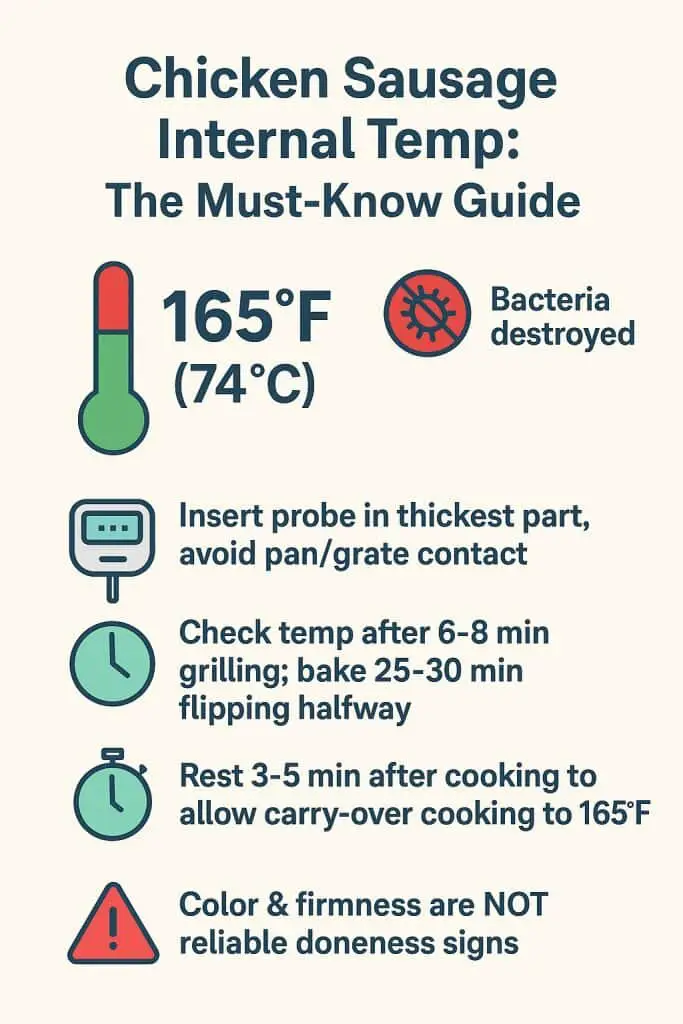
Some meats will “tell” you when they are done. Poultry is not one of them, and chicken sausage is a good example of why temperature matters more than looks.
Higher bacteria risk
- Poultry, including chicken sausage, is more likely to carry harmful bacteria such as Salmonella (1) and Campylobacter (2).
- These can cause serious foodborne illness if the meat is undercooked.
Why 165°F (74°C) matters
- The 165°F (74°C) standard is based on food safety research, not guesswork.
- At this temperature, those bacteria are destroyed almost instantly, giving you a strong safety margin.
Why you cannot trust appearance
- Sausage can brown on the outside while the center is still below 165°F.
- It may stay slightly pink even when fully cooked, especially if it contains curing agents or certain seasonings.
- Color, clear juices, or firmness are not reliable signs of safety.
Once you treat 165°F as your safety line, you get both: sausage that is safe to eat and a lot more confidence every time you cook it.
The Right Way to Use Your Meat Thermometer
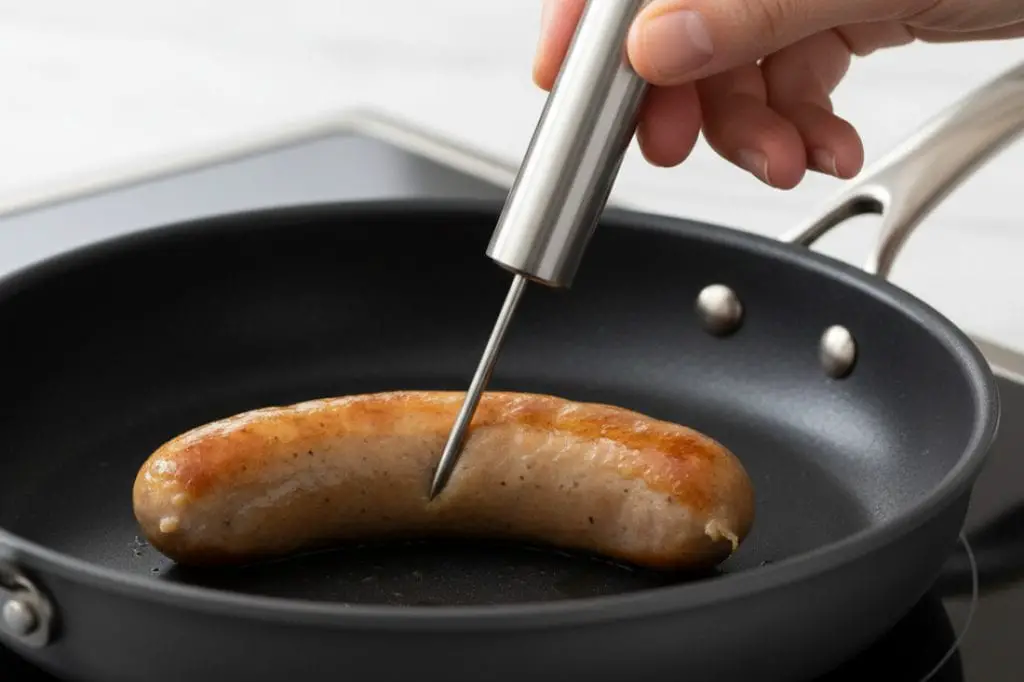
Sometimes the difference between “I think it’s done” and “I know it’s done” is just a few seconds with a thermometer.
Use a reliable digital meat thermometer. Accuracy depends on the tool. A basic, well-made digital thermometer is usually enough.
When cooking on the stovetop, following solid stovetop chicken sausage techniques helps you control heat better, which makes your temperature checks even more accurate.
Place the probe in the right spot
- Insert the probe into the thickest part of the sausage.
- Aim for the center of the meat, not the edge.
- Make sure the tip is not touching the pan, grill grates, or any bone (if it is a larger, bone-in product). The center heats last, so its temperature is the best sign of doneness.
Check more than one link in a batch. When cooking several sausages, test at least two links to be sure heat is spreading evenly.
Let the reading settle. Hold the probe in place for a few seconds until the number stops climbing. A fast beep does not always mean the thermometer has fully registered the true internal temperature.
This small routine takes only moments, but it improves both safety and quality, for chicken sausage and almost any other meat you cook.
Grilling and Pan-Frying for a Perfect Sear
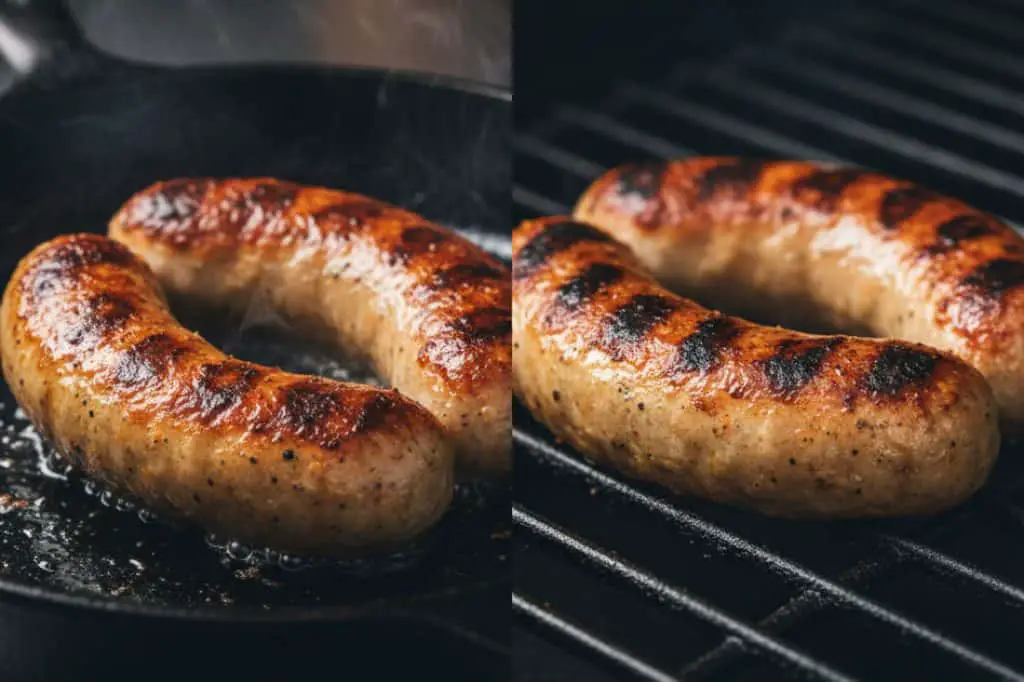
There is a kind of quiet pride in pulling sausage off the grill and knowing it is both safe and still juicy.
Use medium heat, not high
- Grilling or pan-frying works best over medium heat. High heat can burst the casing or burn the outside while the inside stays undercooked.
- Aim for about 10-15 minutes of cooking time, turning the sausages often with tongs so they brown evenly on all sides.
- You can even explore more variations through chicken sausage cooking methods to see how different heat levels influence texture and browning.
Start checking earlier than you think
- After 6-8 minutes, begin checking the internal temperature. Do not wait until they “look done.”
- Insert your thermometer into the center of a sausage and see how close you are to 165°F (74°C). You can nudge the heat up or down and adjust the timing based on what you see.
Pull at 165°F and let them rest
- Once the thermometer reads 165°F, take the sausages off the heat right away. Let them rest for a few minutes before serving.
- This approach gives you chicken sausage that is safe, still juicy, and has that crisp, golden-brown exterior most of us are aiming for.
Baking for Hands-Off Convenience
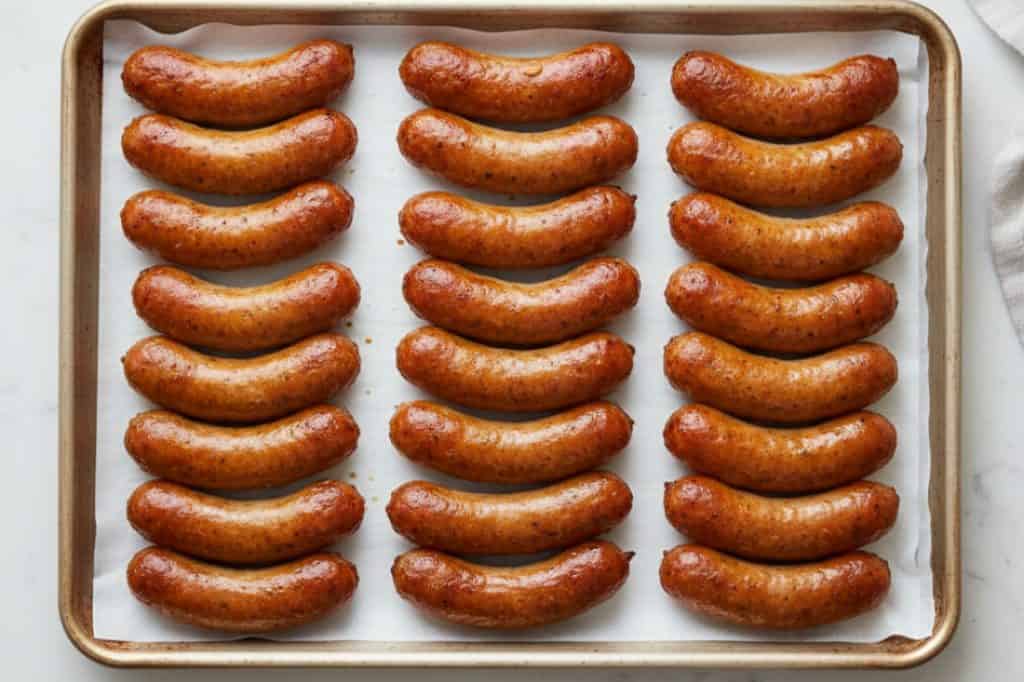
Baking is a simple way to cook a lot of chicken sausage at once without standing over the stove.
Set up the oven and pan
- Preheat your oven to 375°F (190°C).
- Arrange the sausages in a single layer on a baking sheet so they are not crowded. If you’re curious about how different prep styles influence oven results, making chicken sausage can show how seasoning and shaping can affect final texture.
- Lining the pan with parchment paper makes cleanup easier.
Cook and flip
- Bake for about 25-30 minutes.
- Halfway through, flip each sausage to encourage even browning.
Check for 165°F at the end
- About 5 minutes before you expect them to be done, start checking the internal temperature.
- When the thickest part of the sausage reaches 165°F (74°C), remove them from the oven.
Baking gives you evenly cooked, safe sausage with very little hands-on work.
Understanding Carry-over Cooking for Juicy Results

Credit: wikiHow
Carry-over cooking is a simple idea that makes a big difference in how juicy your sausage turns out.
When you take the sausage off the heat, it does not stop cooking right away. The heat trapped inside keeps working, and the internal temperature can rise by 5 to 10°F in the first few minutes.
You can use this to your advantage. For the best texture:
- Remove chicken sausage from the grill, pan, or oven when it reaches about 160°F (71°C).
- Let it rest for 3-5 minutes. During this time, the temperature will usually climb to the safe 165°F (74°C) without drying it out.
This short rest also lets the juices move back through the sausage. If you cut it open right away, those juices run out onto the plate and the sausage ends up drier.
Carry-over cooking may raise internal temperature a few degrees, but always confirm with a thermometer that it reads 165 °F before serving, do not rely on residual heat alone.
FAQ
What should I do if my chicken sausage internal temp isn’t reaching 165°F even after long cooking?
If the chicken sausage internal temp stays below 165°F, keep cooking and check the thickest part with an instant-read thermometer chicken sausage.
Don’t rely on color. Undercooked links raise the risk of undercooked chicken sausage and chicken sausage bacteria risk.
Aim for the safe temp chicken sausage of 165°F chicken sausage, which matches the USDA recommended temp chicken sausage.
How can I tell the difference between chicken sausage doneness temp and appearance?
Appearance can mislead you, since chicken sausage no pink inside doesn’t always mean it hit the correct temp.
Always trust the internal cooking temp for chicken sausage. Use a digital meat thermometer chicken sausage and measure the thickest part sausage temperature.
The safe internal temp poultry sausage is 165 °F chicken sausage, or 74°C chicken sausage temp.
What temperature to cook chicken sausage if I’m using an air fryer, oven, or pan?
No matter the method, the chicken sausage cooking temperature goal stays the same: reach the minimum internal temp chicken sausage of 165°F.
Air fryers heat fast, so check early. Oven-bake or pan-fry and follow chicken sausage cooking guidelines.
What matters is the internal temp vs appearance chicken sausage, not the appliance you pick.
How do I reheat leftover chicken sausage and ensure it’s safe to eat?
Warm leftovers until the reheated chicken sausage safe temp reaches 165°F again. This prevents chicken sausage avoid food-borne illness issues.
Use a thermometer for a clear chicken sausage thermometer reading. Make sure juices run clear, following basic safe cooking practices chicken sausage.
Never guess; verify chicken sausage internal temperature every time.
Is there a safe way to handle raw links so I avoid chicken sausage Salmonella safety temp concerns?
Handle raw links like any poultry. Follow food safety temp poultry sausage guidelines and cook sausage until safe internal temp.
The poultry sausage safe temperature is 165°F, which also covers chicken sausage Campylobacter elimination temp needs.
Chill leftovers fast and follow chicken sausage temperature instructions to lower chicken sausage health safety risks.
Mastering Chicken Sausage Safety
Cooking chicken sausage safely really comes down to one main rule: it needs to reach 165°F (74°C) inside, and you should check that with a meat thermometer.
This rule is the same no matter how you cook it: grilling, baking, or pan-frying. Hitting 165°F on the inside helps protect you from foodborne illness and gives you more reliable results every time.
For juicier sausage, use carry-over cooking: take the sausage off the heat when it reaches about 160°F, then let it rest for a few minutes.
The temperature will rise to 165°F as it sits. With a basic thermometer and this simple habit, you can cook chicken sausage safely and confidently.
References
- https://en.wikipedia.org/wiki/Salmonella
- https://en.wikipedia.org/wiki/Campylobacter
Related Articles
- https://milkwoodrestaurant.com/chicken-sausage-recipes-and-cooking-methods/
- https://milkwoodrestaurant.com/how-do-you-make-chicken-sausage/
- https://milkwoodrestaurant.com/how-to-cook-chicken-sausage-on-stove/
Was this helpful?

I’m Mary R. Q. , a seasoned professional chef dedicated to elevating home cooking experiences. Through my expertise in the culinary arts, I provide practical cooking tips and insightful reviews of kitchen utensils on my blog, milkwoodrestaurant.com. As a passionate advocate for transforming everyday meals into extraordinary culinary adventures, I aim to empower home cooks with the knowledge and tools they need to create delicious and memorable dishes. I’m also an author of the book “1,001 Kitchen Tips & Tricks: Helpful Hints for Cooking, Baking, and Cleaning (1,001 Tips & Tricks)” which is sold on Amazon. Join me on a flavorful journey as we explore the art of cooking and the essential tools that make it a joy.







![Preparing [champ chicken sausage] - raw sausages boiling in a pot and cooking in a pan.](https://milkwoodrestaurant.com/wp-content/uploads/2026/02/image-1-4-150x150.jpg)
