A 100-gram serving of cooked chicken breast has about 31 grams of protein. The same amount of most cooked sausages only offers 12 to 18 grams. The difference comes from sausage’s higher fat content and other added ingredients. This makes chicken the clearer choice for protein.
If you’re counting every gram of protein or watching your calories closely, this difference matters. At Milkwoodrestaurant, our chefs and nutritionists look at these details. They use this information to create high-protein dishes that help you meet your fitness goals, but still taste great.
Chicken Breast Provides More Protein Than Most Sausages
- Chicken breast has almost double the protein of a typical pork or beef sausage for the same weight. It also has fewer calories and less fat.
- Sausage is still a source of protein, but the extra fat, salt, and fillers mean you get less protein in every bite.
- What’s healthiest for you depends on what you’re trying to do. But if you want the most protein for the fewest calories, plain chicken is almost always the better pick.
Lean Muscle Makes Chicken a Higher-Protein Food
Chicken breast is lean muscle. Sausage is a mixture of meat, a lot of fat, water, and spices. Those extra ingredients dilute the protein.
The USDA confirms that 100 grams of cooked chicken breast gives you about 31 grams of pure protein. It’s a straightforward source. The muscle in chicken is full of complete protein, supplying all the amino acids your body requires.
Sausage is made for flavor. A common pork or beef sausage recipe is often 25% to 30% fat. Fat improves taste and adds calories, but it contributes zero protein. This means each bite contains less of the actual meat that provides protein.
In factories, sausage is made by emulsifying meat. This process mixes finely ground trimmings with blocks of fat, ice water, and binding salts. This manufacturing method spreads out the intact muscle fibers, reducing the amount of pure muscle in each gram compared to a solid piece of chicken.
The goal of sausage is taste and texture, not being a protein powerhouse. This fundamental difference is why a serving of plain chicken has significantly more protein than a serving of most processed sausages.
A Side-by-Side Protein Comparison Highlights Chicken’s Advantage
A direct comparison shows the chicken’s clear lead. Chicken breast has about twice the protein of many regular sausages when you compare equal weights.
The data from the USDA makes it obvious. Not only does chicken have more protein, but it also has fewer calories and a lot less saturated fat than most pork or beef sausages.
| Food | Protein | Fat | Calories |
| Chicken breast | 31g | 3.6g | 165 kcal |
| Chicken thigh | 26g | Higher | Moderate |
| Pork sausage | 12–18g | 25–30g | 300–340 kcal |
| Beef sausage | 12–18g | High | High |
| Turkey or chicken sausage | 16–20g | Moderate | Lower |
Even turkey sausage and chicken sausage, which are better than many pork kinds, still don’t match the protein you get from a plain grilled or roasted chicken breast.
Sure, some expensive, extra-lean sausages might come closer. But you have to check the label, because the protein amount can change a lot from one brand to another.
Higher Fat Content Lowers Protein Density in Sausage
Fat reduces protein density because fat and protein occupy the same serving weight. The more fat a sausage has, the less room there is for lean meat. That means less protein in every bite.
Traditional sausage uses a lot of added fat to make it taste better and feel juicier. A 100-gram serving of pork sausage can have 25 to 30 grams of fat. All that fat pushes the actual meat, and its protein, out of the way.
Official laboratory data from the USDA FoodData Central database confirms that a 100-gram sample of boneless, skinless, grilled chicken breast yields exactly 31 grams of protein against a minimal 3.6 grams of total lipid fat. This benchmark demonstrates why intact avian muscle tissue serves as the baseline control for high-density protein formulations.
This concept is often called protein dilution. The more fat present, the fewer grams of protein remain within the same weight of food.Protein efficiency also matters when calories are limited.
- Chicken breast provides approximately 19g of protein per 100 calories.
- Many commercial breakfast sausage protein products provide around 9g per 100 calories.
- Lean meats support higher protein intake without dramatically increasing calorie consumption.
For people following a high protein diet, protein for fat loss, or bodybuilding nutrition, this higher protein density can make daily macro tracking much easier.
Chicken Sausage Is Usually Leaner Than Pork Sausage
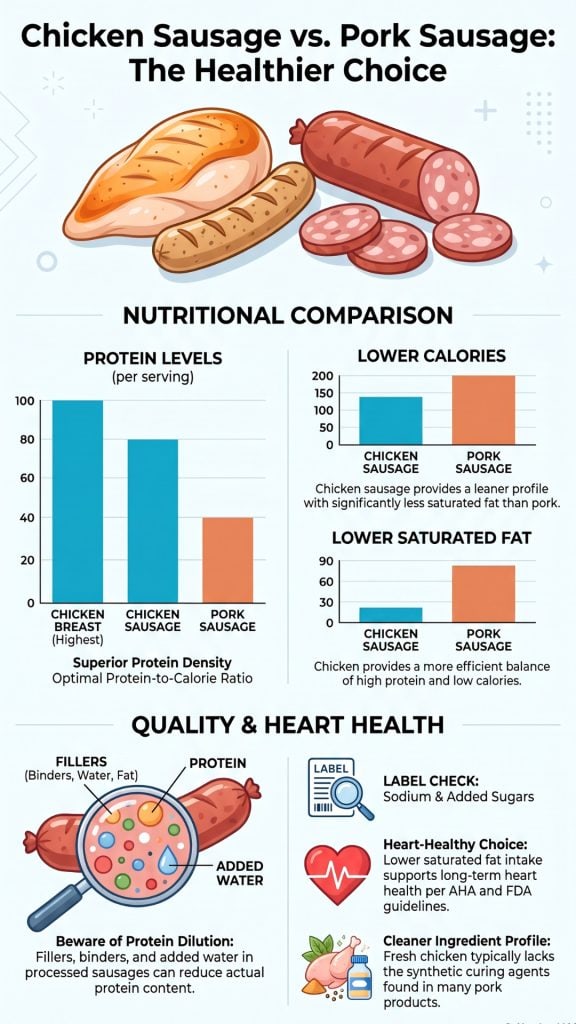
Chicken sausage is generally a healthier choice than pork sausage. However, it still can’t beat plain chicken breast for pure protein.
Most chicken sausage is made with leaner meat. This means it usually has fewer calories and less saturated fat than pork sausage. The American Heart Association notes that watching your saturated fat and sodium intake is good for your heart.
As noted by the U.S. Food and Drug Administration (FDA):
“Diets higher in saturated fat are associated with an increased risk of developing cardiovascular disease. Saturated fat is found in a variety of foods, including processed meats and poultry products (such as bacon, hot dogs, jerky, some luncheon meats, and sausages)” – U.S. Food and Drug Administration (FDA)
Here’s what chicken sausage usually has over a regular pork sausage:
- Less saturated fat
- Fewer calories
- A bit more protein
- A better balance of protein to calories
You need to check the label every time. Look for:
- Protein per serving
- Sodium content
- Added sugars
- The ingredient list
- The serving size
Health-conscious eaters are catching on to a trick with store-bought chicken sausages: hidden fillers. To make them, companies often swap pork fat for plant oils or starchy binders. This lowers the saturated fat, but it also dilutes the protein in every serving.
Cooking at home with a whole chicken breast avoids this. You’re just using the muscle meat, with no processed fillers to get in the way.
The sausage-making process itself is the core issue. It always involves mixing meat with fat, salt, water, and spices. Adding binders like starch is standard. Science shows this creates a meat emulsion, which is fundamentally different from a solid piece of muscle.
All those extra ingredients add bulk and weight, but very little protein. The protein you do get is spread thin. Processing dilutes protein in a few key ways:
- Added Water: Increases weight, diluting the protein.
- Added Fat: Occupies space meant for muscle.
- Binders & Fillers: Ingredients like starch stretch the product further.
- Emulsification: Alters the meat’s natural structure.
There’s another health concern beyond just salt. Major public health reviews point to synthetic curing agents, like sodium nitrite, as a primary risk in processed meats. When these chemicals are cooked at high heat, they can react with other compounds in food to form nitrosamines, which are known carcinogens.
Fresh, uncured chicken doesn’t contain these additives. Choosing it removes this specific risk, which supports both clean eating and the latest advice on long-term health.
Chicken Provides the Best Protein for Muscle Building
Chicken breast is usually the winner if you want the most protein. Most athletes and gym-goers pick grilled chicken. It gives you high-quality protein without much fat.
Updated clinical guidelines from leading sports dietetics organizations emphasize the role of specific amino acid thresholds, particularly the leucine trigger required to optimize muscle protein synthesis. Intact chicken breast consistently yields approximately 2.5 grams of leucine per 100-gram serving, meeting this metabolic threshold efficiently.
Conversely, blended sausage products exhibit highly erratic amino acid profiles due to the inclusion of connective tissue trimmings, making them less reliable for structured post-workout recovery protocols.
Here’s why chicken is better for muscle:
- It’s packed with protein.
- It’s very low in fat.
- It’s easy to track in your diet.
- It has the full set of amino acids.
- You can cook it a hundred different ways.
Sausage isn’t completely useless, though. If someone is trying to gain weight and needs more calories, the extra fat in sausage can help. Using a lean turkey or chicken sausage in your weekly meals can also keep things from getting boring, and it still adds some protein.
Chicken Supports Weight Loss With More Protein and Fewer Calories

Chicken gives you a lot more protein for far fewer calories. Eating more protein helps you feel full and protects your muscle while you’re cutting calories.
Nutrition experts at places like Harvard say that getting enough protein can help control your appetite and maintain muscle when you’re eating less.
Research from the International Journal of Peptides shows:
“Protein induces prolonged ghrelin suppression and is considered to be the most satiating macronutrient. Fat, on the other hand, exhibits rather weak and insufficient ghrelin-suppressing capacity.” – International Journal of Peptides
This means protein actively turns down your hunger signals for a longer time, while fat doesn’t. Choosing chicken over sausage isn’t just about protein numbers, it’s about keeping you fuller for longer, making weight management easier.
For people pursuing healthy protein options, chicken works especially well because it combines:
- High protein density
- Lower calorie intake
- Lower saturated fat
- Greater meal flexibility
That said, successful weight loss depends on total calorie intake and overall dietary quality rather than a single food choice.
Prefer Chicken of Sausage for Meal Prep and Protein Goals
Most fitness-focused Reddit users recommend chicken because it provides better macro efficiency. Across communities such as fitness and nutrition, users frequently describe chicken breast as the default protein source for meal prep because it delivers consistent protein with relatively few calories. Many also mention that tracking chicken nutrition facts is easier than estimating nutrition for heavily processed sausages.
Common reasons people still enjoy sausage include:
- Better flavor
- Greater convenience
- Less meal-prep boredom
- Variety in breakfast meals
Frequently mentioned concerns include:
- Hidden sodium
- Added sugars
- Marketing claims around “healthy” chicken sausage
- Unexpected calorie increases
Community discussions generally align with USDA nutrition data: chicken remains the more efficient choice for protein, while sausage is better viewed as an occasional addition rather than a primary protein source.
The Best Protein Source Depends on Your Nutrition Goals
High Protein Chicken Sausage Jambalaya! Only 476 Calories!🍗🌭🍲 #food #shorts #highproteinrecipes
Credit: Legend’s_Cooking
The best choice depends on personal nutrition goals instead of protein alone. People seeking maximum protein quality, lean meat comparison, and calorie efficiency will usually benefit from whole chicken. Those prioritizing convenience or richer flavor may occasionally include sausage while balancing the rest of the day’s nutrition.
Choose chicken when the goal is:
- Maximum protein
- Fat loss
- Lower calories
- Bodybuilding nutrition
- Meal prep consistency
Choose sausage when the goal is:
- Convenience
- Rich flavor
- Higher-energy meals
- Occasional dietary variety
A simple habit makes every decision easier: always compare the nutrition label instead of assuming every sausage is a high-protein food.
Simple Cooking Methods Add Flavor Without Reducing Protein
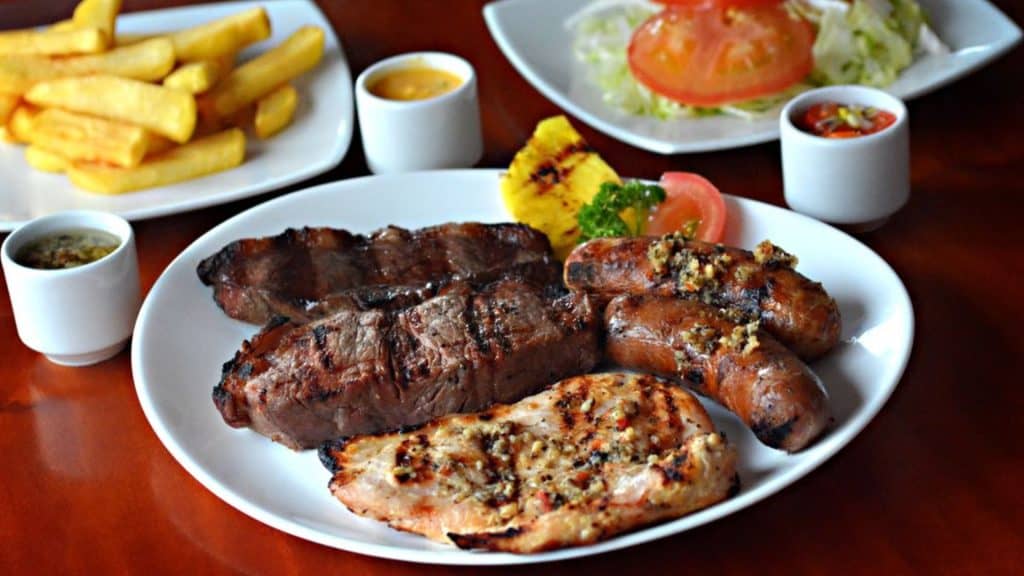
You can keep chicken interesting without losing its protein. Just season it well and try different ways to cook it.
A simple trick restaurants use to keep chicken breast juicy is brining. They soak the chicken in a saltwater solution for a short time. This process changes the muscle fibers so they hold onto moisture during cooking, giving you a tender result without needing to add a lot of oil or butter.
Some good ways to cook chicken are:
- Grilling
- Roasting
- Sous vide
- Air frying
- Brining (before cooking)
Sausage can still be part of a healthy diet. The key is balance. Have a smaller portion of sausage alongside plenty of vegetables, whole grains, or other whole food proteins. This is much better than making processed meat the main focus of your meal.
Choose the Protein That Fits Your Nutrition Goals
Pick the protein that matches what you’re trying to do. If you want more protein without a lot of extra calories, go with chicken. It delivers more protein per serving with less fat, making it simpler to hit your targets. That’s the main point.
At Milkwoodrestaurant, we keep our menu data current. We track new information about ingredients and pay attention to how our guests’ eating habits change.
If you have specific nutrition needs or goals, you can always tell our kitchen staff. This helps us make sure the menu works for people aiming for high performance, as well as those following special diets for health reasons.
FAQ
Is chicken breast or chicken thigh better for a high-protein diet?
If you’re following a high protein diet, protein in chicken breast is generally higher than protein in chicken thigh because breast meat contains less fat and more lean muscle. However, chicken thighs still provide complete protein and essential amino acids. If your goal is to increase your daily protein intake while keeping calories lower, chicken breast is usually the better choice.
Does cooking change chicken protein content or sausage protein content?
Cooking does not significantly change chicken protein content or sausage protein content. Most of the change comes from water loss during cooking, which makes the protein more concentrated by weight. Comparing protein per 100g or protein per serving after cooking gives a more accurate comparison than measuring raw and cooked meat together.
How can I compare chicken vs sausage nutrition when shopping?
The easiest way to compare chicken vs sausage nutrition is by reading the nutrition label. Check the amount of protein, calories, saturated fat, and sodium in each serving. Reviewing chicken nutrition facts, sausage nutrition facts, and the overall macronutrient comparison helps you choose the option with better protein density for your nutrition goals.
Is turkey sausage protein a better choice than pork or beef sausage?
Turkey sausage protein is often higher than protein in pork sausage or protein in beef sausage, but the exact amount depends on the ingredients. Some turkey sausages still contain added fat and sodium. Comparing turkey vs chicken protein, pork vs chicken protein, and beef vs chicken protein on the nutrition label helps you make a more informed choice.
Related Articles
- https://milkwoodrestaurant.com/chicken-sausage-links-calories/
- https://milkwoodrestaurant.com/chicken-sausage-recipes-grill/
- https://milkwoodrestaurant.com/chicken-sausage-a-low-fat-option-for-a-healthy-diet/
References
- https://www.accessdata.fda.gov/scripts/InteractiveNutritionFactsLabel/saturated-fat.cfm
- https://onlinelibrary.wiley.com/doi/10.1155/2010/710852