Chicken sausage is moderate in fat. Most products have 8 to 15 grams of fat per 100 grams, by FDA standards. It’s leaner than pork sausage, but not as lean as plain chicken breast. People often choose it to cut saturated fat while keeping some flavor. But watch out, the word “lean” on the package doesn’t tell the whole story. You need to check the actual numbers.
This guide gives you those numbers, shows what you might be trading away, and offers practical tips for fitting chicken sausage into your meals. If you want the real details, keep reading.
Is Chicken Sausage Low Fat? Key Facts at a Glance
- Chicken sausage is 30–50% lower in fat than pork, but still exceeds strict low-fat definitions.
- Most products contain moderate fat and high sodium, which impacts heart health goals.
- Choosing lean, low-sodium, clean-label options makes it more diet-friendly.
Quick Reality Check: Is Chicken Sausage Truly Low Fat?
Chicken sausage is not truly low-fat by official standards, typically 10–14g fat per 100g (USDA average ~12g). Most supermarket chicken sausages use a mix of breast and thigh meat. That blend raises fat content compared to plain poultry. According to USDA nutrient data, fat can make up 40–50% of total calories in some products.
Marketing often frames chicken sausage as a lean protein source, especially compared to pork. That claim holds up in relative terms, but it does not meet strict dietary definitions used in clinical nutrition.
This gap between perception and reality explains why many “healthy sausage choice” products still fall into a moderate-fat category.
- Typical fat range: 8–15g per 100g
- FDA low-fat definition: ≤3g per serving
- Calories: 180–220 per 100g
That distinction shapes how you should use chicken sausage in a diet focused on fat control.
What Does “Low Fat” Actually Mean for Sausages?
“Low fat” means ≤3g of fat per serving or per 100 calories, a standard defined by the FDA, and most chicken sausages exceed this limit. In clinical nutrition, low-fat foods are designed to reduce total calorie intake and limit saturated fat. This matters for managing cholesterol and cardiovascular risk.
Chicken sausage often includes added ingredients like oils, skin, or binders. These raise total fat beyond what you would expect from plain chicken. The difference becomes clear when comparing whole foods. Skinless chicken breast contains only 3-4g fat per 100g, making it a true low-fat benchmark.
To identify a genuinely low-fat sausage, focus on these label markers:
- Total fat: ≤5g per serving
- Saturated fat: minimal or under 2g
- Protein density: higher than fat grams
Understanding these thresholds helps separate marketing claims from evidence-based nutrition.
How Does Chicken Sausage Compare to Other Sausages?
Chicken sausage contains 30-50% less fat than pork sausage, but still delivers 10-15g fat per 100g, based on USDA data. It sits in the middle of the sausage spectrum. Leaner than pork, but heavier than whole chicken cuts. Turkey blends can drop fat further, especially when made from breast meat.
Below is a simplified comparison of common sausage options.
| Type | Fat (per 100 gr) | Calories | Protein | Sodium |
| Chicken Sausage | 10-15g | 180-220 | 15-20g | 600-900 mg |
| Lean Chicken/Turkey Blend | 5-8g | 120-160 | 18-22g | 600-800 mg |
| Pork Sausage | 20-30g | 250-350 | 12-15g | 800-1000 mg |
| Chicken Breast | 3-4g | 110–120 | 25g | 70mg |
According to the USDA FoodData Central database, poultry-based sausages still carry significantly more fat than unprocessed meat. That comparison makes one point clear. Chicken sausage is a better swap, not a low-fat staple.
Why Chicken Sausage Is Not Always Low Fat
Chicken sausage often reaches 40-50% of calories from fat due to ingredients like skin and added oils, as seen in products from brands like Aidells. Manufacturers rely on fat for texture and flavor. Without it, sausage becomes dry and less appealing. That leads to higher fat levels even in products labeled “lean.”
Processing methods also play a role. Emulsification blends fat evenly into the meat, making it harder to remove during cooking.
Key reasons fat content rises include:
- Use of dark meat and skin
- Added fats for juiciness
- Binding agents that trap fat
- Misleading labels like “made with chicken”
These factors explain why chicken sausage can approach pork sausage levels in some cases.
Hidden Health Trade-Offs: Sodium, Processing, Nitrates
Chicken sausage is often sold as the healthy choice. It’s lower in fat than pork, sure. But that’s only part of the story.
Let’s talk about salt. A lot of it. You might get 700, even 900 milligrams of sodium in a 100 gram serving. Processed meats such as chicken sausage are often high in sodium; diets high in sodium raise blood pressure and cardiovascular strain (American Heart Association, Dietary Guidelines for Americans, and reviews of processed‑meat–related cardiovascular risk).
And it’s processed meat. Study after study links eating processed meats, chicken sausage included, to a higher chance of heart trouble. Then there are the preservatives. Nitrates and nitrites. They keep the color pink and stop bacteria. But research keeps asking questions about what they do to us over years of eating them. The science isn’t finished, but it gives you pause.
Remember this. High salt, high pressure. Processed meat, higher risk. “Lean” on the label doesn’t mean “clean.” It just means less fat.
Having it now and then? Fine, probably. But making it a staple is a gamble with your heart health. Not worth it, really.
Can Chicken Sausage Fit a Weight Loss or Heart-Healthy Diet?
“Harvard T.H. Chan School of Public Health” recommends choosing lean protein sources and limiting processed meats, including many sausages, to support long‑term health and weight management.
Its main advantage is protein content. With 15-20g protein per 100g, it helps maintain satiety and lean mass.
Compared to red meat, it contains less saturated fat. Pork sausage can reach 10g saturated fat, while chicken versions often stay around 3–5g. That makes it useful in structured diets such as Mediterranean-style eating patterns. This weight loss-friendly chicken sausage approach supports satiety while keeping fats and calories under control, helping people align with their nutritional goals more confidently.
To use it effectively:
- Limit portions to one link per meal
- Pair with vegetables and fiber-rich foods
- Choose low-sodium options when possible
In this role, chicken sausage becomes a diet-friendly sausage, not a primary protein source.
Reddit & Real-World Feedback: Why People Doubt “Low Fat” Claims
People online are skeptical when they see “low-fat” slapped on chicken sausage packaging. Scroll through forums and apps like MyFitnessPal, and you’ll find users tracking 10 to 12 grams of fat per sausage link more than what the “low-fat” label suggests. That mismatch sticks in their craw.
There’s talk about bloating and water retention too, which makes sense given the high sodium content. Some folks notice their weight loss stalls after relying too much on processed meats like these.
A typical reaction?
“Low-fat marketing …. but still 12g of fat per link”
What stands out in these conversations:
- Growing attention to food labels
- Worry about fats that aren’t obvious
- Complaints about bloating from salt
- A strong lean toward making sausage at home
This feedback mirrors the nutrition facts. Chicken sausage isn’t unhealthy, but the hype around it being “low-fat” doesn’t always line up with what people find on the plate. In other words, expectations often outrun reality.
Cooking Method: Does Grilling or Air Frying Reduce Fat?
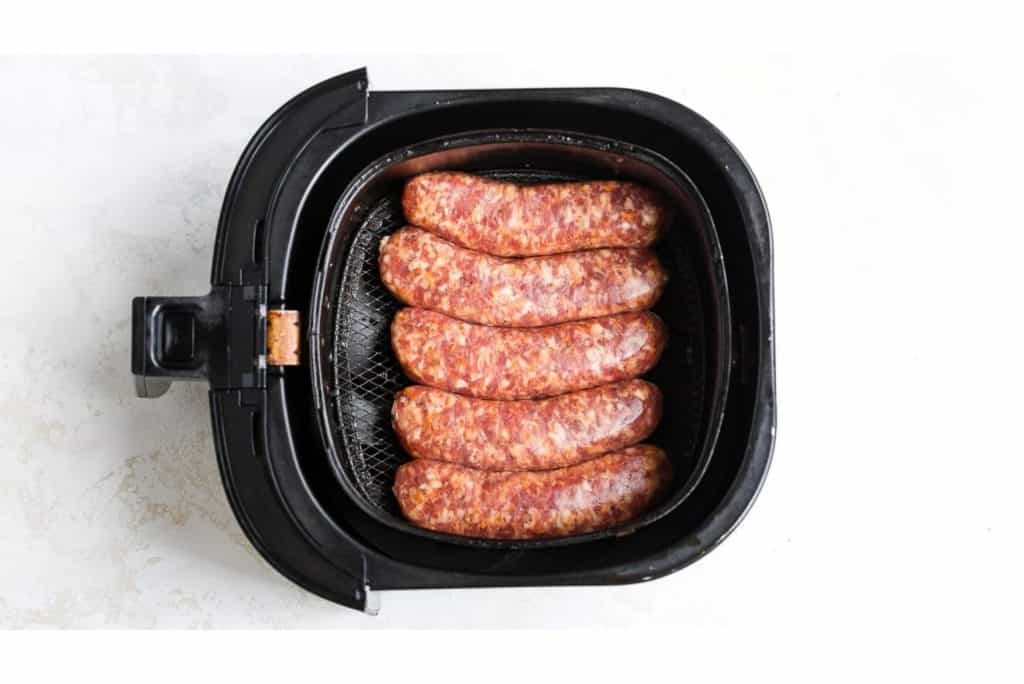
You can definitely trim some fat off your sausage by how you cook it. Methods like grilling or air frying can reduce the total fat content up to 25% per cooking, simply because the heat causes fat to melt and drip away.
Grilling is the most effective for this, the fat drips right through the grates. Air frying works on a similar principle, using hot circulating air to pull moisture and fat out. You’ll often see a little pool of liquid in the bottom of the air fryer basket.
Pan frying, especially if you add extra oil or butter, tends to keep more fat in the food. You can blot the cooked sausage with a paper towel to soak up surface grease, but that won’t remove the fat that’s mixed into the sausage itself.
So, while your cooking method helps, it’s not a magic trick. A fatty sausage is still a fatty sausage after it’s grilled. The type of meat and ingredients you started with matter much more for the final nutrition.
Healthier Chicken Sausage Choice: What to Look For
Picking out a healthier chicken sausage can be tricky. The key numbers to check are the fat and sodium. Aim for less than 7 grams of fat and under 600 milligrams of salt per link. That’s a decent benchmark.
But the real secret is on the back, in the ingredients. A shorter list is almost always better. You want to see “chicken breast” or “all-white meat chicken” right at the top, followed by things you recognize as spices, garlic, maybe a little maple syrup. If you see a bunch of long chemical names, it’s a sign of heavy processing.
Look for labels that say “no added nitrates or nitrites.” Those are preservatives you’re better off avoiding. And watch the sodium! Some brands pack a ton of salt into one little sausage.
Brands like Applegate (6g fat/link). They’re a good place to start looking. Just remember, even the healthier picks are still processed. They’re great for a quick breakfast or tossing in some pasta, but they shouldn’t be the main part of every meal. It’s all about balance and knowing what you’re actually eating.
Is Homemade Chicken Sausage a Better Low-Fat Option?

Absolutely, making your own chicken sausage can be a much better low-fat option. When you use lean chicken breast, the fat content can drop to just 2-5 grams per 100-gram serving. Compare that to most store-bought versions, and the difference is pretty clear.
However, removing fat creates texture challenges. Sausage may turn dry or crumbly without proper technique.
The catch is texture. Lean meat is dry, and without the fat, your sausage can easily turn out crumbly or tough. It’s a common kitchen problem. To fix it, you need to add moisture back in. A splash of broth, some grated apple, or even cooked vegetables like spinach can help a lot. A small amount of a binder, like breadcrumbs or an egg white, will hold everything together.
Cooking technique matters just as much as the ingredients. Don’t blast it with high heat. Cook it gently, and be careful not to overcook it once it’s dry, you can’t fix it. The big advantage here is control. You know exactly what’s in it, with no hidden preservatives.
Chicken Sausage vs Other “Healthy Sausage” Alternative
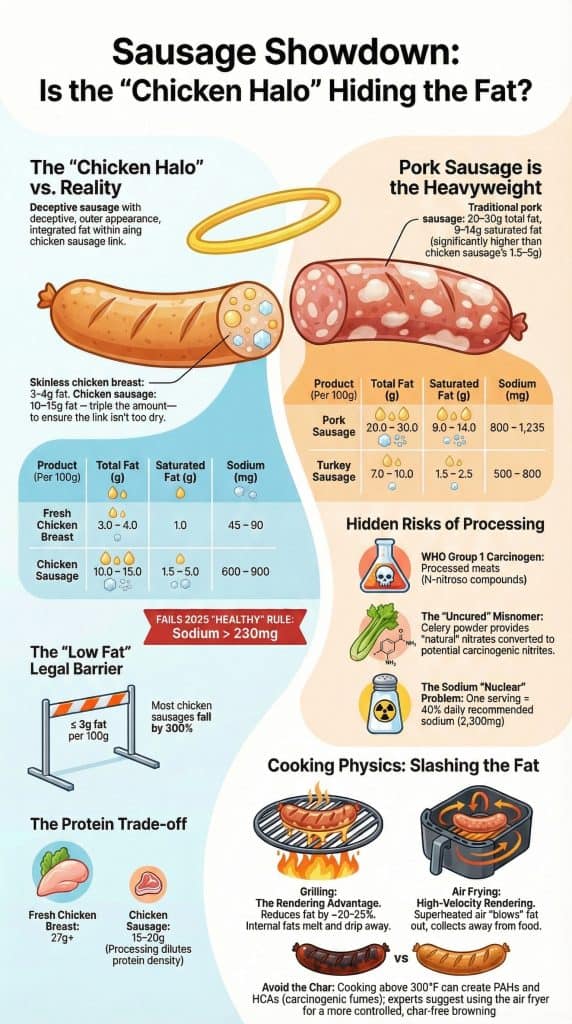
Looking for a healthier sausage? Chicken is a common pick, but it’s worth seeing how it stacks up against turkey and plant-based versions.
Turkey sausage typically has 5 to 8 grams of fat per 100-gram serving. That’s often a bit leaner than a standard chicken sausage, and it delivers comparable protein. It’s a straightforward swap if your main goal is cutting fat.
Plant-based sausages, like those from Beyond Meat, are a different story. They’re completely cholesterol-free, which is a big plus for heart health. The trade-off is a fat content: they can have around 12 grams, often from added oils like coconut or sunflower oil to mimic juiciness.
Then there’s the homemade route. As we covered, you can get the fat content down to 2-5 grams when you control everything.
So what does “healthy” mean here? It completely depends on what you’re prioritizing. Is it lower fat? Turkey or homemade food might win. Avoiding cholesterol? Go plant-based. The healthiest choice isn’t about the main ingredient, it’s about the specific recipe and what’s added to it.
A Smarter Choice, Not a Free Pass
You want something that feels lighter, but still fills you up, and chicken sausage seems like the easy answer. It does cut down on fat compared to pork, but it’s not as lean as it sounds once you check the label. That’s the tradeoff.
If you treat it like a flexible option instead of a go-to staple, it fits just fine into your routine. Pay attention to portions and how you cook it, and you’ll keep things on track without overthinking every meal.
FAQs
Is chicken sausage actually a low fat sausage compared to others?
Chicken sausage is often considered a low fat sausage compared to pork options, but the poultry sausage nutritional profile varies depending on ingredients. Some types are a lean protein source with lower saturated fat in sausage, while others contain added fats. You should always check labels and compare sausage fat content to confirm if it meets high protein low fat goals.
Is chicken sausage good for weight loss and healthy eating?
Chicken sausage can be a weight loss friendly sausage when you follow proper portion control sausage habits. It provides a satiating protein snack and supports lean mass support due to its protein content. Choosing a low calorie sausage with low glycemic sausage benefits helps make it a healthy sausage choice for structured and balanced daily meals.
What makes chicken sausage a healthier sausage choice?
A healthy sausage choice depends on ingredient quality and processing level. Look for natural chicken sausage, no added nitrates sausage, or uncured chicken sausage. These options support clean eating sausage habits and reduce concerns related to processed meat health. A minimally processed sausage with low sodium sausage content also supports heart healthy sausage and blood pressure friendly sausage goals.
How does chicken sausage compare to turkey and other lean sausages?
Turkey and chicken sausage are both lean meat sausage options with comparable protein levels. Chicken sausage may contain slightly more fat depending on formulation. Both can qualify as low carb sausage and keto friendly chicken sausage options. You should compare saturated fat in sausage and sodium content in sausage to make a more accurate choice.
What is the best way to cook chicken sausage to keep it low fat?
The cooking method plays a key role in fat content. Grilled chicken sausage, baked chicken sausage, and air fried sausage reduce added fats compared to pan frying. These methods support clean label sausage meals and help maintain a low processed meat approach. Pairing with vegetables creates a plant forward sausage meal that remains balanced and suitable for regular consumption.
References:
- https://nutritionsource.hsph.harvard.edu/what-should-you-eat/protein/
- https://pmc.ncbi.nlm.nih.gov/articles/PMC3680013/