Chicken sausage and sauerkraut make a lighter take on a classic European favorite without losing the savory, tangy flavors that define the dish. Lean chicken sausage pairs naturally with fermented cabbage, creating a meal that is filling, flavorful, and easy to prepare. From quick skillet dinners to slow cooker recipes, this combination remains a reliable choice for busy weeknights. Keep reading to learn about its history, nutritional benefits, and the best ways to cook it at home.
Quick Flavor Snapshot: Chicken Sausage & Sauerkraut
Chicken sausage and sauerkraut work together as a simple, balanced meal that blends history, flavor, and convenience.
- Lean chicken sausage provides protein while keeping the dish lighter than traditional pork versions
- Sauerkraut adds sharp acidity and fermentation-based depth that balances the savory sausage
- The pairing comes from European food preservation traditions and remains popular for its simplicity and versatility
Why Chicken Sausage and Sauerkraut Make Such a Good Pairing
The secret is balance. Chicken sausage gives savory flavors from meat, herbs, spices, and smoke. Sauerkraut adds acidity, crunch, and deep flavor from fermentation.
Without acidity, rich foods can taste the same after a few bites. Sauerkraut refreshes your palate and keeps the meal interesting.
Fermentation adds more than sourness. During fermentation, lactic acid bacteria convert natural sugars in cabbage into organic acids, creating the distinctive flavor associated with sauerkraut. Key reasons this pairing works:
- Tangy flavors balance savory meat
- Fermentation adds depth
- Different textures create contrast
- Aromatics boost overall flavor
- Mustard complements both
Chicken sausage generally contains less total fat and saturated fat than pork sausage, making sauerkraut’s acidity especially useful for maintaining flavor balance.
This balance is one reason chicken sausage with sauerkraut remains a popular combination across different cooking styles.
The History Behind Sausage and Sauerkraut
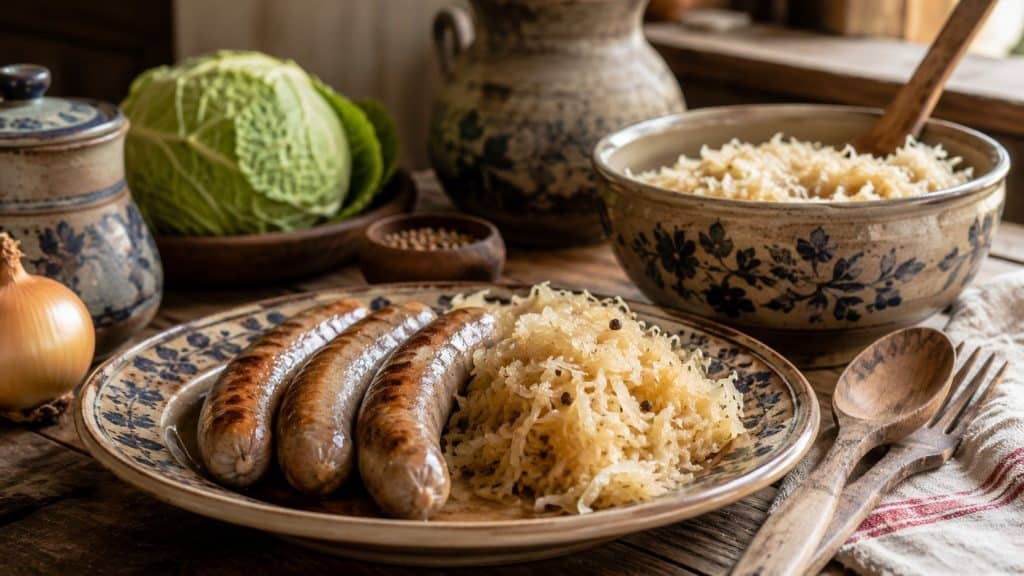
Many people link sauerkraut to Germany, but fermented cabbage is much older. While popular culinary folklore frequently credits the laborers of the Great Wall of China with inventing fermented cabbage using rice wine, historical documentation reveals a parallel timeline in Europe.
Texts from the Roman naturalist Pliny the Elder indicate that Mediterranean communities were actively preserving cabbage in salt brine over 2,000 years ago.
Evidence suggests that Slavic populations independently developed identical lacto-fermentation methods to safeguard essential nutrients against harsh winter shortages, long before the dish became synonymous with Germanic cuisine.
Fermented cabbage became a staple in Central and Eastern Europe because it could be stored for extended periods without refrigeration and provided access to vegetables during winter months. Germany, Poland, Austria, and the Alsace region of France all made their own versions.
Winter was a big reason for this tradition. Fresh vegetables were hard to get in cold months. Fermenting cabbage extended storage life for months while helping preserve nutrients such as vitamin C during winter.
Sausage was made for the same reason. Before refrigerators, preserving meat was important. People made many types of sausage with local spices, smoking, and animals they had.
Combining sausage and sauerkraut happened naturally. Both stored well, both were common, and they tasted better together.
Over time, this pairing became part of regional foods:
- German bratwurst with sauerkraut
- Polish kielbasa and sauerkraut
- Alsatian choucroute garnie
- Beer-braised sausage and sauerkraut
As diets changed, poultry sausages like chicken sausage became popular. They offer the same flavors with less fat and calories.
However, ingredients and manufacturing methods can vary, which is why some consumers pay attention to whether certain products are considered ultra-processed.
The Best Chicken Sausage Varieties to Serve with Sauerkraut
Different chicken sausages change the dish’s flavor. Some are sweet, others smoky, garlicky, or herb-filled. The right choice depends on your taste.
| Sausage Variety | Flavor Profile | Pairs Well With |
| Apple chicken sausage | Sweet and savory | Apples, cider, onions |
| Smoked chicken sausage | Smoky and rich | Potatoes, mustard, caraway |
| Garlic chicken sausage | Bold and savory | Onions, garlic, sauerkraut |
| Italian chicken sausage | Herb-forward | Bell peppers, onions |
| Chicken kielbasa | Traditional, hearty | Mustard, potatoes |
Smoked chicken sausage is often chosen because its flavor profile resembles traditional bratwurst, while chicken kielbasa reflects the seasoning style commonly associated with Polish sausage.
Apple chicken sausage is popular because its sweetness softens sauerkraut’s acidity. This contrast makes the dish easier for people unsure about fermented foods.
Smoked chicken sausage tastes closest to traditional bratwurst and is a safe choice for first-timers. Garlic chicken sausage goes well with caramelized onions, reinforcing flavors without overpowering.
Italian chicken sausage offers a Mediterranean twist with herbs like fennel and oregano, which surprisingly complement fermented cabbage.
How to Cook Chicken Sausage and Sauerkraut Without Drying It Out
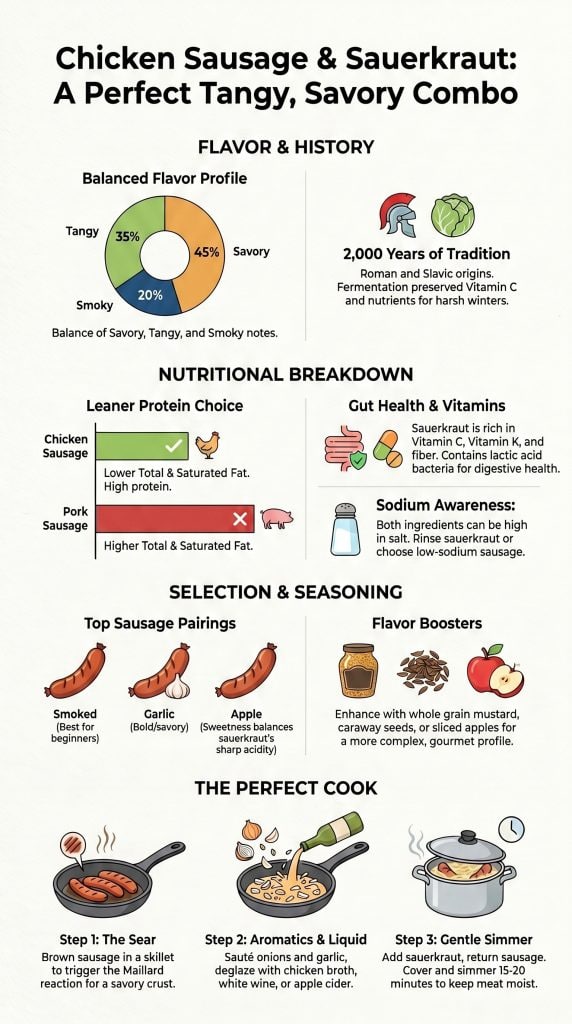
Because poultry contains less fat than pork, chicken sausage requires precise timing to prevent a dry, rubbery texture. Searing the meat in a hot skillet initiates the Maillard reaction, the chemical process where heat transforms amino acids and sugars to create a deeply savory, browned crust.
A good cooking method:
- Heat olive oil in a skillet.
- Brown sausage on all sides, then remove it.
- Cook sliced onions until soft.
- Add garlic and caraway seeds.
- Pour in broth, white wine, or apple cider.
- Stir in sauerkraut.
- Return sausage to the pan.
- Cover and cook gently for 15-20 minutes.
This keeps sausage moist and lets flavors blend.
Air fryers also work well, browning quickly without overcooking. Sheet-pan cooking with potatoes, onions, and sauerkraut makes a full meal with little cleanup. The rule: brown first, then simmer briefly, avoid overcooking.
One-Pan Chicken Sausage and Sauerkraut Recipe
This easy recipe takes about 30 minutes with simple ingredients.
Ingredients:
- 1 pound smoked chicken sausage
- 16 ounces sauerkraut, drained
- 1 large onion, sliced
- 2 cloves garlic, minced
- 1 teaspoon caraway seeds
- 1 tablespoon olive oil
- ½ cup chicken broth or dry white wine
- 1 tablespoon whole grain mustard
- Salt and black pepper to taste
Instructions:
- Heat olive oil in a skillet over medium-high heat.
- Brown sausage until lightly caramelized, then remove.
- Cook onions until soft.
- Add garlic and caraway seeds.
- Pour in broth or wine and scrape browned bits from the pan.
- Stir in sauerkraut and mustard.
- Return sausage to skillet.
- Cover and cook for about 15 minutes.
- Season with salt and pepper.
Serve with roasted potatoes, crusty bread, or a green salad.
Ways to Improve the Flavor of Store-Bought Sauerkraut
Store-bought sauerkraut varies in taste. Some are sharp or salty. A few tweaks help:
- Taste first. If too strong, drain and rinse lightly to reduce brine.
- Build flavor before cooking by adding:
- Sautéed onions
- Garlic
- Bay leaves
- Caraway seeds
- Juniper berries
- Apples
- Dijon or whole grain mustard
- White wine (like Riesling), chicken broth, or light beer can soften acidity and add flavor.
- Apples add natural sweetness without making the dish sugary, balancing sourness well, especially with smoked or apple chicken sausage.
As noted by Verbraucherzentrale Südtirol
“If the sauerkraut is only cooked until slightly firm to the bite, the vitamin C content actually increases”” –Verbraucherzentrale Südtirol
The goal is to balance acidity, sweetness, and savory notes, not to hide sauerkraut’s flavor.
The Nutritional Benefits of Chicken Sausage and Sauerkraut
Video Guide: How to Cook One-Pan Sauerkraut and Sausage Perfectly
This video demonstrates the essential cooking techniques required to make a flavorful, balanced skillet meal without drying out the lean meat. It visually walks you through browning the sausage links to build a savory crust, sautéing onions, and simmering the ingredients with caraway seeds and broth to naturally mellow store-bought sauerkraut.
Credit: Simple Fantastic Kitchen
Is chicken sausage and sauerkraut a healthy meal? For many, yes. Many people choose chicken sausage because it is often considered a good for health alternative to heavier sausage varieties when enjoyed as part of a balanced diet.
A typical serving of chicken sausage provides substantial protein while generally containing less saturated fat than many pork sausages. Sauerkraut adds fiber, vitamins, and minerals. Together, they make a filling meal suitable for many diets.
| Nutrient or Benefit | Main Source | Why It Matters |
| Protein | Chicken sausage | Supports muscle maintenance |
| Fiber | Sauerkraut | Supports digestive health |
| Vitamin C | Cabbage | Supports immune function |
| Vitamin K | Cabbage | Supports bone health |
| Fermentation compounds | Sauerkraut | Contribute flavor and preservation |
Fermentation creates organic acids that preserve cabbage and give sauerkraut its tangy flavor. Raw, unpasteurized sauerkraut may contain live lactic acid bacteria that support gut health.
As highlighted by the National Institutes of Health
“fermented cabbage…protected against cytokine-induced damage” –National Institutes of Health
Cooking sauerkraut destroys most live cultures but keeps fiber and nutrients. Serving a small amount of raw sauerkraut alongside cooked food can offer both flavor and probiotics.
Keep an eye on sodium since sauerkraut and sausages can be salty. Choose lower-sodium options if needed.
Common mistakes to avoid
- Overcooking sausage: Chicken sausage cooks fast. Too much simmering dries it out.
- Skipping browning: Searing adds flavor that simmering alone can’t match.
- Using sauerkraut straight from the container: Some need draining, rinsing, or seasoning for best taste.
- Adding too much sweetness: Apples and cider help balance but too much removes the tang that makes the dish great.
- Ignoring texture: A browned sausage with tender onions and slightly firm cabbage makes a better meal than everything soft.
- Forgetting acidity: If the dish tastes dull, add a bit of mustard, vinegar, or fresh sauerkraut to brighten it.
Health considerations with fermented foods
Fermented foods can be healthy but may not suit everyone.
- Histamine sensitivity: Fermented foods contain histamine, which can cause headaches, flushing, or upset stomach in sensitive people.
- Digestive issues: Some digestive conditions make fermented foods harder to tolerate. Effects vary by person.
- Medication interactions: Those on MAOI medications should consult a doctor because fermented foods can interact with these drugs.
- Sodium: Many sauerkraut products are high in salt. Look for lower-sodium options when necessary.
For most healthy adults, moderate sauerkraut fits well in a balanced diet.
FAQ
Can I freeze chicken sausage and sauerkraut after cooking?
Yes. Cooked chicken sausage and sauerkraut can be frozen successfully for up to three months. To preserve the texture of the cabbage, the dish must cool completely to room temperature before packaging; freezing hot food creates internal condensation, which results in a soggy, waterlogged texture upon thawing.
For optimal preservation, press the mixture firmly into heavy-duty, zip-top freezer bags and express all excess air to prevent freezer burn. Thaw the meal overnight in the refrigerator and reheat it on the stovetop with a quarter-cup of chicken broth or dry white wine to restore moisture to the lean poultry meat.
What vegetables pair best with a sausage and sauerkraut skillet?
Several vegetables pair well with a sausage and sauerkraut skillet because they balance the tangy flavor of the sauerkraut. Carrots, bell peppers, zucchini, green beans, and onions are common choices. Onion and sauerkraut create a classic flavor combination. Adding vegetables also increases the fiber and nutrient content of a skillet sausage dinner while making the meal more filling.
How can I make sauerkraut less sour?
You can reduce the sour flavor of tangy sauerkraut by cooking it with naturally sweet ingredients. Sauerkraut and apples are a popular combination because the apples balance the acidity. Slowly cooking braised sauerkraut with onions can also mellow its flavor. Some recipes use a small amount of apple cider vinegar and sweet apples to create a more balanced sauerkraut main dish.
Is chicken sausage and sauerkraut suitable for meal prep?
Yes. Chicken sausage meal prep works well because both ingredients store and reheat easily. A meal prep sausage recipe can be divided into individual containers with vegetables or potatoes for quick lunches and dinners throughout the week. Chicken sausage provides protein with less saturated fat than many traditional pork sausages, making it a practical option for a high protein dinner.
What seasonings improve chicken sausage with sauerkraut?
Several seasonings complement chicken sausage with sauerkraut and enhance its overall flavor. Traditional German flavors often include caraway seeds and juniper berries, which pair well with fermented cabbage. Grainy mustard, Dijon mustard, and whole grain mustard add sharpness and depth. These seasonings help create a more flavorful healthy sausage meal without overwhelming the natural taste of the ingredients.
Why Chicken Sausage and Sauerkraut Still Works as a Simple Meal
You can rely on chicken sausage and sauerkraut when you want a meal that feels hearty without being heavy. The savory sausage and tangy cabbage bring balance, but the real difference comes from how you cook it and how you season it.
Brown the sausage first, keep the heat gentle, and adjust the sauerkraut with simple add ins like apple or mustard. If you have not made it in a while, it is an easy dish to bring back into your rotation and worth experimenting with different sausages.
Related Articles
- https://milkwoodrestaurant.com/is-chicken-sausage-good-for-health/
- https://milkwoodrestaurant.com/is-chicken-sausage-really-ultra-processed-meat/
- https://milkwoodrestaurant.com/chicken-sausage-with-sauerkraut/
References
- https://consumer.bz.it/en/node/277
- https://pmc.ncbi.nlm.nih.gov/articles/PMC12093966/
Was this helpful?