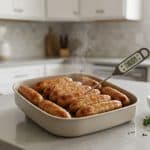
Chicken sausage is safe to eat when it hits 165°F (74°C) inside. That’s the official USDA number for killing bacteria like Salmonella. Don’t rely on how it looks or how long it’s been in the pan, because poultry isn’t like beef.
Sausage can look brown and ready while still being dangerously undercooked. To avoid that, you need a thermometer. This guide walks through how to use one, what to look for, and the best ways to cook it through.
If you want to stop guessing and start eating with confidence, keep reading.
Quick Doneness Guide for Chicken Sausage
- Chicken sausage is safe at 165°F (74°C) internal temperature, verified with a thermometer.
- Visual cues like opaque meat, clear juices, and firm texture support but do not replace temperature checks.
- Cooking method affects time, but safe internal heat stays constant across all methods.
These points summarize how to confirm chicken sausage doneness accurately and avoid undercooking.
Safe Internal Temperature Ensures Chicken Sausage Is Fully Cooked
165°F.
That’s the magic number for chicken sausage. It’s not a guideline, it’s the USDA’s rule for safety. At that exact temperature, heat kills bacteria like Salmonella, which is exactly how you know when chicken sausage is done without relying on guesswork.
You can’t see this happen. A sausage might look beautifully browned and ready, while the center remains dangerous. Poultry doesn’t work like beef or pork. Relying on color or texture is a gamble.
Insights from the U.S. Department of Agriculture (USDA) indicate:
“Uncooked sausages that contain ground turkey and chicken should be cooked to 165 °F. Using a food thermometer is the only sure way of knowing if your food has reached a high enough temperature to destroy foodborne bacteria.” – Ask USDA
The process is scientific. Food safety professionals call it thermal death time, measuring how long heat needs to work at a specific temperature to make food safe.
For home cooking, that translates to one simple tool: a good thermometer. Seasonings or smoke can trick your eyes, making a sausage appear done when it isn’t. Don’t guess by the clock or its looks. Check the temperature.
To confirm doneness safely, follow these steps:
- Insert a thermometer into the thickest part
- Confirm 165°F (74°C) hold 15-30 seconds for stable reading
- Avoid touching casing or pan surfaces
- Recheck if sausages vary in size
Proper Thermometer Use for Accurate Results
Stick the thermometer probe into the thickest part of the sausage. Right in the center. Hold it there for about 20 seconds. It matters more than people think. That short pause lets the heat settle, so the reading is actually accurate.
Use an instant read thermometer. Something reliable, like ThermoWorks or Taylor. The kind you’d trust in a busy kitchen, not just at home.
Placement changes everything. Slide the probe in from the side, aiming straight for the middle. Not too shallow. Not too deep either. And avoid the casing, avoid air pockets. Those spots lie. The numbers look fine, but they’re not.
Here’s the thing. Heat moves unevenly. It starts outside, then slowly creeps inward. The center is always last. Always.
So if you’re unsure, check again. Another spot, slightly deeper, maybe just off to the side. It takes a few seconds, but it builds confidence. And once the center is done, really done, you’ll know. You’re good.
Visual Changes Indicate Chicken Sausage Doneness

When it’s done, a chicken sausage looks different. Noticeably different. The inside shifts from pink to a solid, opaque white or light brown. No shine, no translucency. Just firm, even color.
As noted by the NSW Food Authority:
“Cook poultry, minced meats, and sausages until well done, right through to the centre. No pink should be visible. Juices should run clear after cooking.” – NSW Food Authority
The outside changes too. It turns golden brown, sometimes slightly crisp. Not burnt, just finished. You might see juices when you cut into it. Clear juices, not pink. That’s a good sign. And yeah, it usually shrinks a bit as it cooks. Moisture escapes. Totally normal.
But here’s the thing. These are signs, not guarantees.
That color change happens because of myoglobin breaking down at around 160 to 165°F. And that beautiful browning on the outside? That’s the Maillard reaction. Same reason toast tastes better than plain bread. Flavor, color, aroma. All working together.
Still. Looks can lie.
Some spices, like paprika, can keep the inside looking a little pink even when it’s fully cooked. Curing salts do the same. And smoke, or certain ingredients, can mess with the juice color too. So yeah, trust your eyes, but only to a point.
Notice the shift. The opacity, the browning. Let those guide you. But don’t stop there. Check it outit. Confirm it with a thermometer.
Because visual cues help. But they’re not the final answer. Not quite.
Texture and Juice Indicators of Doneness
You can feel it out when it’s done. Seriously. A fully cooked chicken sausage feels firm when you press it. Not rock hard, not squishy. Somewhere in between. It should spring back a little, almost like it’s resisting you.
If it stays indented. That’s a sign. Probably not ready yet.
And when you poke it, watch the juices. Clear is what you want. Not pink. Never pink.
The texture shift is real, it’s physical. As the temperature climbs past 160°F, the proteins tighten. They contract, squeeze out moisture, and everything inside gets denser. Firmer. More structured. You can feel that difference almost instantly.
Juice clarity tells another part of the story. Clear juices mean mostly water being released. Clean, simple. But pink liquid suggests there’s still something going on inside. Not fully cooked yet.
Still, don’t rely on touch alone. It helps, yeah. It gives you a quick read. But it’s not perfect.
Use it as a clue. Then double check.
Signs to confirm:
- Firm, springy texture when pressed
- No “squishy” or raw feel
- Juices run clear, not pink
- Interior appears matte, not glossy
Non-Thermometer Methods Are Less Reliable but Usable

Firmness, clear juices, even slicing into the sausage, they all help. They give you a rough sense of doneness. But they’re not as accurate as checking the temperature. Not even close.
A lot of home cooks rely on these cues. Especially when grilling outside, or when there’s no thermometer around. It feels intuitive. Press it, look at it, maybe cut it open. Done, right?
Not always.
There’s a lot of variability. Sausages come in different thicknesses. Heat isn’t always even, especially on a grill. Ingredients matter too. Some blends cook differently, hold color differently. So one sausage might look done, while another, same size, same time, isn’t.
And that’s where the risk comes in.
CDC data links undercooked poultry to thousands of outbreak-associated illnesses annually. That’s not a small number. Not something to ignore.
So yes, use those visual and tactile cues. They’re helpful. They guide you. But don’t stop there. Always confirm with a thermometer.
Because guessing works, until it doesn’t.
Without a thermometer, cooks often combine multiple checks:
- Press test for firmness
- Slice test for internal color
- Juice clarity observation
These methods improve confidence but do not guarantee safety.
Common Manual Checks Used at Home
Press, slice, and juice tests are common. People use them all the time. And yeah, they can help. But use them carefully.
Each one reflects a physical change happening inside the sausage.
Press test. Firm versus soft. A cooked sausage pushes back a little. Undercooked, it feels loose. Almost too soft.
Slice test. Cut it open. Look for a fully opaque center. No pink. No glossy, raw-looking spots.
Juice test. Clear liquid means progress. Pink juice? Not there yet.
Some cooks even pre boil for 4 to 5 minutes before grilling. It lowers the risk a bit. Gives you a head start. Still not a guarantee, but safer than going in raw.
But here’s the issue. Misjudgment happens. A lot more than people think. Visual/tactile methods increase undercooking risk due to variability; always use a thermometer per USDA.
Not exact, but enough to matter.
And the real concern. Salmonella.
Even slightly undercooked poultry can carry it. Especially fresh chicken sausage. You might not see it. You definitely won’t taste it. But it’s there.
So use these tests as clues. Helpful, quick, practical. But don’t trust them blindly.
Check the temperature. Always.
Cooking Method Affects Time but Not Safety Temperature

Cooking time changes depending on how you cook it. Grill, pan, oven, even air fryer. Each one behaves a little differently. Heat spreads differently, moisture escapes at different speeds, texture shifts.
But the endpoint. That never changes.
No matter the method, chicken sausage must reach 165°F internally. That’s the line. Not 160, not “looks done.” Exactly there.
Grilling sausage can cook the outside fast, sometimes too fast, creating a nicely charred exterior while the inside lags behind.
Pan frying gives you more control, but it still depends on heat level. Pan frying sausage allows steady browning while keeping the inside cooking gradually. Oven baking is more even, slower, steady.
Each method has its own rhythm. Its own feel.
Still. None of that replaces temperature.
According to the FDA Food Code, internal temperature is the only validated way to confirm safety. Not color. Not texture. Not time.
So yeah, adjust your cooking style. Experiment. Get the texture you like.
But always finish the same way. Check the center. Make sure it hits 165°F.
That part isn’t flexible.
| Method | Time Range | Keynote |
| Pan-fry | 12–15 min | Turn frequently |
| Grill | 10–15 min | Medium heat preferred |
| Oven (375°F) | 20–25 min | Even cooking |
| Air fryer | 10–12 min | Fast and crisp |
Common Cooking Mistakes Lead to Undercooked or Dry Sausage

The most common mistakes. They’re simple, but they matter.
A browned casing fools people all the time. It looks done. Smells done. But it’s not always safe. Fat renders quickly, the outside gets color fast, while the center is still catching up. Dangerous bacteria can survive in that middle zone.
Another big one. Not knowing what you’re cooking.
Fresh, raw sausage needs to reach 165°F all the way through. No shortcuts. But pre cooked sausage? That just needs to be heated through. Already safe. Mixing those two up, yeah that’s where problems start.
Then there’s heat control. Or lack of it.
Grilling can be tricky because heat isn’t always even. A typical <u>grill</u> might have one side blazing while the other barely heats, leaving sausages half done, half not.
And the fork. People keep stabbing it. Again and again.
Every poke lets juices escape. Flavor too. What’s left is dry, tough, kind of disappointing. Not worth it.
So keep it simple. Know what you’re cooking. Control the heat. Be patient.
And skip the fork. Use a thermometer instead.
Key Errors to Avoid During Cooking
Avoid guessing doneness or cutting too early, as both impact safety and moisture.
- Checking only surface color
- Not measuring thickest point
- Overcooking leads to dryness
- Undercooked poultry linked to thousands of outbreak illnesses yearly
- Ignoring rest time after cooking
Organizations like the CDC emphasize proper cooking as a primary defense against foodborne illness.
Resting Improves Juiciness and Final Texture
Source: wikiHow
Let chicken sausage rest for 2–3 minutes after cooking to retain moisture and allow internal heat to stabilize.
Resting triggers carryover cooking, where internal temperature rises by 5–10°F even after heat removal. This helps complete cooking without overexposing the exterior.
Moisture redistribution also occurs during this phase. Cutting too early releases juices, reducing tenderness and flavor.
Resting redistributes juices, improving tenderness; carryover raises temp 2-10°F.
FAQs
How to check chicken sausage doneness without cutting it open
Use a chicken sausage thermometer check with an instant read thermometer. Insert the meat probe into the thickest center and confirm 165°F (74°C). This matches USDA sausage temperature and poultry minimum temp for safe internal heat.
Visual sausage doneness and touch test sausage can support your check, but a thermometer poultry sausage method provides the most reliable result for chicken sausage food safety.
What are the clearest cooked chicken sausage signs to look for
Look for cooked chicken sausage signs such as opaque sausage meat, a brown sausage outside, and a crisp sausage exterior. Inside, there should be no pink sausage, and the sausage juices should be clear, not pink juices unsafe.
A firm sausage texture or springy cooked sausage also indicates doneness. These visual sausage doneness cues help, but always confirm the sausage internal temperature for fully cooked poultry.
Why sausage internal temperature matters for chicken sausage safety
Sausage internal temperature ensures the bacteria kill temp is reached, which reduces microbial load and salmonella chicken sausage risk. The poultry sausage safe temp is 165°F (74°C), based on FDA poultry temp and USDA inspection guide.
This safe internal heat follows food science doneness principles such as thermal death time. Without reaching this temperature, undercooked sausage risks remain even if the outside appears done.
How long does sausage cooking time vary by method used
Sausage cooking time varies by method, including grill chicken sausage, pan fry sausage done, oven baked sausage check, or air fry chicken sausage. Thickness and heat level also affect timing.
However, time alone does not confirm doneness. Always verify with a thermometer poultry sausage reading and safe internal heat. Cooking chicken links evenly helps prevent overcooked sausage dry texture or unsafe undercooking.
Can touch test sausage or slice test sausage confirm doneness
Touch test sausage checks firmness, while slice test sausage shows the sausage cross section color and juices. A springy cooked sausage and opaque sausage meat indicate doneness, while a squishy sausage raw texture or pink juices unsafe suggest more cooking is needed.
These home cook sausage test methods provide helpful clues, but they cannot replace a chicken sausage thermometer check for accurate chicken sausage food safety.
Cook Chicken Sausage Right Every Time
You cut into your sausage and still wonder if it’s safe, even after cooking it carefully. That doubt sticks with you and ruins the moment. It shouldn’t.
Stick to 165°F and back it up with what you see and feel, and you take control fast. This simple habit keeps your food safe and your results consistent, without second guessing. Do it right once, then keep doing it.
References
- https://pmc.ncbi.nlm.nih.gov/articles/PMC9507623/
- https://www.fsis.usda.gov/food-safety/safe-food-handling-and-preparation/poultry/chicken-from-farm-to-table