Chicken sausage gumbo comes together with a dark roux, browned sausage, the Louisiana Holy Trinity, and a slow simmer that builds deep, savory flavor.
It doesn’t take fancy ingredients, but the cooking method makes all the difference. A little patience with the roux pays off in every spoonful. Whether you’re making gumbo for the first time or looking to improve your recipe, this guide covers each step, plus easy fixes for common mistakes.
Keep reading to make a gumbo you’ll want to cook again.
Chicken Sausage Gumbo Success in One Minute
Great chicken sausage gumbo comes down to a few key techniques that create rich Louisiana flavor from the first step to the last.
- Build a dark roux by stirring constantly until it reaches a deep chocolate-brown color without burning.
- Brown the sausage and chicken before simmering with the Holy Trinity to develop a rich, flavorful broth.
- Finish by adjusting the seasoning, adding filé powder off the heat if using, and letting the gumbo rest for 10–15 minutes before serving over white rice.
Chicken and Sausage Gumbo vs. Traditional Stews
Gumbo layers flavor through a dark roux, smoked meat, aromatic vegetables, and slow simmering in one big pot instead of relying only on broth.
Many hearty soups combine meat and vegetables in one pot, but gumbo develops its flavor in stages. Every layer contributes something unique.
The typical structure includes:
- Chicken thighs or chicken breast
- Smoked sausage or andouille
- Dark roux
- Chicken stock
- Onion
- Celery
- Bell pepper
- Garlic
- Bay leaves
- Cajun or Creole seasoning
Utilizing skinless, bone-in chicken thighs rather than lean chicken breast provides a critical structural benefit to the broth. During a prolonged 90-minute simmer, the heat slowly unravels the triple-helix structure of the collagen found in thigh connective tissue, converting it directly into gelatin.
This extracted gelatin coats the palate, perfectly counterbalancing the thin, degraded starches of the dark roux to yield a velvety, rich mouthfeel that chicken breast simply cannot replicate.
Traditional Louisiana cooking also emphasizes the “holy trinity” of vegetables rather than the French mirepoix. Onion, celery, and green bell pepper create the aromatic base that supports the smoked meat without overpowering it.
Why Chicken Sausage Gumbo Is Classic Comfort Food
Several factors explain its reputation.
- Long cooking time allows flavors to blend.
- Smoked sausage contributes savory depth.
- The roux creates a silky, gravy-like consistency.
- Rice balances the rich broth.
One bowl delivers layers of smoky, savory, and mildly spicy flavors that continue improving after resting overnight.
The Dark Roux Is the Foundation of Great Gumbo
The roux supplies most of gumbo’s signature color, body, and roasted flavor, and when seasoned with gumbo file, enhances the dish’s complexity. Experienced Louisiana cooks often say they can judge a gumbo before tasting it simply by looking at the roux.
How to Make Gumbo Roux Correctly
Ingredients:
- 1 cup neutral oil
- 1 cup all-purpose flour
Method:
- Heat the oil over medium heat.
- Stir in the flour.
- Stir constantly.
- Continue cooking until the mixture resembles dark caramel or chocolate.
- Never leave the pot unattended.
A dependable dark caramel roux requires roughly 25 minutes of continuous stirring, while a true, bittersweet chocolate-brown base can demand up to 45 minutes of vigilant temperature management.
Because the margin between a rich, dark roux and a ruined, ash-flecked pot is a matter of seconds, the skillet requires undivided attention, if black specks appear, the flour has burned, and the entire batch must be discarded.
The Science Behind Roux Browning
| Process | Effect on Gumbo |
| Maillard reaction | Creates roasted, nutty flavors |
| Dextrinization | Reduces thickening power while increasing complexity |
| Moisture reduction | Produces darker color |
Food science explains that as the flour browns, proteins and sugars participate in Maillard reactions while starch molecules gradually break down into dextrins. This is why darker roux tastes richer but thickens less than a blond roux.
As noted by Cornell University
“Flour… contains starch, long chains of sugars, and amino acids… Heating flour in oil causes the sugars to react with the amino acids, which results in browning – this famous cooking reaction is called the Maillard reaction. Manipulating the heating conditions changes the chemistry behind the roux, which includes many other caramelization reactions in addition to the Maillard browning process, leading to different aromas and colors.” – Cornell University
If the roux smells burnt or develops black flecks, discard it and begin again. Burnt bitterness cannot be corrected later.
The Holy Trinity is a Classic Louisiana Flavor Base
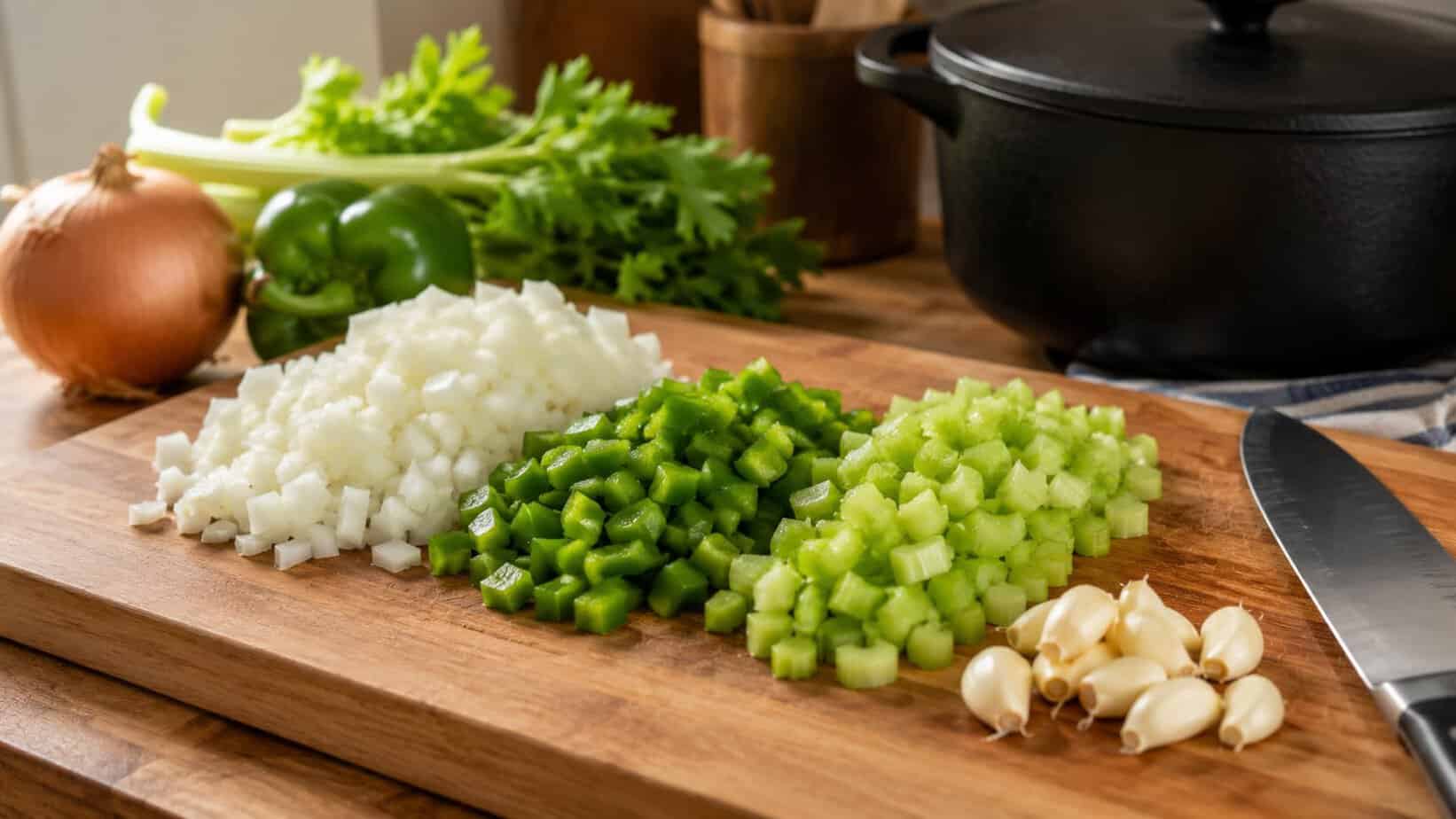
The holy trinity is the backbone of many Louisiana dishes. It combines onion, celery, and green bell pepper into one simple mixture that builds deep flavor from the very beginning.
While French cooking relies on mirepoix, Louisiana cooking swaps carrots for green bell pepper. That one change gives gumbo its unmistakable character. But timing matters.
The exact moisture content of the Holy Trinity serves as an intentional thermal kill-switch. Because a dark chocolate roux crawls closer to burning with each passing second, adding the precise ratio of water-dense onions, celery, and bell peppers causes a rapid drop in surface temperature from roughly 380°F down to safer boiling temperatures.
This immediate steam release deglazes the pan, capturing the caramelized sugars at their peak flavor profile without allowing the flour to cross the threshold into ash.
A common ratio is:
- 2 cups onion
- 1 cup celery
- 1 cup green bell pepper
Cook the vegetables for 6 to 8 minutes over medium heat. Stir often. They should become soft and slightly translucent without taking on much color. Burned vegetables can give the gumbo a bitter taste, so steady heat works better than rushing the process.
Why These Vegetables Matter
Each ingredient has a different job, and removing one changes the balance of the finished gumbo.
- Onion supplies sweetness.
- Celery introduces earthy herbal notes.
- Bell pepper adds freshness and balance.
Skipping one ingredient changes the flavor balance of the finished gumbo.
Garlic usually follows once the vegetables soften. Bay leaves and thyme are added later with the stock.
Choosing the Best Sausage for Chicken Gumbo
Traditional andouille remains the benchmark, although several smoked sausages work well. If you prefer a leaner option, the way you make chicken sausage can influence its texture, seasoning, and how much smoky flavor it contributes to the finished gumbo.
Different sausages produce noticeably different bowls.
| Sausage | Flavor | Heat |
| Andouille | Smoky and peppery | Medium |
| Smoked chicken sausage | Lean with mild smoke | Mild |
| Turkey sausage | Light and savory | Mild |
| Kielbasa | Garlic-forward | Mild |
If authentic andouille is unavailable, choose a smoked sausage rather than a fresh one. Smoke contributes much of gumbo’s complexity.
What to Look for When Buying Smoked Sausage
A high-quality sausage should have:
- Natural smoking
- Minimal fillers
- Clearly identified meat
- Visible seasoning
- Firm texture
Brown the sausage before making the roux. Those browned bits left in the Dutch oven become part of the gumbo’s foundation and add flavor that cannot be recreated later with seasoning alone. If you normally cook chicken sausage in an air fryer, give it a quick sear in the Dutch oven before building the gumbo so you still develop flavorful browned bits in the pot.
Many home cooks underestimate this step. Searing the sliced sausage over medium-high heat until a deep, caramelized crust forms on both sides creates a heavy layer of dark-brown drippings on the bottom of the pot.
Simmering un-browned meat directly in broth strips away the opportunity to capture this concentrated caramelization, which serves as the ultimate flavor anchor for the entire dish.
Building Deep Flavor Before The Simmer
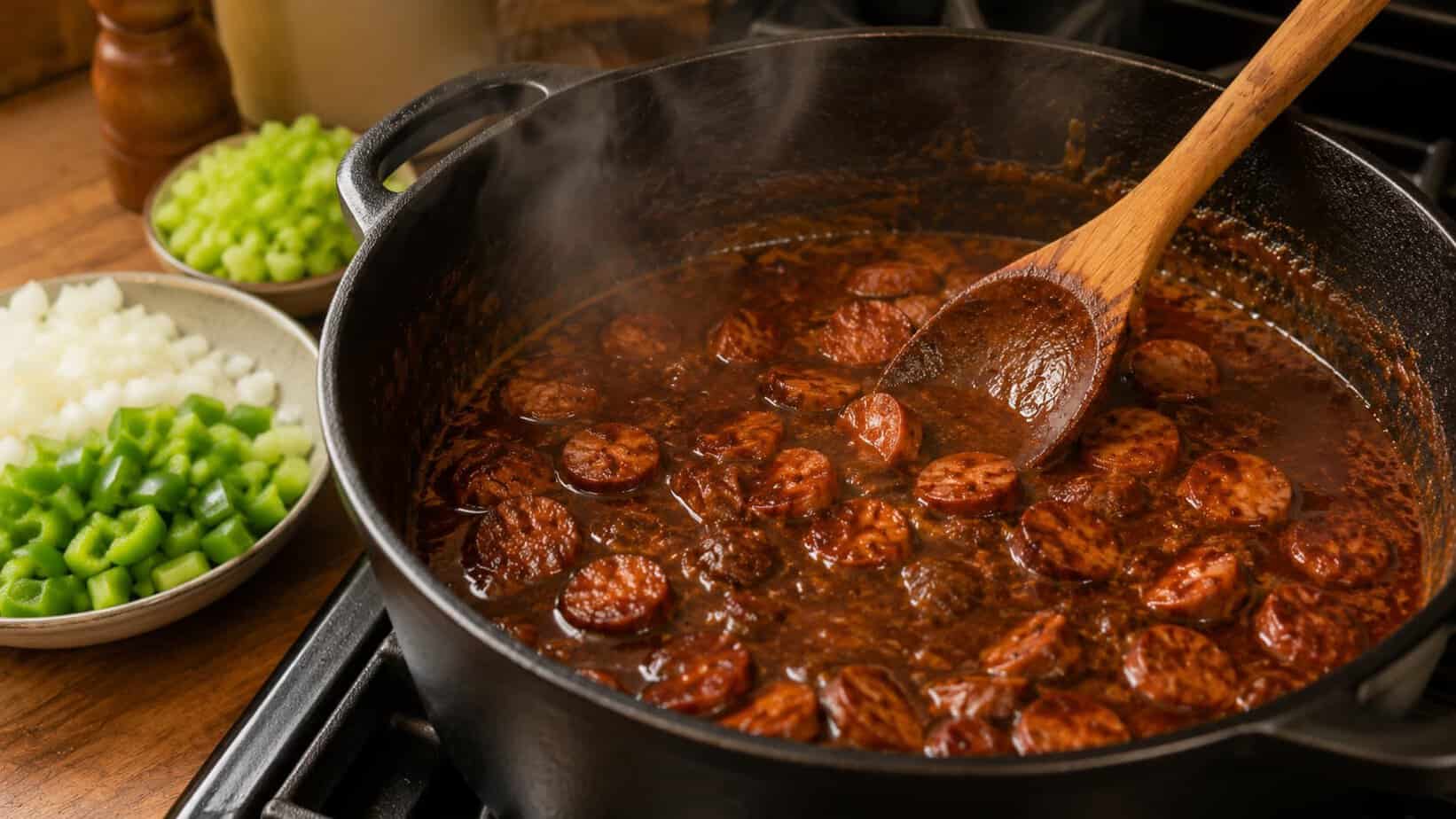
Skipping the meat-searing phase eliminates the flavor foundation of the entire dish. Searing the sliced sausage over medium-high heat draws out the seasoned fat, which then acts as the frying medium for the chicken thighs.
This process builds a deep-brown glaze of caramelized proteins (fond) on the bottom of the Dutch oven, which dissolves cleanly into the simmering stock later to anchor the broth. Searing the chicken directly in the rendered sausage fat creates a deep-brown glaze, known as fond.
Rather than relying solely on packaged Cajun seasonings, these caramelized bits dissolve entirely into the simmering stock later, providing a deep, savory anchor that cannot be replicated by broth alone. The goal isn’t to cook it completely, it will finish during the simmer, but to create browned surfaces that contribute richer flavor.
Every browned bit stuck to the bottom of the Dutch oven (called fond) dissolves into the broth later, adding depth that seasoning alone can’t match.
Why Browning Chicken and Sausage Matters
Browning creates several advantages:
- Develops roasted flavors.
- Creates fond for the stock.
- Improves the finished color.
- Adds complexity before the simmer even begins.
The Best Cooking Order for Chicken Sausage Gumbo
Following a consistent order and detailed instructions helps prevent overcooked meat or burnt roux.
- Brown the sausage.
- Remove the sausage.
- Brown the chicken.
- Remove the chicken.
- Prepare the dark roux.
- Cook the holy trinity.
- Add garlic.
- Slowly whisk in warm stock.
- Return the chicken and sausage.
- Simmer gently.
This sequence allows each ingredient to contribute its own flavor without becoming overcooked.
Gumbo Simmering Time for Rich Flavor
Most chicken and sausage gumbo recipes simmer for about 60 to 90 minutes, though longer simmering can deepen flavor. Once the stock, roux, vegetables, chicken, sausage, and garlic powder come together, resist the temptation to boil aggressively.
A gentle simmer allows fat to emulsify into the broth while collagen from the chicken slowly enriches the texture.
Many Louisiana cooks believe gumbo tastes even better the following day because the flavors continue blending as it rests.
The first hour to Simmer Chicken and Sausage Gumbo develops the broth. The second hour allows the seasonings, smoked meat, herbs, and roux to become one cohesive dish.
Flavor Development During Simmering
| Time | What Happens |
| 20 minutes | Roux begins integrating into the broth. |
| 45 minutes | Chicken becomes tender. |
| 60 minutes | Flavors become noticeably richer. |
| 90 minutes | Sausage seasons the stock. |
| 120 minutes | Full-bodied, restaurant-style gumbo develops. |
Taste near the end, not the beginning.
Smoked sausage, chicken stock, and Cajun seasoning all contribute salt differently, so early adjustments often lead to an overly salty gumbo.
Okra vs. Filé Powder for Thickening Gumbo
Both are traditional ingredients, but they work differently. This debate has existed for generations in Louisiana kitchens.
Some cooks swear by okra, others prefer filé powder, and some use both depending on family tradition.
How Okra Thickens Gumbo
Fresh okra releases natural mucilage during cooking. That mucilage acts as a natural hydrocolloid, gently thickening the broth while adding a silky mouthfeel.
Research from Food Hydrocolloids shows
“The proteins and polysaccharides in okra mucilage can undergo Maillard reactions during heat treatment. This process can enhance its emulsifying properties, which means it helps blend the liquid and fat components of the gumbo, contributing to its characteristic smooth and silky mouthfeel.” – Food Hydrocolloids
Cook sliced okra for several minutes before adding the stock if you want less of its characteristic “slimy” texture.
Benefits include:
- Thickens throughout cooking.
- Adds subtle vegetable flavor.
- Creates a smooth consistency.
- Performs well during long simmers.
Adding Filé Powder the Right Way
Never boil filé powder.
Instead:
- Remove the gumbo from the heat.
- Sprinkle in a small amount.
- Stir gently.
- Taste before adding more.
Boiling filé can create a stringy texture.
Comparing Okra and Filé Powder
| Thickener | When to Add | Result |
| Okra | During cooking | Smooth, silky body |
| Filé powder | After cooking | Slightly thicker finish with earthy flavor |
Some cooks skip both if they’ve developed an exceptionally dark roux, while others combine all three methods for maximum body.
Creole vs. Cajun Chicken Sausage Gumbo
Creole and Cajun gumbo share the same roots, but each developed its own style in different parts of Louisiana. Both rely on a flavorful roux, the holy trinity, and slow cooking. The biggest differences come from the ingredients added after the base is finished.
Creole gumbo may include tomatoes and seafood, while Cajun versions more often emphasize a dark roux and smoked meats. Seafood is also common, especially shrimp, crab, and oysters. The roux is usually lighter than the version used in Cajun cooking, allowing the vegetables and seafood to stand out more clearly.
Creole-style gumbo often includes:
- Tomatoes
- Shrimp or crab
- Lighter roux
- More herbs and spices
Cajun gumbo takes a different direction. It leans heavily on a dark roux with a deep roasted flavor. Smoked meats provide richness, while chicken serves as the main protein in many home recipes. Duck, turkey, or wild game also appear depending on the season and local traditions.
Cajun gumbo commonly features:
- Dark roux
- Smoked sausage
- Chicken
- Duck
- Game meats
Neither version is more authentic than the other. They’re different regional traditions that continue to evolve in home kitchens across Louisiana.
Common Chicken Sausage Gumbo Mistakes
Burnt roux, weak stock, and poor seasoning adjustments account for most disappointing pots of gumbo.
Fortunately, nearly every mistake is preventable.
Preventing a Burnt Roux
The darker the roux becomes, the more carefully it must be watched.
Avoid:
- High heat.
- Walking away.
- Thin cookware.
- Inconsistent stirring.
A heavy Dutch oven or cast-iron pot distributes heat more evenly, reducing hot spots that scorch flour.
Preventing Lumpy Gumbo
Smooth gumbo starts with gradual liquid incorporation.
Instead of dumping all the stock into the roux:
- Add one ladle.
- Stir until smooth.
- Repeat gradually.
- Continue until the broth is fully incorporated.
Warm stock also blends more easily than cold stock.
Fixing Flat or Bland Gumbo
Usually the problem isn’t salt.
Instead, consider these possibilities:
- Roux wasn’t cooked long enough.
- Chicken wasn’t browned.
- Simmer time was too short.
- Stock lacked richness.
- Bay leaves or thyme were omitted.
Toward the end of cooking, adjust:
- Cajun seasoning
- Black pepper
- Cayenne
- Hot sauce
- Salt
Small adjustments made during the final ten minutes usually produce the best balance.
Slow Cooker and Instant Pot Chicken Sausage Gumbo
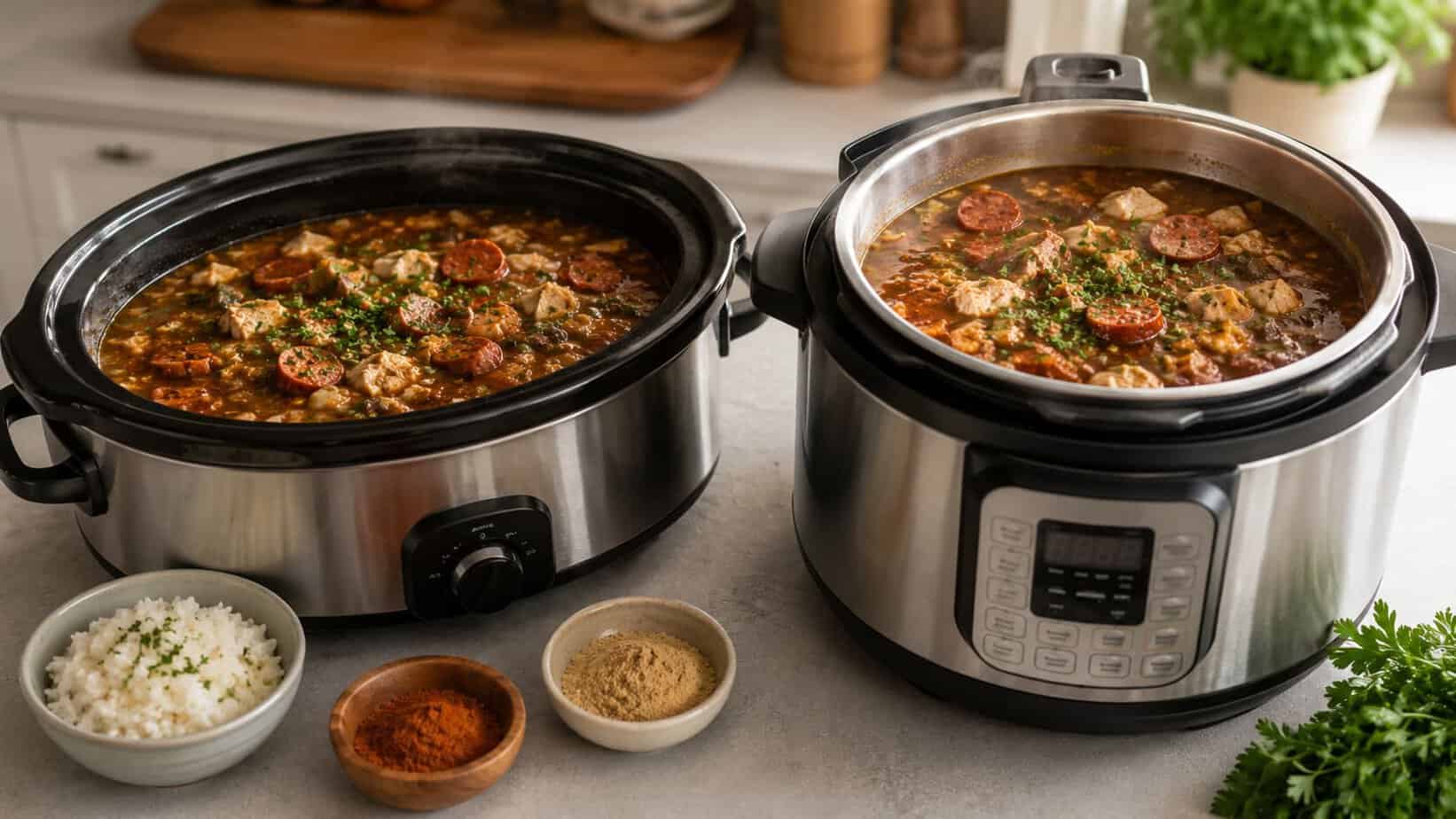
The roux and meat should still be browned separately before using either appliance.
Many people hope a slow cooker or pressure cooker eliminates the traditional steps. Unfortunately, the most important flavors still come from browning and the dark roux, so those steps shouldn’t be skipped.
Slow Cooker Chicken Gumbo Instructions
For a slow cooker version:
- Brown the sausage.
- Brown the chicken.
- Prepare the dark roux on the stovetop.
- Cook the holy trinity.
- Transfer everything to the slow cooker.
- Add warm chicken stock.
- Cook on Low for 6–8 hours or High for 3–4 hours.
The long cooking time produces tender chicken while allowing the seasonings to meld.
Instant Pot Gumbo
The Instant Pot shortens the simmer but not the preparation.
Recommended method:
- Use the Sauté function to brown the sausage.
- Brown the chicken.
- Build the roux separately or carefully using Sauté.
- Add vegetables and stock.
- Pressure cook for 20–25 minutes with a natural pressure release.
The pressure cooker speeds up tenderizing the chicken, but the finished flavor still depends on the quality of the roux.
Serving, Storing, and Reheating Chicken Sausage Gumbo
Serve gumbo over hot white rice, refrigerate promptly, and reheat gently on the stovetop.
Many Louisiana cooks believe gumbo tastes even better the next day because the flavors continue developing overnight.
Best Rice Ratio
For most servings:
- ½ to ¾ cup cooked white rice
- Approximately 1½ cups gumbo
Keep the rice separate during storage. Mixing it into the gumbo causes it to absorb too much liquid.
Storage Guide
| Storage Method | Recommended Time |
| Refrigerator | 3–4 days |
| Freezer | 2–3 months |
Cool the gumbo before refrigerating, then store it in airtight containers.
Reheating Tips
For the best texture:
- Reheat slowly over medium-low heat.
- Stir occasionally.
- Add a splash of chicken stock if it has thickened too much.
Avoid boiling vigorously, as this can toughen the chicken.
Favorite Garnishes
Classic finishing touches include:
- Sliced green onions
- Fresh parsley
- Hot sauce
- Filé powder (added after cooking)
- Freshly cracked black pepper
A piece of crusty French bread or warm cornbread also pairs well with gumbo.
How to Make Chicken Sausage Gumbo Step by Step
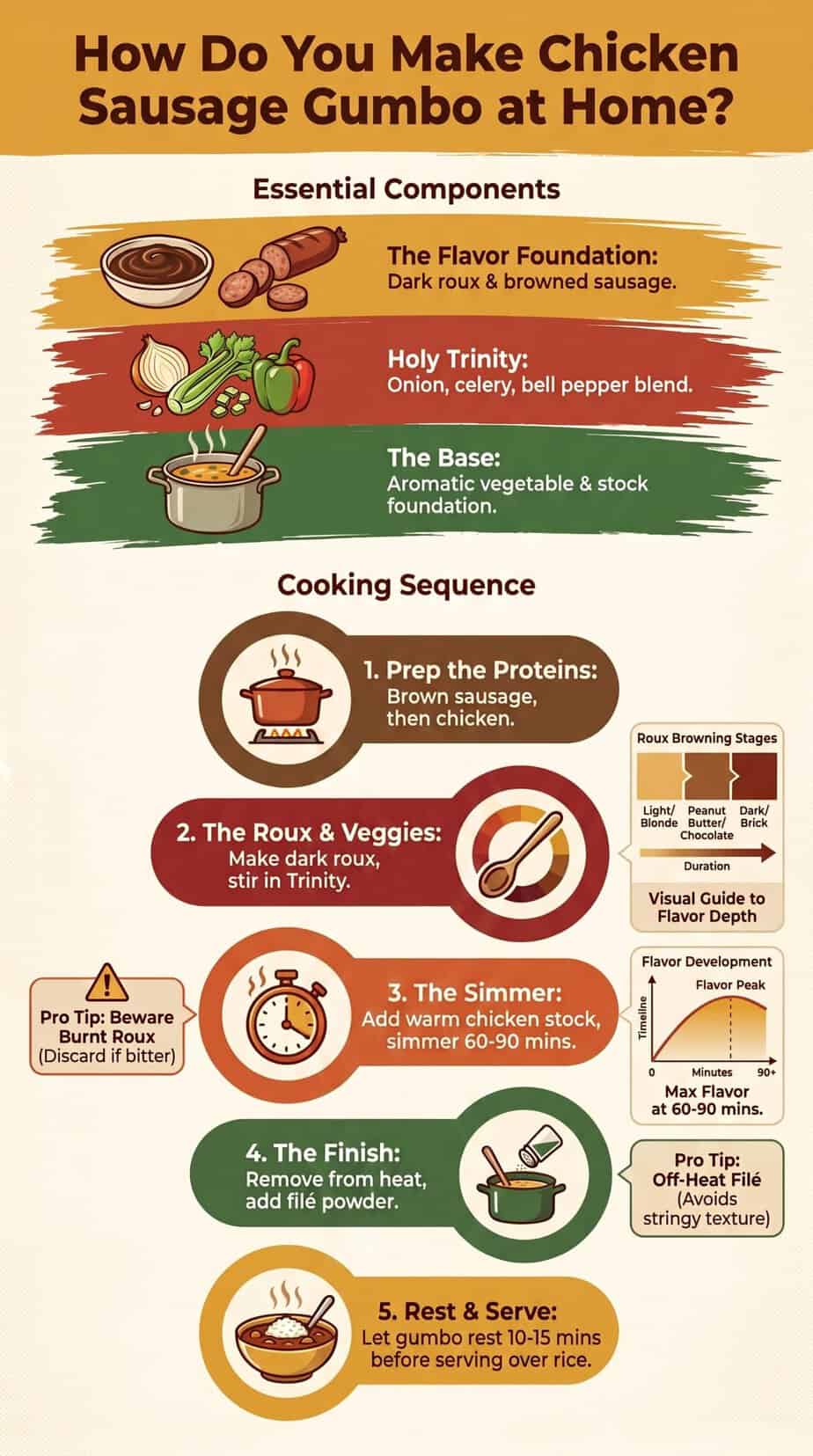
Making chicken sausage gumbo is all about building flavor one layer at a time. A well-made chicken and sausage gumbo depends on layering flavor from the roux, browned meat, vegetables, and slow simmer rather than relying on seasoning alone.
The process starts with browning the meat, followed by a smoky pork sausage dark roux, softened vegetables, and a long, gentle simmer. None of the steps are difficult, but each one matters. Rushing the roux or adding ingredients out of order can change the final result.
The recipe below makes a rich, hearty New Orleans chicken gumbo with smoky sausage, tender chicken, and a deeply flavored broth. Serve it over steamed white rice, and finish each bowl with fresh herbs for extra brightness.
Ingredients
Protein
- 1 to 1½ pounds chicken thighs, cut into bite-size pieces
- 1 pound smoked sausage or andouille, sliced
Roux
- 1 cup vegetable oil
- 1 cup all-purpose flour
Vegetables
- 2 medium onions, diced
- 2 celery stalks, diced
- 1 green bell pepper, diced
- 4 garlic cloves, minced
Liquid
- 8 to 10 cups warm chicken stock
Seasonings
- 2 bay leaves
- 1 teaspoon dried thyme
- 2 teaspoons Cajun seasoning
- Black pepper, to taste
- Cayenne pepper, optional
- Salt, to taste
- Hot sauce, optional
To Finish
- Cooked white rice
- Sliced green onions
- Chopped parsley
- Filé powder, optional
Use warm stock instead of cold stock. It blends into the roux more smoothly and helps keep the cooking temperature steady.
Complete Cooking Timeline
The cooking process follows a clear order. Each stage builds on the one before it, creating a gumbo with a rich texture and balanced flavor.
Step 1
Brown the sliced sausage in a heavy Dutch oven.
Remove and reserve.
Step 2
Brown the chicken in the rendered fat or a little added oil until lightly golden.
Remove.
Step 3
Prepare the roux.
Cook the flour and oil, stirring constantly until the color resembles dark chocolate.
Step 4
Immediately stir in:
- Onion
- Celery
- Bell pepper
Cook until softened.
Step 5
Add garlic.
Cook for about one minute.
Step 6
Slowly whisk in the warm chicken stock until smooth.
Step 7
Return:
- Chicken
- Sausage
- Bay leaves
- Thyme
- Cajun seasoning
Bring to a gentle simmer.
Step 8
Cook for 1–2 hours, stirring occasionally.
Taste and adjust the seasoning near the end.
Step 9
Remove the bay leaves.
Stir in sliced green onions.
Add filé powder only after removing the pot from the heat if desired.
Step 10
Allow the gumbo to rest for 10–15 minutes before serving over steamed white rice.
The short resting time allows the flavors to settle and the broth to thicken slightly. Spoon the gumbo over steamed white rice, then finish each bowl with chopped parsley, extra green onions, and a few dashes of hot sauce if desired.
Watch: How to Make Authentic Chicken and Sausage Gumbo Step-by-Step
Credits: America’s Test Kitchen
This step-by-step video tutorial guides you through making authentic chicken and sausage gumbo right in your own kitchen. Learn how to master a rich, dark chocolate roux, properly sear your meats, and simmer the ingredients to flavorful perfection.
Your Best Bowl Starts With the Roux
You can taste the difference when every step gets the time it needs. That’s what makes gumbo worth making. Once you learn how to build a dark roux and let the pot simmer, each batch gets better and feels easier to make. Stick with the method, you’ll notice it.
When you’re ready, save this recipe and come back whenever you’re craving a rich Louisiana classic. Share it with someone who loves homemade gumbo, then serve it with steamed white rice, hot sauce, fresh green onions, and good company.
FAQ
Can I make chicken sausage gumbo without a Dutch oven?
Yes. You can make gumbo in a cast iron gumbo pot or any heavy-bottomed stockpot. The pot should be large enough to stir the gumbo roux recipe safely and hold all the ingredients without overflowing. If you are making gumbo for a crowd, use a pot with at least a 6- to 8-quart capacity so the gumbo cooks evenly.
What’s the difference between Creole and Cajun chicken gumbo?
The main difference in creole vs cajun gumbo is the cooking style and ingredients. Creole chicken gumbo often includes tomatoes, while cajun chicken gumbo usually relies on a dark roux without tomatoes. Both versions use the holy trinity of gumbo vegetables, but the seasoning, color, and flavor vary depending on the recipe and regional tradition, especially when comparing different cajun dishes.
How should I store and reheat leftover chicken sausage gumbo?
For safe gumbo leftover storage, let the gumbo cool slightly before transferring it to airtight containers. Store it in the refrigerator for up to four days or freeze it using gumbo freezer tips for longer storage. When reheating gumbo, warm it slowly over medium-low heat and stir occasionally. Add a small amount of stock if the gumbo becomes too thick.
Can I customize chicken sausage gumbo for different dietary needs?
Yes. You can make turkey sausage gumbo if you prefer a leaner sausage, or use other chicken sausage substitutes based on your taste. For a gluten free gumbo, replace the wheat flour with a suitable gluten-free thickener. To prepare a low sodium gumbo, use low-sodium chicken stock and reduce the amount of added salt during cooking.
Related Articles
- https://milkwoodrestaurant.com/best-way-to-make-chicken-sausage/
- https://milkwoodrestaurant.com/how-to-cook-chicken-sausage-in-the-air-fryer/
- https://milkwoodrestaurant.com/make-chicken-and-sausage-gumbo/
References
- https://www.cornellsun.com/article/2013/04/cajun-cooking-and-chemistry
- https://www.sciencedirect.com/science/article/
Was this helpful?

I’m Mary R. Q. , a seasoned professional chef dedicated to elevating home cooking experiences. Through my expertise in the culinary arts, I provide practical cooking tips and insightful reviews of kitchen utensils on my blog, milkwoodrestaurant.com. As a passionate advocate for transforming everyday meals into extraordinary culinary adventures, I aim to empower home cooks with the knowledge and tools they need to create delicious and memorable dishes. I’m also an author of the book “1,001 Kitchen Tips & Tricks: Helpful Hints for Cooking, Baking, and Cleaning (1,001 Tips & Tricks)” which is sold on Amazon. Join me on a flavorful journey as we explore the art of cooking and the essential tools that make it a joy.