How to cook chicken and sausage gumbo starts with a roux that builds deep color and flavor. Chicken sausage adds plenty of flavor while keeping this Louisiana favorite easy enough for a weeknight meal. Filé powder is often stirred in at the end for extra body, though it’s optional if the gumbo is already thick enough. Get the roux right, and the rest falls into place.
Keep reading for the step-by-step method.
Chicken Sausage Gumbo at a Glance
By the end of this guide, you’ll know how to:
- Make a dark roux without burning it.
- Use the Holy Trinity to build classic gumbo flavor.
- Brown the meat, add stock correctly, and simmer everything for the best results.
How Chicken and Sausage Gumbo Differs From Other Stews
At first glance, gumbo looks like a thick stew. But it isn’t made the same way.
The biggest difference is the roux. Instead of thickening the dish near the end, gumbo starts with a dark roux that gives the broth its color and deep roasted flavor. That step changes everything.
Traditional Cajun and Creole gumbo also builds flavor in layers. First comes the roux. Then the vegetables. After that come the stock, meat, and a slow simmer. Each step adds something to the finished pot.
Why the Roux Matters
If there’s one part of gumbo you shouldn’t rush, it’s the roux. Everything else builds from it.
A dark brown roux gives gumbo its deep color and rich, roasted flavor. It also adds a light nutty taste that you won’t get any other way. Without it, the gumbo loses much of its signature depth and color.
- Rich roasted flavor
- Deep brown color
- Light nutty taste
- Builds the base of the broth
As the roux gets darker, it becomes more flavorful. But there’s a trade-off. It won’t thicken the gumbo as much as a lighter roux. That’s completely normal, and it’s one reason traditional gumbo cooks low and slow.
As noted by America’s Test Kitchen
“Browning flour, dry or in fat, causes its starch chains to break down into smaller molecules, which are less effective at trapping (and thereby thickening) liquid. The darker the roux, the more compromised its thickening power” – America’s Test Kitchen
Essential Gumbo Ingredients
| Ingredient | Purpose |
| Dark roux | Flavor base |
| Holy Trinity | Aromatics |
| Chicken | Main protein |
| Sausage | Smoky flavor |
| Chicken stock | Rich broth |
| White rice | Traditional serving |
Rice has long been served with gumbo throughout Louisiana because it soaks up the flavorful broth without overpowering it.
Essential Ingredients for Chicken and Sausage Gumbo
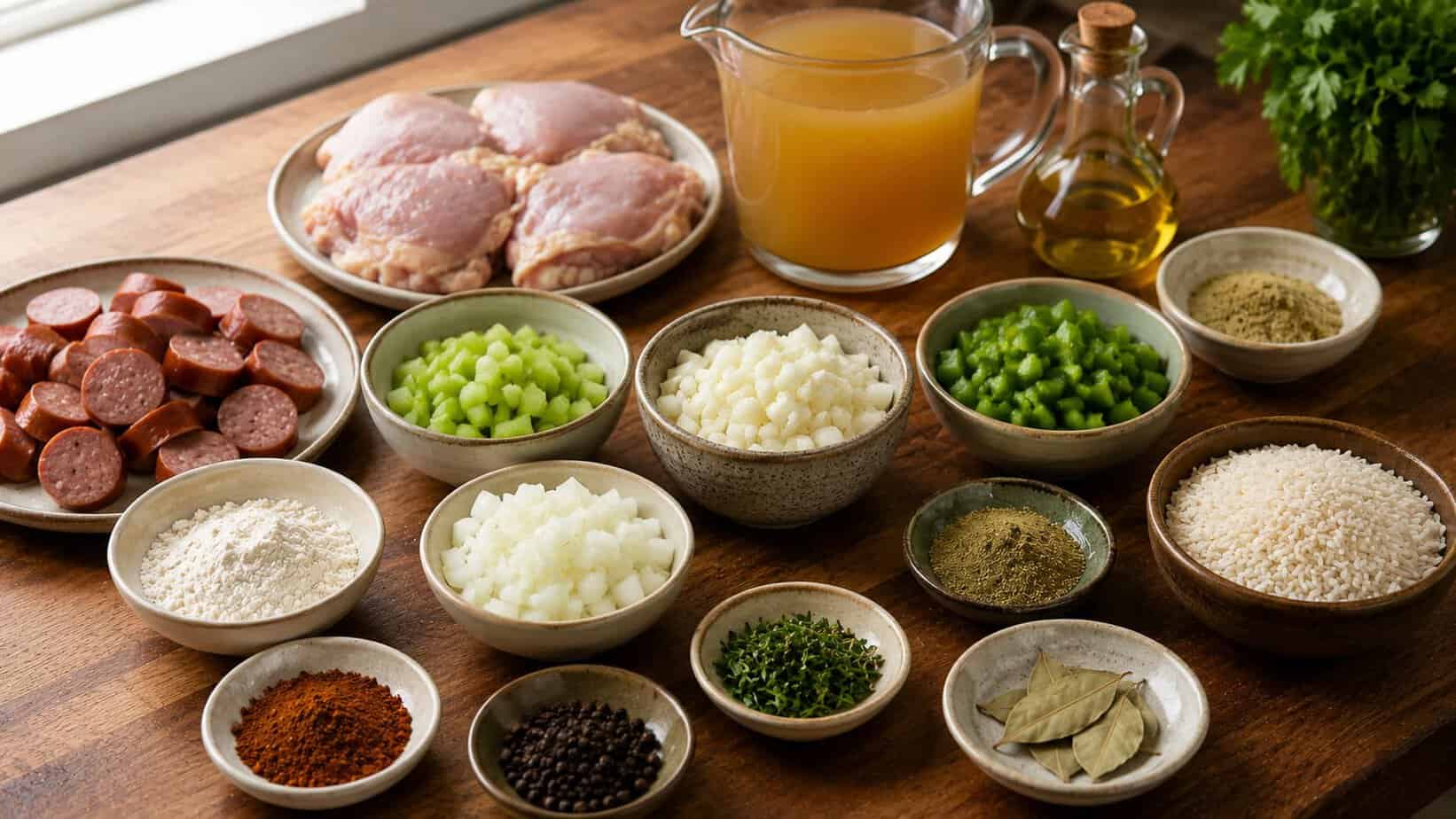
Before turning on the stove, gather everything first. Gumbo moves quickly once the roux is ready.
You’ll need:
- Chicken thighs
- Andouille sausage or smoked chicken sausage
- Onion
- Celery
- Green bell pepper
- Garlic
- Flour
- Vegetable oil
- Chicken stock
- Bay leaves
- Thyme
- Worcestershire sauce
- Creole seasoning
- White rice
- Green onions
- Filé powder (optional)
Chicken thighs are often preferred because they stay juicy during long simmering. They stay juicy during the long cooking time, while chicken breast can dry out.
Choosing the Best Sausage
Several types of sausage work well in gumbo.
Andouille sausage is the traditional choice. It brings plenty of smoke along with a bit of spice. Smoked pork sausage has a milder taste.
Chicken sausage makes the dish a little lighter while still adding plenty of flavor.
Smoked turkey sausage is another option if you want less fat without giving up the smoky taste.
Pick whichever fits your taste. Good-quality sausage makes a noticeable difference.
Making a Dark Roux Without Burning It
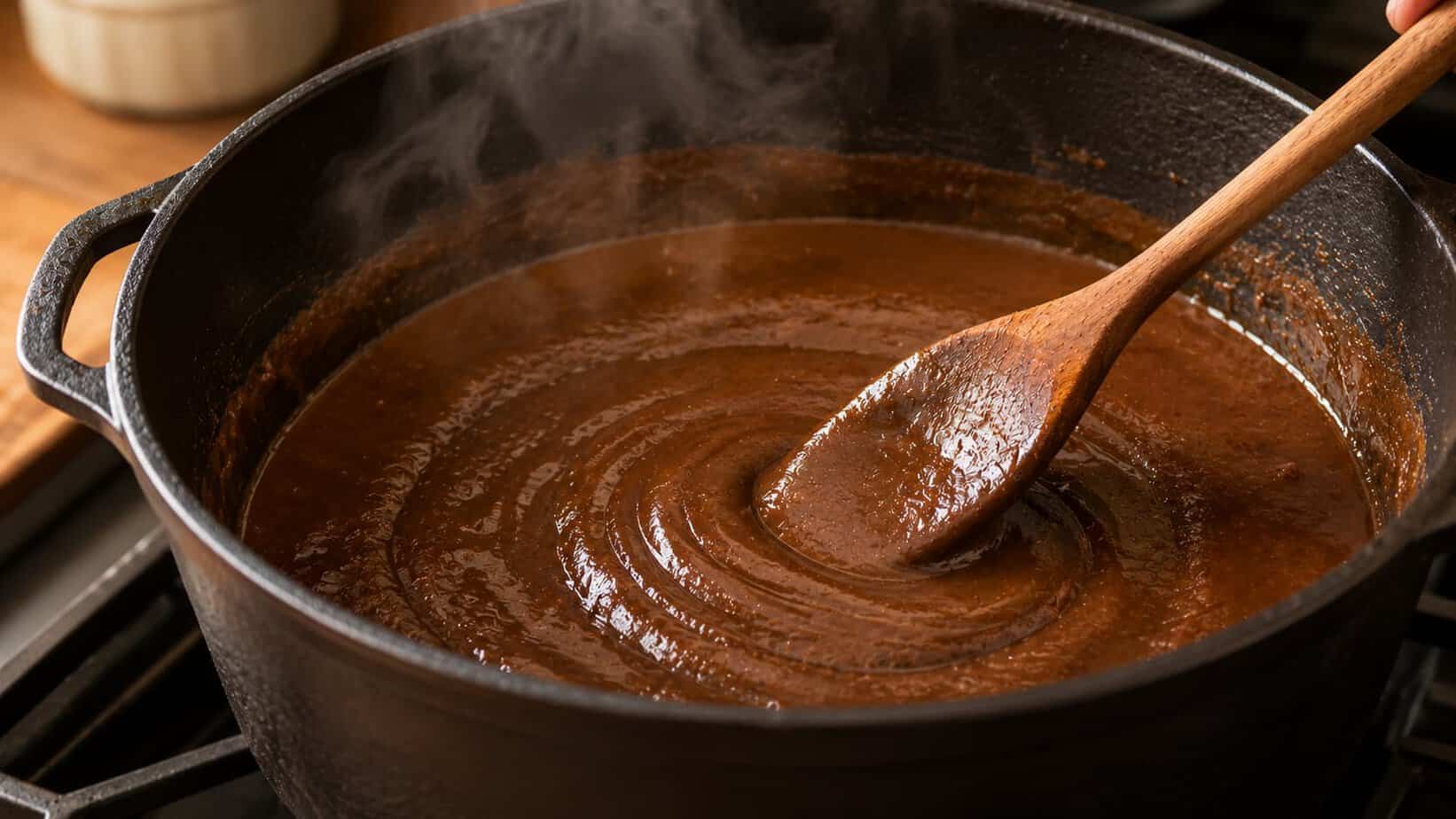
This is the step many first-time cooks worry about. Don’t rush.
Mix equal parts flour and oil in a heavy, big pot or Dutch oven over medium-low heat. Stir the mixture the whole time. Scrape along the bottom and sides as it cooks.
The color slowly changes.
- Peanut butter: light flavor
- Copper penny: medium flavor
- Dark chocolate: classic gumbo
Aim for a deep, dark chocolate color. The definitive sign of readiness occurs when the raw, pasty smell of raw flour completely vanishes, replaced by a rich, deeply roasted coffee aroma that fills the kitchen.
A Dutch oven makes this easier because it spreads heat more evenly. Even so, expect roux timing to vary widely by heat, vessel, and method; many stovetop versions take about 20 to 45 minutes.
Patience pays off.
The Holy Trinity
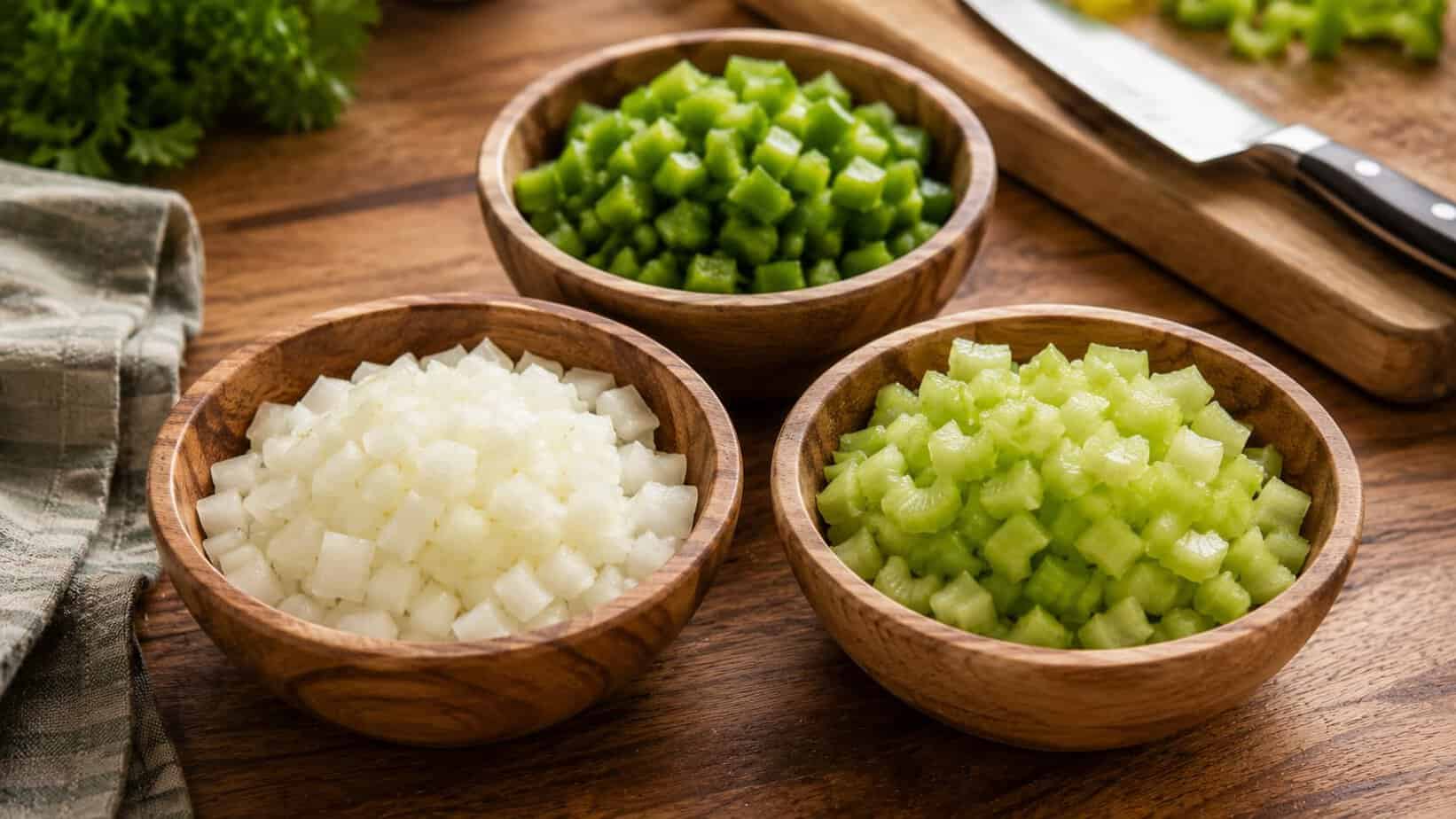
Every classic gumbo begins with the Holy Trinity of vegetables. It includes:
- 1 diced onion
- 2 diced celery stalks
- 1 diced green bell pepper
Garlic usually joins the pot after these vegetables soften. It’s common in gumbo, even though it isn’t officially part of the Holy Trinity.
Once the roux reaches the right color, add the vegetables right away. Their moisture cools the roux slightly and keeps it from getting too dark.
Cook the vegetables for about 8 to 10 minutes until the onions become soft and slightly clear. Then stir in the garlic for another minute.
Now the base is ready.
Brown the Chicken and Sausage First
Some recipes skip this step. That’s a mistake. Browning the meat creates extra flavor before the gumbo even starts simmering.
Slice the sausage into rounds and brown both sides over medium heat. Remove it once it’s nicely browned.
Season the chicken with salt and pepper. Sear each side until golden brown, about 3 to 5 minutes, then remove it before it’s fully cooked. The remaining simmer will finish the meat, so keeping an eye on chicken sausage cook time helps prevent overcooking later in the pot.
Those browned bits left on the bottom of the pot matter. They’ll dissolve into the broth later and add even more flavor.
Choosing the Right Stock
Stock brings the whole dish together.
Homemade chicken stock gives the richest flavor because it contains natural gelatin from simmered bones. That creates a broth with more body.
Store-bought stock also works well, especially on busy days. A low-sodium version gives better control over the seasoning.
Plan on using about 8 cups.
Add stock gradually while stirring constantly; warming the stock can help the roux incorporate more smoothly. Then pour it in slowly, about one cup at a time, while stirring constantly.
This keeps the broth smooth instead of lumpy.
Simmer Low and Slow
Once the stock is mixed in, return the browned chicken and sausage to the pot.Drop in the bay leaves and thyme, followed by a splash of Worcestershire sauce and the Creole seasoning.
Experienced Southern cooks often reach for trusted brands like Tony Chachere’s or utilize custom blends heavy on white pepper; because commercial seasonings vary widely in salt content, starting conservative here prevents an over-salted pot as the broth reduces.
Bring everything to a gentle simmer. Not a boil.
Simmer the gumbo for about 1 hour or more, until the flavors meld and the chicken is tender. By the end of the simmer, you should also know when chicken sausage is done by checking that it’s heated through and still juicy rather than dry. During that time, the chicken becomes tender, the broth develops more flavor, and everything blends together.
Taste near the end instead of adding lots of seasoning at the beginning. As the liquid cooks down, the flavors become stronger.
When to Add the Sausage
There’s more than one way to do this.
If you want the broth to have a stronger smoky flavor, add the browned sausage early in the simmer. It has more time to season the entire pot.
But if you prefer firmer sausage slices, wait until the last 20 to 30 minutes. They’ll hold their texture a little better.
Either method works. It really comes down to personal preference. Many recipes brown sausage first, then simmer it with the gumbo; others add it later to preserve texture.
Okra vs. Filé Powder
This is one of the biggest debates in gumbo cooking. Some families always use okra. Others swear by filé powder. Plenty of cooks use both.
Here’s a quick comparison.
| Thickener | Texture | Flavor |
| Okra | Silky | Mild, fresh |
| Filé powder | Smooth | Lightly earthy |
If you’re using fresh okra, stir it into the gumbo while it simmers. The natural starch helps thicken the broth as it cooks.
Filé powder works differently. Add it after the pot comes off the heat. Excessive boiling can make the filé turn stringy, which isn’t what you want. Do not boil filé; add it off heat or at the table.
Some people don’t add filé to the whole pot at all. Instead, they leave it on the table so everyone can season their own bowl.
Creole vs. Cajun Gumbo
These two styles share the same roots, but they’re not exactly alike. Cajun gumbo usually skips tomatoes and depends on a dark roux for its rich, smoky flavor. Creole gumbo often includes tomatoes, giving the broth a brighter taste and a little more color.
Insights from Worldchefs indicate
“Filé (dried and ground sassafras leaves) was a contribution of the Choctaws and, possibly, other local Indian groups. Roux has its origin in French cuisine, although the roux used in gumbos is much darker than its Gallic cousins” – Worldchefs
These styles overlap, but they differ in ingredients and regional tradition. They’re simply different traditions from different parts of Louisiana.
If you’re making chicken and sausage gumbo for the first time, either version is a good choice.
Common Gumbo Mistakes
Most gumbo problems are easy to avoid.
One of the biggest mistakes is burning the roux. If it smells burnt, there’s no easy fix. It’s frustrating, but starting over is the best option. Cooking over medium to medium-low heat helps prevent that.
Another issue is greasy gumbo. Browning sausage adds flavor, but you don’t have to leave every bit of rendered fat in the pot. Pour off some of it before making the roux if there’s too much.
Thin gumbo is another common problem. That usually happens when the roux isn’t cooked long enough, too much stock is added, or the gumbo doesn’t simmer long enough. Give it time. A slow simmer often fixes the texture naturally.
Use the table below as a quick troubleshooting guide for common chicken sausage gumbo mistakes, including their likely causes and practical solutions to help you achieve the best results every time.
| Problem | Likely Cause | How to Fix It |
| Burnt Roux | Heat was too high or stirring stopped | Discard the roux and start over |
| Greasy Gumbo | Excess sausage fat remained in the pot | Drain some rendered fat before continuing |
| Thin Broth | Too much stock or insufficient simmering | Simmer longer to reduce and thicken |
| Lumpy Broth | Stock added too quickly | Whisk continuously while adding warm stock |
| Bland Flavor | Under-seasoned or short simmer | Taste near the end and adjust seasoning gradually |
How to Serve Chicken and Sausage Gumbo
The broth should always be the star of the meal.
Serve each bowl over cooked white rice. About ½ to 1 cup per serving is enough.
Then add a few simple toppings:
- Sliced green onions
- Chopped parsley
- Filé powder, if desired
- Hot sauce
Some Louisiana families serve potato salad alongside gumbo or even spoon it into the bowl. Others place a scoop right into the bowl. It may sound unusual, but it’s a longtime regional tradition.
A slice of crusty bread or a simple green salad also makes a good side without taking attention away from the gumbo.
Storing and Freezing Gumbo
One of the best things about gumbo is that it often tastes even better the next day. As it rests, the flavors continue to blend together.
Let the gumbo cool before storing it, and keep the rice separate. This helps the rice avoid soaking up too much broth. Otherwise, the rice absorbs too much broth.
Store leftovers in an airtight container.
- Refrigerator: 3 to 4 days
- Freezer: Up to 3 months
When you’re ready to eat, thaw frozen gumbo overnight in the refrigerator if possible. Reheat it slowly over medium-low heat, stirring from time to time.
Taste it before serving. It may need a small pinch of seasoning after reheating.
Cooking Gumbo for a Crowd
Making a larger batch isn’t as easy as doubling every ingredient. Keep the same flour-to-oil ratio when making the roux.
Then increase the stock a little at a time until the consistency looks right. Wait until the end to adjust the seasoning. That’s usually the easiest way to keep the flavors balanced.
Quick Tips Before You Start
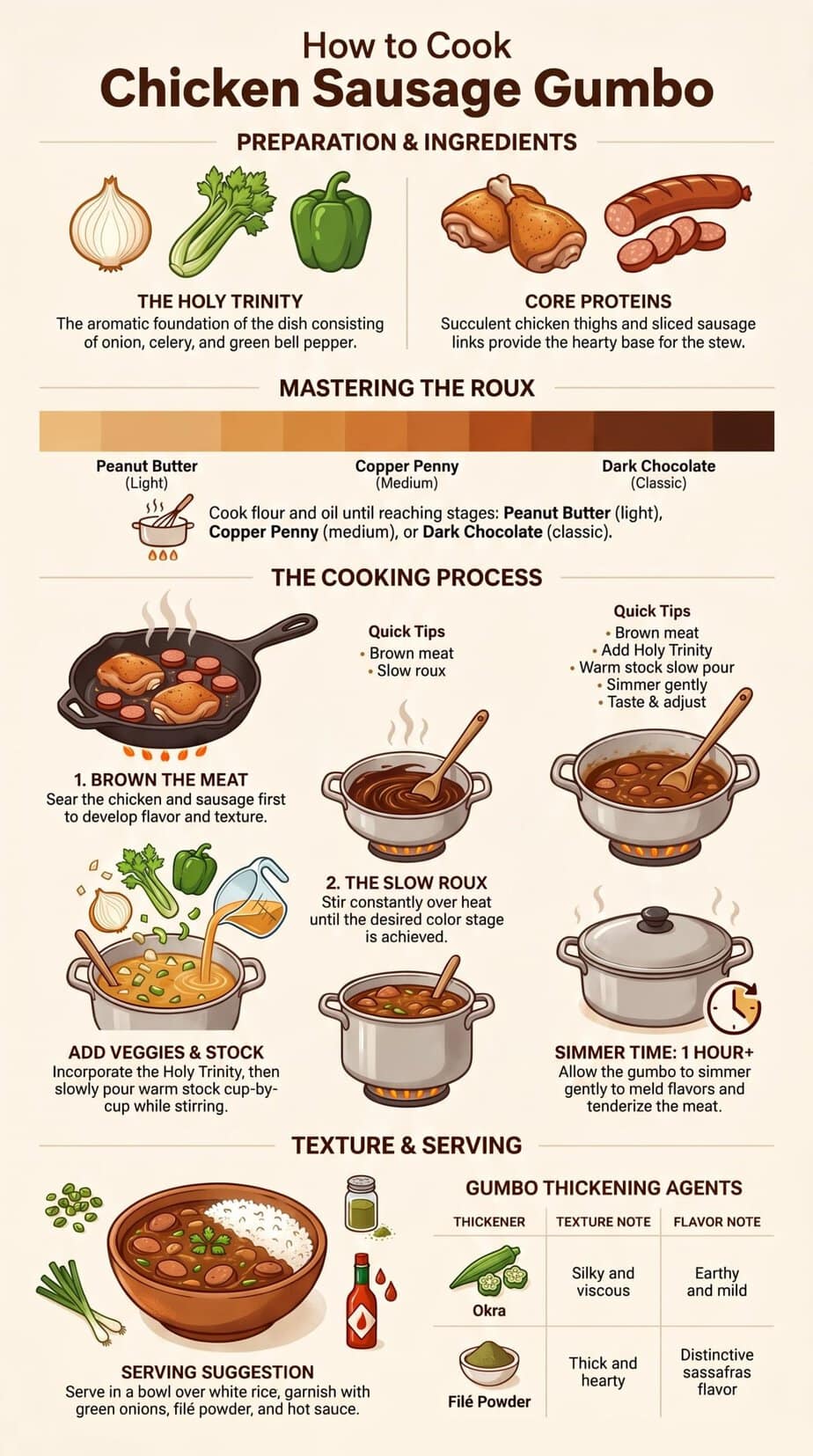
Remember these basics:
- Brown the meat first.
- Take your time with the roux.
- Add the Holy Trinity right away.
- Pour in warm stock slowly.
- Simmer for at least one hour.
- Taste before adding more seasoning.
None of these steps are difficult. They just take a little patience. And that’s probably the biggest lesson when making gumbo.
Watch: Authentic Cajun Gumbo Masterclass with Chef Isaac Toups
Credits: Munchies
In this video, acclaimed Cajun Chef Isaac Toups provides a masterclass on crafting an authentic Louisiana-style chicken and sausage gumbo. He demonstrates how to develop a deep, dark chocolate roux safely and efficiently while layering flavours with the traditional holy trinity.
Make Chicken Sausage Gumbo With Confidence
You’ll notice the difference when each step gets the time it needs. A dark roux builds deep flavor, and a gentle simmer helps the broth come together. Don’t rush it. That’s what makes a pot of gumbo taste rich and satisfying.
Once you’ve made it a few times, the whole process feels much easier. You can swap ingredients to match what you have without losing the heart of the recipe, or even branch out into chicken sausage gumbo with shrimp when you want another classic Louisiana variation.
Gather your ingredients, follow the steps, and enjoy a homemade chicken sausage gumbo that’s full of rich Louisiana flavor.
FAQ
Can I use smoked sausage instead of andouille in chicken sausage gumbo?
Yes. You can replace andouille with smoked sausage in a chicken and sausage gumbo recipe if you prefer a milder flavor. Andouille sausage gumbo has a smokier, spicier taste, while smoked sausage is less bold. Browning sausage for gumbo before adding it to the pot develops deeper flavor and improves the finished dish regardless of which sausage you choose.
Should I use chicken thighs or chicken breasts for gumbo?
Chicken thighs are the preferred choice for gumbo because they stay juicy during the long cooking process. Gumbo with chicken thighs usually has richer flavor and more tender meat than recipes made with chicken breasts. If you are deciding between boneless vs bone-in chicken gumbo, bone-in pieces add more flavor, while boneless chicken is easier to shred and serve.
Can I make chicken sausage gumbo in a slow cooker or Instant Pot?
Yes. You can make quick chicken sausage gumbo in either appliance, but prepare the roux on the stovetop first for the best flavor. Instant Pot gumbo chicken sausage cooks much faster, while slow cooker chicken sausage gumbo develops flavor over several hours. Both methods work well when you follow the proper cooking steps.
What should I serve with chicken sausage gumbo?
Gumbo over rice is the traditional choice because it balances the rich broth and makes each serving more filling. Popular gumbo serving suggestions also include crusty bread or gumbo side dishes potato salad. Finish each bowl with gumbo garnish green onions and add gumbo hot sauce finishing if you want extra heat.
Related Articles
- https://milkwoodrestaurant.com/chicken-sausage-cook-time/
- https://milkwoodrestaurant.com/how-to-know-when-chicken-sausage-is-done/
- https://milkwoodrestaurant.com/boiling/
- https://milkwoodrestaurant.com/chicken-sausage-gumbo-with-shrimp/
References
- https://www.americastestkitchen.com/articles/361-chicken-and-sausage-gumbo
- https://worldchefs.org/new-orleans-chicken-and-sausage-gumbo/
Was this helpful?

I’m Mary R. Q. , a seasoned professional chef dedicated to elevating home cooking experiences. Through my expertise in the culinary arts, I provide practical cooking tips and insightful reviews of kitchen utensils on my blog, milkwoodrestaurant.com. As a passionate advocate for transforming everyday meals into extraordinary culinary adventures, I aim to empower home cooks with the knowledge and tools they need to create delicious and memorable dishes. I’m also an author of the book “1,001 Kitchen Tips & Tricks: Helpful Hints for Cooking, Baking, and Cleaning (1,001 Tips & Tricks)” which is sold on Amazon. Join me on a flavorful journey as we explore the art of cooking and the essential tools that make it a joy.