Chicken sausage and leek pasta is a quick dinner that’s both tasty and sensible. It uses lean protein and the mild sweetness of leeks to build flavor. The real trick is in the cooking method: you brown the sausage well, then use the pasta’s own starch to make a smooth, light sauce. You don’t need any cream. While sausage and leek (Salsiccia e Porri) is an Italian classic, using chicken sausage is a modern, leaner twist on the traditional pork-heavy recipe.
The dish feels a bit special but is honestly very straightforward to make. Read on for the step-by-step method and tips to get it right.
Quick Wins for Chicken Sausage and Leek Pasta
These are the core ideas that shape the dish, from texture to flavor, and help you get consistent results every time.
- Proper technique prevents rubbery sausage and bitter leeks
- Emulsification creates a creamy sauce without relying on heavy cream
- Ingredient sequencing matters more than complexity
The Distinct Character of Chicken Sausage and Leek Pasta
Chicken sausage and leek pasta stands out by combining lean poultry richness with leek sweetness, using starch-based emulsification instead of heavy cream for a lighter yet glossy sauce.
Chicken sausage brings a different kind of richness than pork. It still has flavor, but it feels lighter on the palate. Most links land around 140–160 calories, which puts them well below many pork options. That difference shows up in the final dish. You get a satisfying meal without the heavy, greasy finish that can come from fattier sausages.
Leeks play a quiet but important role. They have a soft, slightly sweet taste that builds as they cook. Unlike onions, which can take over a dish if not handled carefully, leeks stay gentle. When sautéed slowly, they turn silky and almost melt into the sauce. That smooth texture helps tie everything together.
The sauce itself is where this dish separates from older, cream-based pasta recipes. Instead of pouring in cream, it uses pasta water. That cloudy water carries starch released from the noodles during cooking. When mixed with fat from the sausage and a bit of oil or butter, it forms a light, glossy coating. The pasta ends up evenly covered, not drowned.
This approach changes the feel of the dish. It still tastes rich, but it does not sit as heavily. You can finish a bowl and not feel weighed down, which is part of why it works well for weeknight meals.
Another strength is flexibility. The base is simple, so it adapts easily. You can add greens like spinach, toss in chili flakes for heat, or finish with grated cheese. It works just as well for a quick dinner as it does for something more polished.
Key traits at a glance
| Element | What it adds | Why it matters |
| Chicken sausage | Lean protein | Lighter than pork, still filling |
| Leeks | Soft sweetness | Blends smoothly into sauce |
| Pasta water | Natural starch | Creates a glossy coating |
| Cooking method | Sauté + toss | Builds flavor without heaviness |
| Structure | Simple base | Easy to adjust for different meals |
That balance keeps this dish in regular rotation. It works on busy nights, but it can also be dressed up with small changes.
Understanding Rubbery Texture in Chicken Sausage
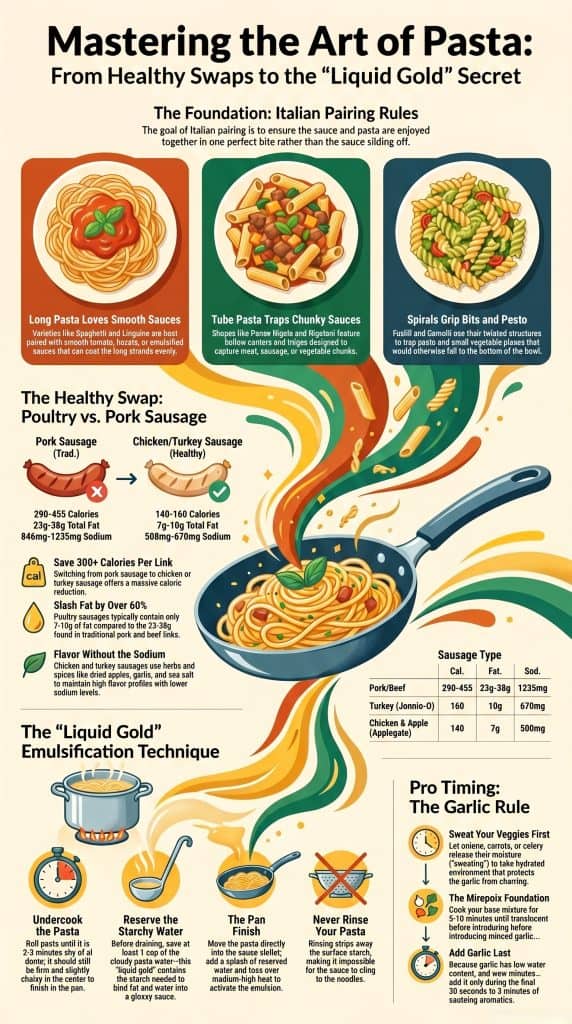
Chicken sausage can turn rubbery for a few clear reasons. The biggest one is its low fat content. Fat helps keep meat tender. Without enough of it, the proteins tighten faster as heat rises. Once that tightening happens, the texture shifts from juicy to firm, sometimes even bouncy.
This change starts earlier than most people expect. Around 65–70°C, the proteins in chicken begin to contract. As they squeeze, moisture gets pushed out. If the sausage cooks too quickly or unevenly, that moisture loss becomes noticeable in the final bite.
Research from Kawahara, S., et al. shows
“Variability in gel improvement level between chicken and pork sausages was observed… resulted from the variation in meat proteins in response to processing and heating.” –KoreaScience
There is another factor that often gets overlooked: added binders. Many store-bought chicken sausages include ingredients like soy protein isolate. These help hold the sausage together and improve shelf life, but they also affect texture. When heated, these binders can firm up more than natural meat alone. If the sausage is not browned properly, that firmness stands out even more.
Heat control makes a big difference. If the pan is too crowded or not hot enough, the sausage releases moisture and starts to steam. Steaming cooks the inside before the outside has time to develop color. That leads to a pale surface and a tight, chewy interior.
A proper sear changes everything. When the sausage hits a hot pan with enough space, it browns on the outside first. That browning builds flavor and slows down moisture loss. The inside cooks more gently, which helps keep the texture tender.
Common causes
- Low fat compared to pork
- Early protein tightening
- Fillers in processed sausage
- Overcrowded pans
- Heat that is too low
What helps
- Remove the casing so the meat can brown evenly
- Use medium-high heat to build color quickly
- Cook in batches instead of crowding the pan
- Wait before adding extra salt, as chicken sausage is often pre-seasoned with higher sodium levels to compensate for lower fat.
These small adjustments fix most texture problems. The sausage stays tender, the edges crisp up, and it blends better into the pasta.
Leeks vs Onions and Shallots
Leeks take more effort, and they cost more, but they bring a softer flavor that changes the dish in a noticeable way.
They contain natural sugars, usually around 3–5%. When cooked slowly, those sugars come forward and give a gentle sweetness. Onions can be sharper, especially if they are not cooked long enough. Shallots sit somewhere in the middle, with a mix of sweetness and bite.
Leeks also behave differently in the pan. As they cook, they break down into thin strands and soften into a smooth texture. This matters in a pasta dish where you want the sauce to feel even, not chunky or harsh.
The downside is prep. Dirt often hides between the layers, so a quick rinse is not enough. They need to be cut and soaked properly, or that grit ends up in the final dish.
Still, for this recipe, leeks give a cleaner, more balanced flavor. They do not fight with the sausage or the sauce.
As noted by Journal of Chromatography A
“While onions produce a prominent ‘lachrymatory factor’ (the compound that makes you cry) and specific sulfurs, leeks offer a different aromatic profile due to their unique composition of organosulfur compounds.” –ScienceDirect
Quick comparison
| Ingredient | Flavor | Prep effort | Cost |
| Leeks | Mild, sweet | High | $$ |
| Onions | Sharp | Low | $ |
| Shallots | Balanced | Medium | $$ |
Leeks ask for more work, but they reward it with a smoother result.
Cleaning and Prepping Leeks the Right Way
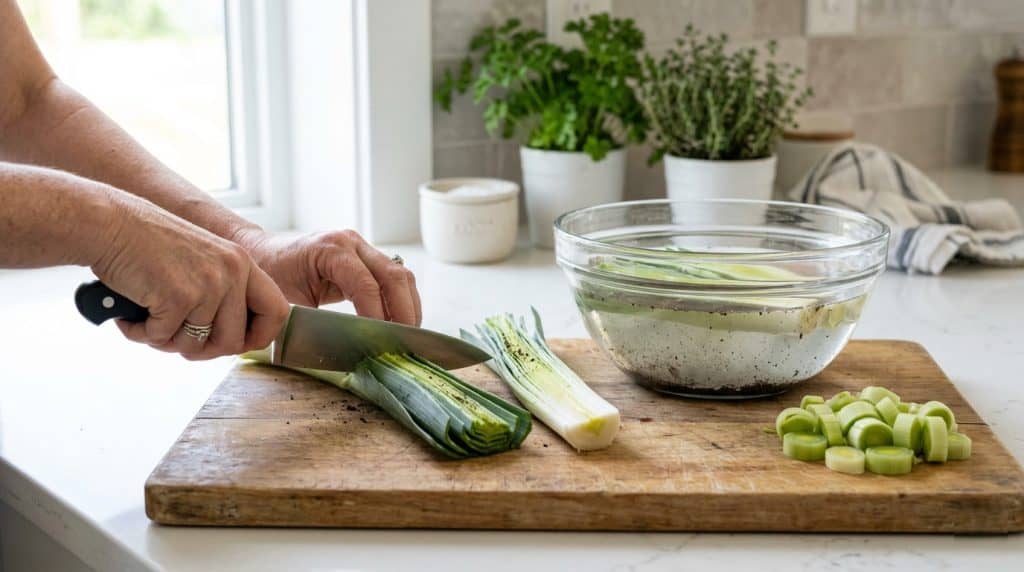
Leeks need more than a rinse. Dirt gets trapped deep between their layers, and if it stays there, you will feel it in every bite.
Start by cutting off the dark green tops and the root end. Slice the leek lengthwise, then cut it into thin half-moons. At this point, it will still look clean, but the grit is hidden.
Place the slices in a bowl of cold water. Move them around gently with your hands. The dirt will sink to the bottom while the leek pieces float. Let them sit for a moment, then lift the leeks out by hand. Do not pour everything into a colander, or the dirt will mix right back in. This step becomes even more important when working with frozen chicken sausage, since excess moisture can affect how everything cooks together.
Spread the cleaned leeks on a towel and pat them dry. Too much water in the pan can slow down cooking.
Skipping this step is one of the fastest ways to ruin the dish. The texture should be smooth, not gritty.
Emulsion vs Cream for Pasta Sauce
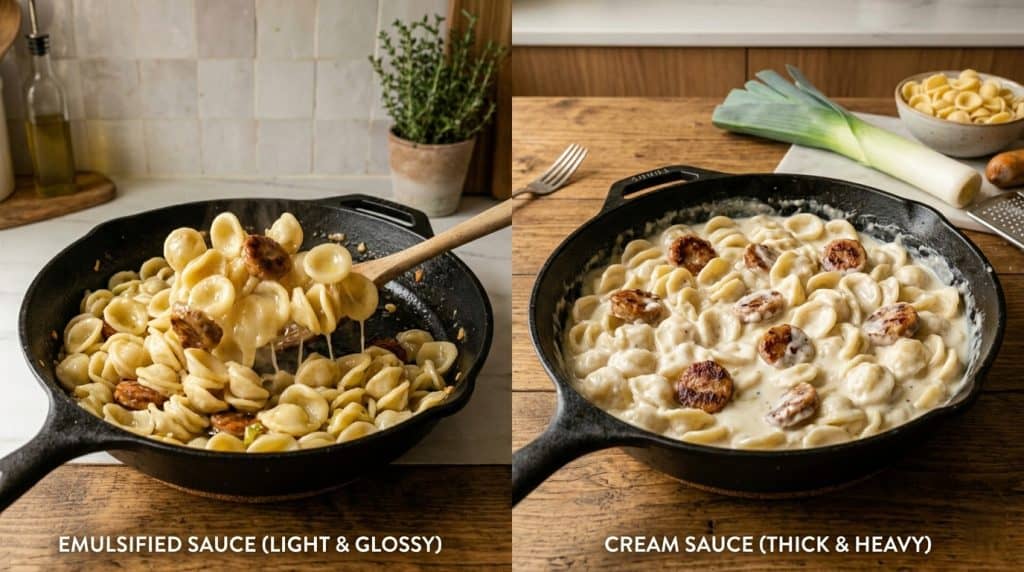
A starch-based emulsion gives a lighter sauce. Cream gives a thicker one. Both work, but they lead to different results.
Pasta water holds a small amount of starch, usually around 1–2%. That might not sound like much, but it is enough. When mixed with fat from the sausage and a bit of cheese, it forms a smooth coating that clings to the pasta.
Cream works differently. It adds body right away, making the sauce feel rich and heavy. It is easier to handle, but it can also hide the more delicate flavor of the leeks.
If you compare both approaches side by side, the difference is pretty clear.
An emulsion gives you a lighter texture with a clean flavor, but it takes a bit more effort to get right.
Cream, on the other hand, creates a thick and rich texture almost instantly, and it is much easier to use.
For this dish, the lighter option usually works better. It allows the leeks and sausage to stand out instead of getting buried under too much dairy.
A few details matter. Save pasta water before draining. Toss the pasta while adding it. Turn off the heat before adding cheese to prevent clumping or ‘breaking’ the emulsion. These small steps follow a simple cooking method that keeps the sauce smooth without overcomplicating the process.
Step-by-Step Cooking Method for Best Results
A good result comes down to timing and heat. Each step builds on the last, so rushing one part can throw off the whole dish.
Start with the sausage. Heat a skillet over medium-high heat and add a small amount of oil. If the sausage is in casing, remove it first. This helps it brown more evenly. Break it into chunks and let it sit in the pan without moving it too much at first. That contact builds color. Once browned, stir and cook through, then remove it from the pan and set aside.
Episode 11 – Sausage, Leek and Fennel Pasta
Episode 11 – Sausage, Leek and Fennel Pasta
Credit : Southampton Halls
Next come the leeks. Lower the heat to medium or even medium-low. Add a bit more oil or butter, then the cleaned leeks. Stir them occasionally and let them cook slowly. This takes around 8–10 minutes. They should turn soft and slightly golden, not brown or crispy. If they cook too fast, they lose their sweetness and can taste bitter.
Add garlic near the end of this stage. It only needs about a minute. Any longer and it risks burning, which will affect the whole dish.
Once the base is ready, deglaze with dry white wine (like Pinot Grigio) to cut through the richness of the sausage. Scrape the bottom with a wooden spoon to lift the browned bits left from the sausage. This step adds depth without extra ingredients.
Now bring everything together. Add the cooked pasta directly into the pan, along with a splash of reserved pasta water. Toss the mixture so the starch, fat, and liquid combine into a light sauce. Keep stirring. If it looks dry, add a bit more pasta water.
Return the sausage to the pan and mix it through. Finish with grated cheese, a squeeze of lemon juice or some zest, and fresh herbs if you like. Taste before adding salt. The sausage and cheese already bring some.
Steps at a glance
- Brown sausage and set aside
- Cook leeks slowly until soft
- Add garlic briefly
- Deglaze with liquid
- Toss pasta with sauce and water
- Return sausage and finish
This order keeps textures balanced. Nothing overcooks, and the sauce stays smooth.
Best Pasta Shapes for This Dish
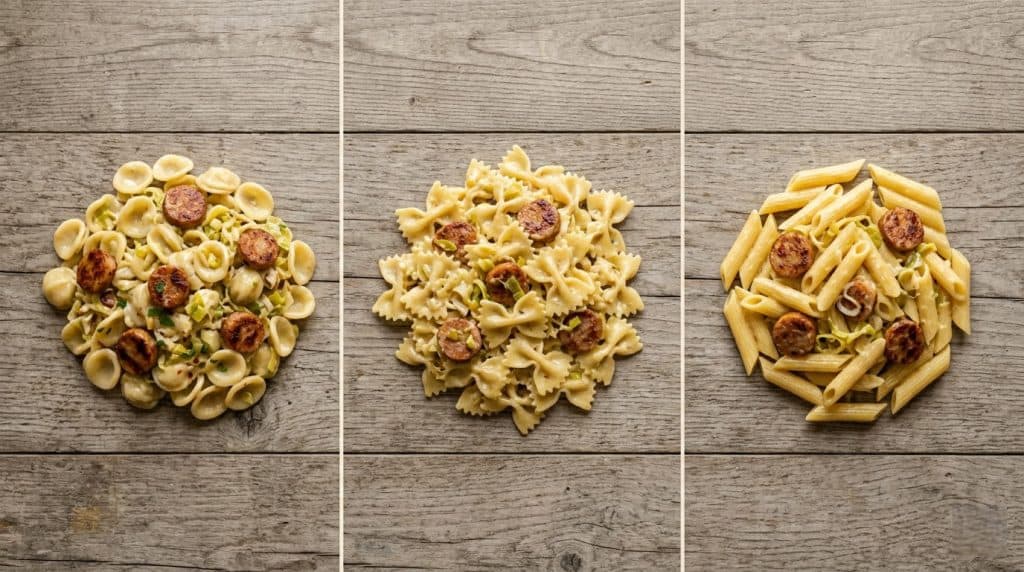
Shape matters more than it seems. Some pasta holds sauce better, especially when the sauce is light.
Short, textured shapes tend to work best. They have ridges or curves that catch bits of sausage and leek. Each bite feels more complete.
Orecchiette is a strong choice. Its small, cup-like shape scoops up sauce and small pieces. Rigatoni also works well, with ridges that grip the sauce and a hollow center that traps it. Campanelle, with its flared edges, holds onto the glossy coating in a different way.
Smooth pasta like spaghetti is less effective here. The sauce can slide off, leaving the noodles undercoated. It still works, but the result is less even.
If you want a balanced bite every time, go with a shape that has texture or space to hold the sauce.
Popular Flavor Variations for This Dish
This dish can shift in different directions without much effort. Small changes in ingredients lead to clear differences in flavor.
A creamy version adds richness. A splash of cream or a spoon of Dijon mustard thickens the sauce and gives it a deeper taste. It feels heavier, but some prefer that texture.
A green version leans fresh. Spinach or peas can be added near the end of cooking. They cook quickly and bring color and a lighter feel.
For heat, chili flakes are enough. They cut through the richness and add a sharper edge. You do not need much.
An earthy version uses mushrooms and herbs like thyme. Mushrooms soak up flavor from the pan and add depth. This variation feels a bit more grounded, almost like a fall dish, similar to other chicken sausage vegetable recipes that lean on deeper, savory combinations.
Flavor variation overview
| Style | Add-ins | Resulting flavor |
| Creamy | Cream, Dijon | Rich and smooth |
| Green | Spinach, peas | Light and fresh |
| Spicy | Chili flakes | Sharp and bold |
| Earthy | Mushrooms, thyme | Deep and savory |
Lemon zest works across all versions. It brightens the dish and keeps it from feeling too heavy.
Avoiding Common Cooking Mistakes
A few small mistakes can change the whole dish. Most of them come down to heat and timing.
Leeks are easy to overcook. If the heat is too high, they brown too fast and turn bitter. Keeping the heat low and giving them time helps bring out their natural sweetness.
Garlic is another point to watch. It cooks quickly and burns easily. Adding it too early can lead to a sharp, unpleasant taste.
Crowding the pan is a common issue. When too much food goes in at once, it traps moisture. Instead of browning, the ingredients steam. This affects both flavor and texture.
Salt can also get out of balance. Chicken sausage and cheese already contain sodium. Adding more without tasting first can make the dish too salty.
Common mistakes
- Cooking leeks too fast
- Adding garlic too early
- Overcrowding the pan
- Adding salt without tasting
Simple fixes
- Use medium to low heat for leeks
- Add garlic near the end
- Cook in batches if needed
- Taste before seasoning
These adjustments are small, but they keep the dish consistent.
Make It Work Every Time
You can follow every step and still end up with a dry bite or a dull finish if the heat slips or timing feels off. It’s frustrating. The difference comes from slowing down just enough to brown the sausage well and let the leeks soften fully so the sauce comes together naturally.
If you keep your focus on that method, this dish stops feeling tricky and starts feeling reliable. That’s the shift. You don’t need extra ingredients or complicated changes, just repeat the same approach and tweak small details until it fits your taste.
FAQs
How can I make chicken sausage and leek pasta taste restaurant quality at home?
To make chicken sausage and leek pasta taste like restaurant style pasta, focus on proper cooking steps. Brown the sausage until it develops deep flavor. Cook sautéed leeks slowly so they become soft and sweet. Build a creamy leek sauce or a creamy white wine sauce, then finish with parmesan and fresh herbs. These steps create a balanced, flavorful pasta dish.
What are the best variations of leek and sausage pasta for quick dinners?
Leek and sausage pasta offers many options for quick weeknight dinners. You can prepare sausage and leek orecchiette for a hearty texture or sausage and leek farfalle for a lighter option. Adding peas, mushrooms, or kale improves both flavor and nutrition. These leek pasta variations keep quick pasta meals interesting while still delivering comfort food pasta at home.
Can I make a creamy pasta with sausage without heavy ingredients?
You can prepare creamy pasta with sausage without making it too heavy. Use a small amount of cream combined with pasta water to create a smooth texture. A creamy white wine sauce also works well for balance. Sautéed leeks add natural sweetness. This method produces creamy chicken sausage pasta that fits into healthy pasta dishes and works as a light pasta dinner.
What ingredients make the best sausage pasta dinner with leeks?
A good sausage pasta dinner starts with quality sausage pasta ingredients such as chicken sausage, fresh leeks, garlic, and pasta. Add parmesan, fresh herbs, and vegetables like peas or kale for extra flavor. A sausage pasta sauce made with white wine or a creamy leek sauce improves depth. This combination creates a complete and satisfying meal.
Is chicken sausage and leek pasta good for meal prep or family meals?
Chicken sausage and leek pasta works well for pasta meal prep and sausage pasta for family meals. The dish reheats evenly and maintains flavor when stored properly. Use sturdy pasta shapes and avoid overcooking the sauce to keep texture consistent. This protein packed pasta can be portioned easily and served as a reliable option for busy schedules.
References
- https://koreascience.kr/ksci/search/article/articleView.ksci?articleBean.atclMgntNo=E1DMBP_2007_v20n8_1285
- https://www.sciencedirect.com/science/article/abs/pii/S0021967302002212